


The Secrets of the Mediterranean Diet. Does [Only] Olive Oil Matter?
- PMID: 31817038
- PMCID: PMC6949890
- DOI: 10.3390/nu11122941
The Secrets of the Mediterranean Diet. Does [Only] Olive Oil Matter?
Abstract
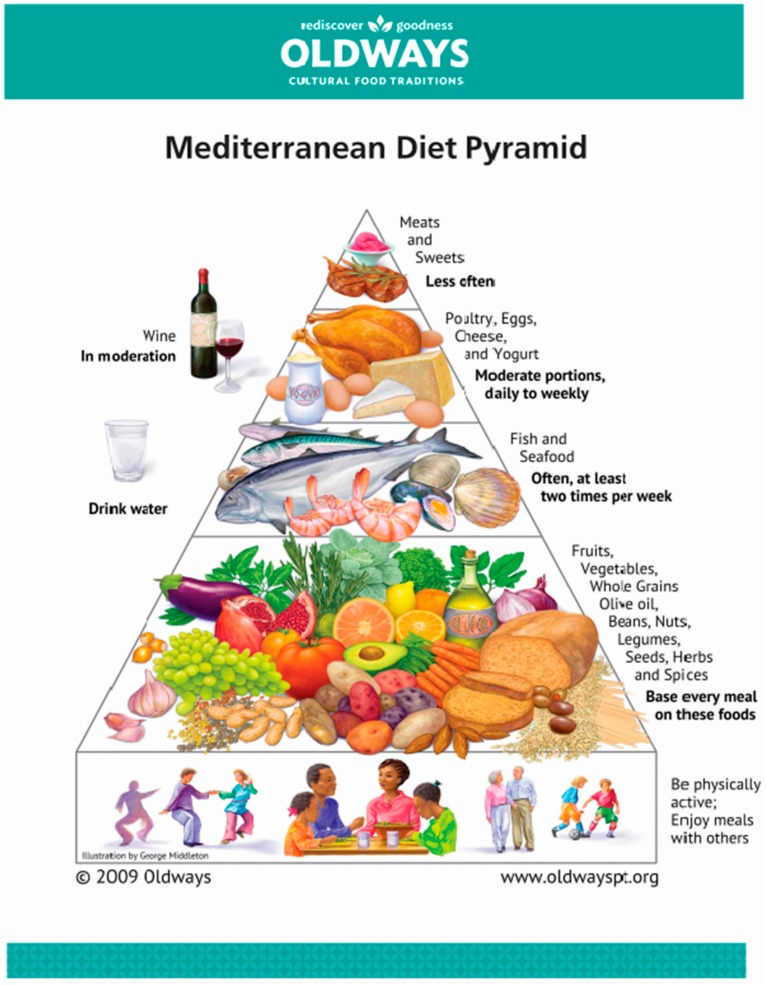
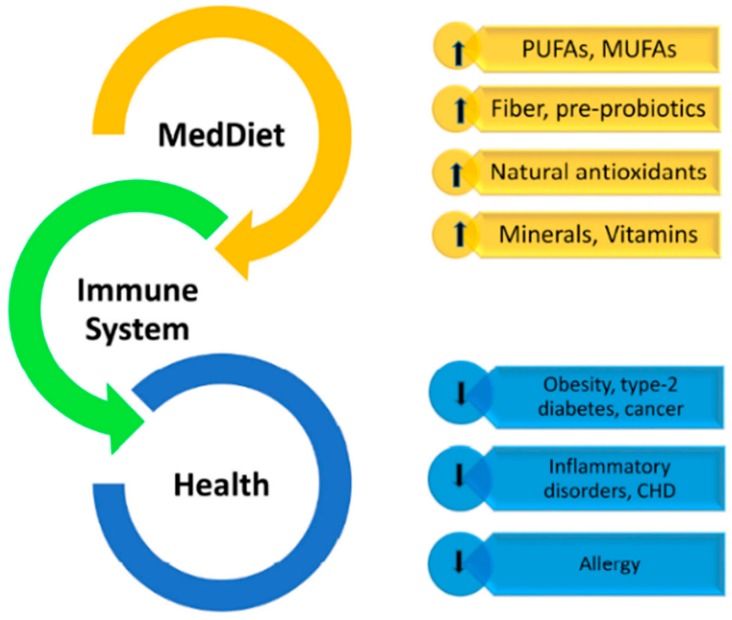
Diet plays a key role in the maintenance and optimal functioning of immune cells. The Mediterranean dietary pattern is an example of a prudent choice of lifestyle and scientifically accepted to help preserve human health by protecting against major chronic and inflammatory diseases. Mediterranean diets (MedDiets) are characteristically high in the consumption of fruits, vegetables and salad, bread and whole grain cereals, potatoes, legumes/beans, nuts, and seeds. Their common central feature is the usage of olive oil as the main source of fat. The health benefits attributed to olive oil are specifically related to extra virgin olive oil (EVOO) intake with its high nutritional quality and multiple positive effects on health. Overall, MedDiets have direct (mono-unsaturated fatty acids (MUFAs), tocopherols, polyphenols) and indirect (low saturated fats, well-balanced linoleic/alpha linolenic acid) effects on the immune system and inflammatory responses. In the present paper, we summarize the current knowledge on the effect of olive oil per se and MedDiets generally on immune-mediated and inflammatory diseases, such as coronary heart disease (CHD)/cardiovascular diseases (CVD), obesity, type-2 diabetes, cancer, asthma, and allergies.
Keywords: CHD/CVD; allergy; cancer; fresh food; inflammation; metabolic syndrome; mono-unsaturated fatty acids; obesity; olive oil; traditional.
Conflict of interest statement
The authors declare no conflict of interest.
Figures
References
-
- Santangelo C., Vari R., Scazzocchio B., De Sanctis P., Giovannini C., D’Archivio M., Masella R. Anti-inflammatory Activity of Extra Virgin Olive Oil Polyphenols: Which Role in the Prevention and Treatment of Immune-Mediated Inflammatory Diseases? Endocr. Metab. Immune Disord. Drug Targets. 2018;18:36–50. doi: 10.2174/1871530317666171114114321. - DOI - PubMed
-
- Kunisawa J., Arita M., Hayasaka T., Harada T., Iwamoto R., Nagasawa R., Shikata S., Nagatake T., Suzuki H., Hashimoto E., et al. Dietary ω3 fatty acid exerts anti-allergic effect through the conversion to 17,18-epoxyeicosatetraenoic acid in the gut. Sci. Rep. 2015;5:9750. doi: 10.1038/srep09750. - DOI - PMC - PubMed
Publication types
MeSH terms
Substances
LinkOut - more resources
Full Text Sources
Other Literature Sources
Medical
