Review
. 2019 Dec 8;10(12):441.
doi: 10.3390/insects10120441.

Bacterial Semiochemicals and Transkingdom Interactions with Insects and Plants

Affiliations
Review

Bacterial Semiochemicals and Transkingdom Interactions with Insects and Plants

Matteo Calcagnile et al. Insects. .

Abstract

A peculiar feature of all living beings is their capability to communicate. With the discovery of the quorum sensing phenomenon in bioluminescent bacteria in the late 1960s, it became clear that intraspecies and interspecies communications and social behaviors also occur in simple microorganisms such as bacteria. However, at that time, it was difficult to imagine how such small organisms-invisible to the naked eye-could influence the behavior and wellbeing of the larger, more complex and visible organisms they colonize. Now that we know this information, the challenge is to identify the myriad of bacterial chemical signals and communication networks that regulate the life of what can be defined, in a whole, as a meta-organism. In this review, we described the transkingdom crosstalk between bacteria, insects, and plants from an ecological perspective, providing some paradigmatic examples. Second, we reviewed what is known about the genetic and biochemical bases of the bacterial chemical communication with other organisms and how explore the semiochemical potential of a bacterium can be explored. Finally, we illustrated how bacterial semiochemicals managing the transkingdom communication may be exploited from a biotechnological point of view.

Keywords: bacterial metabolism; insect semiochemicals; microbiome; microbiota; symbiosis.


Conflict of interest statement

The authors declare no conflict of interest.

Figures
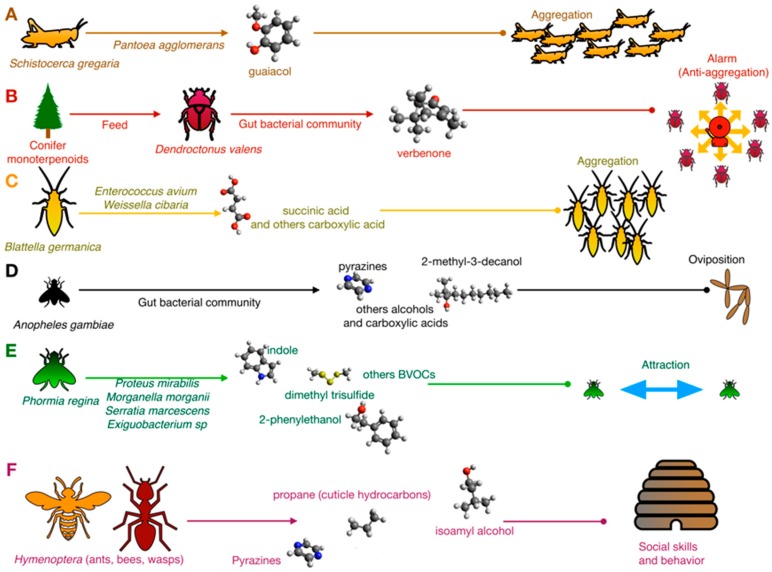
Figure 1
Figure 1
Bacteria and insect communication. In S. gregaria (A), the bacterium P. agglomerans produces guaiacol, which acts as an aggregation signal. In D. valens (B), bacterial community convert conifer monoterpenoids in verbenone, a multifunctional pheromone. In B. germanica (C), the aggregation is stimulated by succinic acid and other acids produced by gut bacteria. In A. gambiae (D), pyrazines, carboxylic acids, and alcohols stimulate oviposition. In P. regina (E), bacterial volatile organic compounds (BVOCs) stimulate attraction between individuals. In eusocial insects (F) (Hymenoptera), social and behavioral skills are managed by pyrazines, cuticular hydrocarbons, and other semiochemicals.
Figure 2
Figure 2
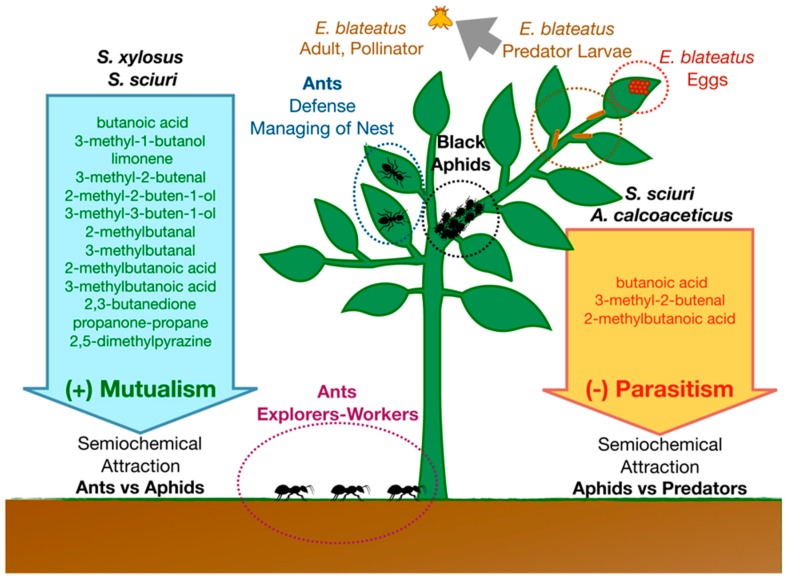
Aphids mutualism and predation. In aphids, S. xylosus and S. sciuri produces BVOCs that acts as an attractant for ants. Mutualistic ants manage and protect aphid nests. On the other hand, S. sciuri and A. calcoaceticus produce some BVOCs that help E. blateatus larvae to find the aphids (the prey).
Figure 3
Figure 3
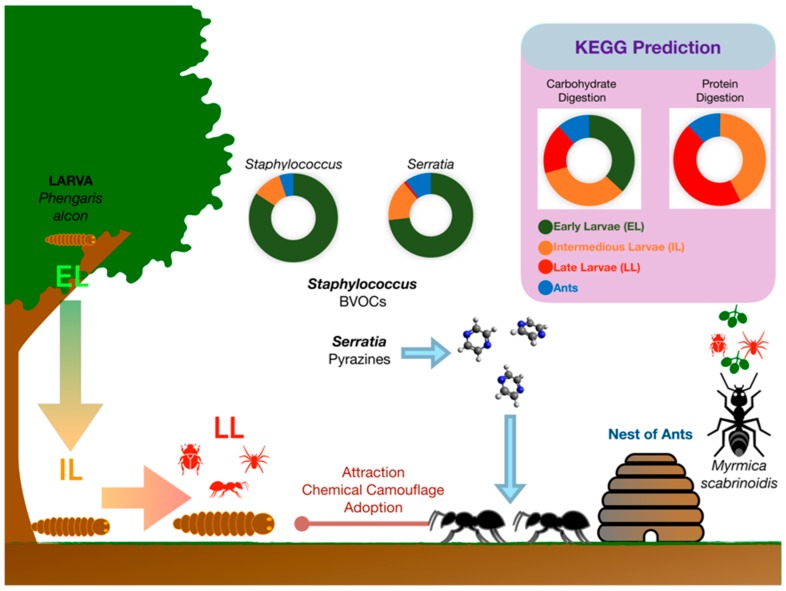
Mirmecophilus butterfly. P. alcon (Maculinea) is a lepidoptera that is adopted by ants (M. scabrinodis) in, intermediate larvae (IL) stage when the larvae fall on soil (after the early phytophagous phase). The attraction mechanism and chemical camouflage strategy is related to gut microbiota, which produces BVOCs. The genera Staphylococcus and Serratia shows a consistent distribution with camouflage skills. PICRUST prediction of genetic content shows as digestion of carbohydrate and proteins are consistent with the development of larvae and validate the system.
Figure 4
Figure 4
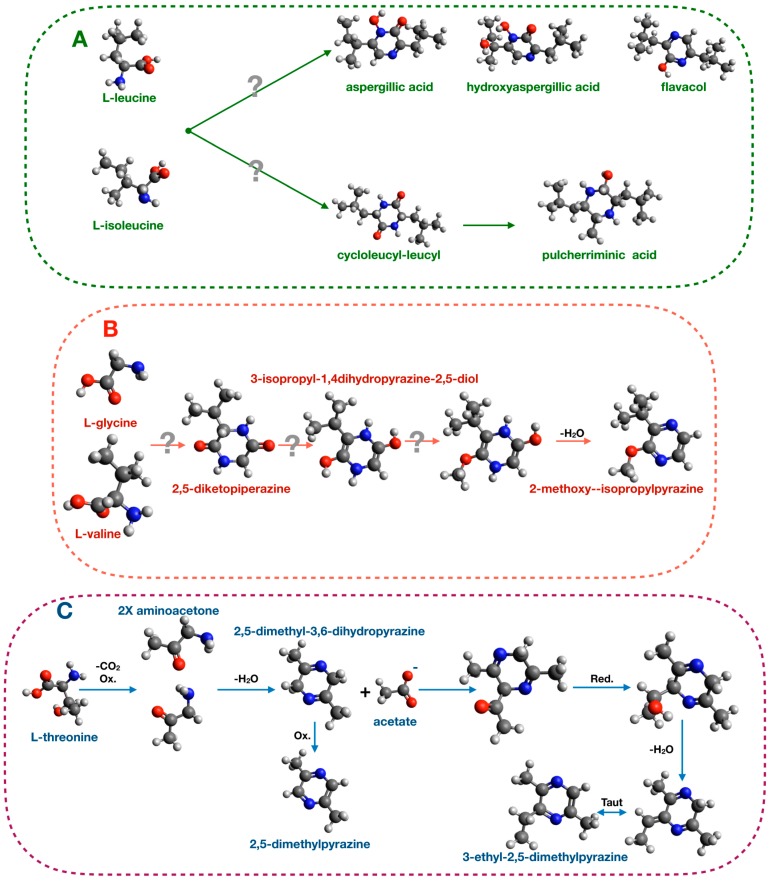
Pyrazines biosynthesis. Generally, experimental data show a correlation between amino acids metabolisms and pyrazine production in microorganisms. Yeast species, if cultured in isoleucine or leucine-rich medium, produce pyrazines used in an industrial process (A) Aspergillus produces aspergillic acid and similar molecules, Candida pulcherrima produces pulcherriminc acid. A similar effect (B) is observed in Pseudomonas perolens, adding valine and glycine in the culture broth. In this last case, there was a proposed pathway. Finally, adding radiolabeled precursors, a pathway was individuated in Serratia marcescens B2 that start from threonine (C).
Figure 5
Figure 5
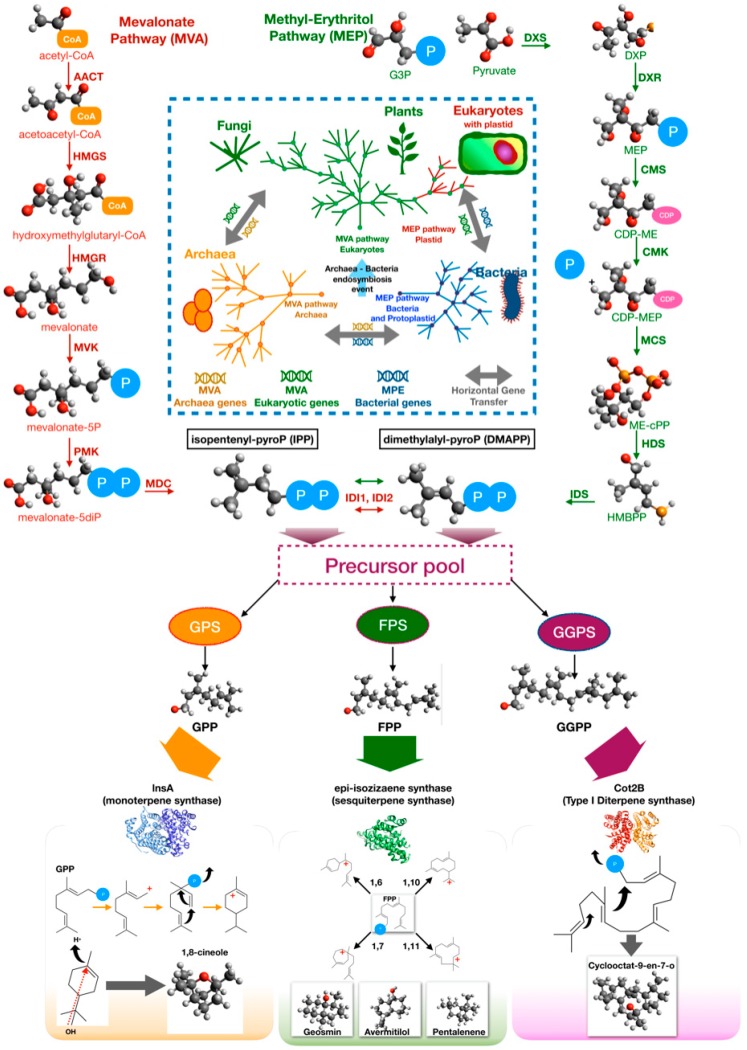
Terpene and terpenoids biosynthesis. The precursors for biosynthesis of terpenes and terpenoids (isopentyl-pyroP, IPP and dimethylallyl-piroP, DMAPP) are synthetized by two biosynthetic pathways: The mevalonate pathway (MVA, in red) and the methylerythritol phosphate pathway (MEP, in green). As shown in the the square with blue dotted line, MVA was found in eukaryotes and archaea, while MEP was found in bacteria or in eukaryotes equipped with plastid. Horizontal gene exchange has allowed the acquisition of MVA (for the bacteria) or MEP genes (for the eukaryotes). GPS (geranyl-pyroP synthase), FPS (farnesyl-pyroP synthase) and GGPS (geranylgeranyl-pyroP synthase) assemble IPP and DMAPP into linear long-chain precursors used by the biosynthetic enzymes to produce the terpenes-like ring. In the figure, the examples are reported (from precursor to ring cyclization), including monoterpene synthases, diterpene synthases, and sesquiterpene synthases. Abbreviations: MVA: AACT = acetoacetyl-CoA thiolase, HMGS = 3-hydroxy-3-methylglutaryl- CoA synthase, HMGR = 3-hydroxy-3-methylglutaryl- CoA reductase, MVK = mevalonate kinase, PMK = phosphomevalonate kinase, MDC = mevalonate- 5-decarboxylase. Abbreviation of MEP: DXS = 1-deoxy-d-xylulose-5-phosphate synthase, DXP = deoxy-d-xylulose-5-phosphate, DXR = 1-deoxy-d-xylulose-5-reductase; MEP = methyl-erythritol phosphate, CMS = MEP cytidylyltransferase, CDP-MEP = cytidylyl-MEP, MCS = ME-cPP synthase, ME-cPP = methyl-erythritol 2,4-cyclodiphosphate (ME-cPP), HDS = hydroxymethylbutenyl 4-diphosphate synthase, HMBPP = hydroxymethylbutenyl 4-diphosphate, IDS = IPP/DMAPP synthase, IDI1/IDI2 = IPP-DAMPP isomerase.
Figure 6
Figure 6
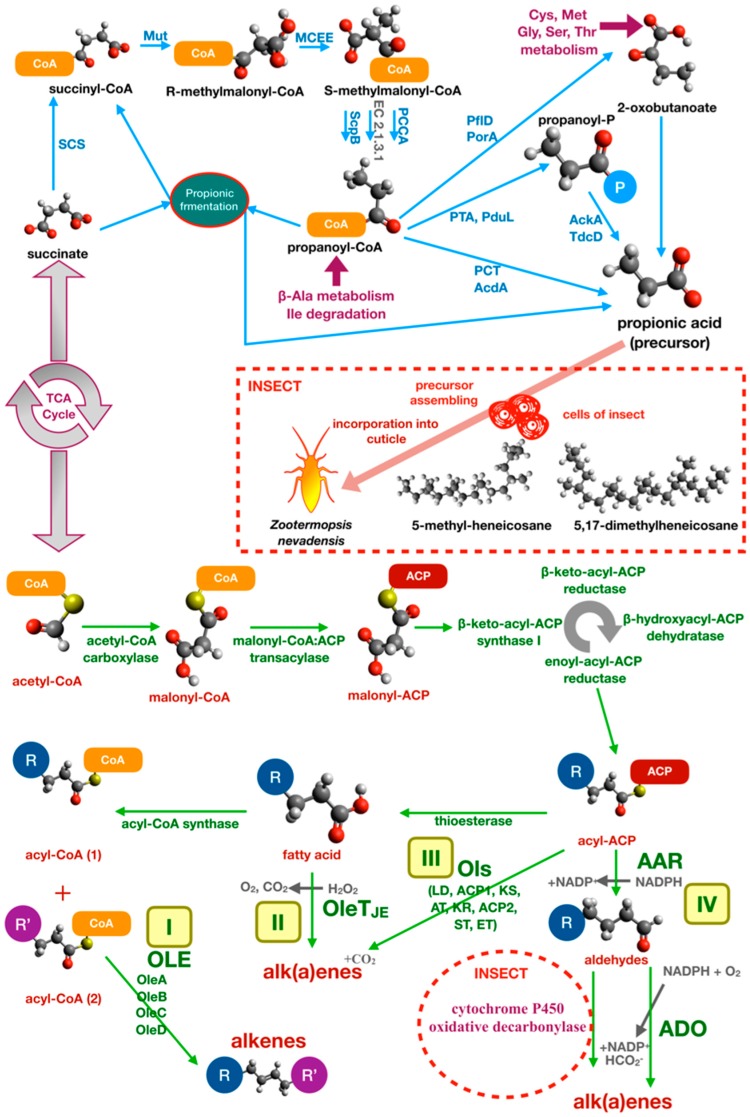
Linear hydrocarbons biosynthesis. Microorganisms produce hydrocarbons through different biosynthetic pathways. The blue arrows indicate bacterial metabolism for a precursor of hydrocarbons (propionic acid). As shown, different pathways produce propionate including fermentation, biotransformation of succinate, and biotransformation of intermediates from amino acid metabolisms. In Z. nevadensis, propionate is produced by bacterial community starting from succinate and is then assembled in final cuticular hydrocarbons by the insect. The green arrows show the direct synthesis of alkanes and alkenes in bacteria. There are four pathways: AAR/ADO, Ols, OleABCD, and OleTJE. Abbreviations: SCS = succinyl-CoA synthetase, MUT = methylmalonyl-CoA mutase, MCEE = methylmalonyl-CoA/ethylmalonyl-CoA epimerase, ScpB = methylmalonyl-CoA decarboxylase, PCCA = propionyl-CoA carboxylase alpha chain, EC 2.1.3.1 = methylmalonyl-CoA carboxytransferase, PflD = formate C-acetyltransferase, PorA = pyruvate ferredoxin oxidoreductase alpha subunit, Pta = phosphate acetyltransferase, PduL = phosphate propanoyltransferase, AckA = acetate kinase, TdcD = propionate kinase; Pct = propionate CoA-transferase, AcdA = acetate-CoA ligase (ADP-forming) subunit alpha.

References

    1. Nihorimbere V., Ongena M., Smargiassi M., Thonart P. Beneficial effect of the rhizosphere microbial community for plant growth and health. Biotechnol. Agron Soc. Environ. 2011;15:327–337.
    1. Chen M., Arato M., Borghi L., Nouri E., Reinhardt D. Beneficial Services of Arbuscular Mycorrhizal Fungi—From Ecology to Application. Front. Plant Sci. 2018;9:1270. doi: 10.3389/fpls.2018.01270. - DOI - PMC - PubMed
    1. Moreau D., Bardgett R.D., Finlay R.D., Jones D.L., Philippot L. A plant perspective on nitrogen cycling in the rhizosphere. Funct. Ecol. 2019;3:540–552. doi: 10.1111/1365-2435.13303. - DOI
    1. Choudhary D.K., Kasotia A., Jain S., Vaishnav A., Kumari S., Sharma K.P., Varma A. Bacterial-Mediated Tolerance and Resistance to Plants Under Abiotic and Biotic Stresses. J. Plant Growth Regul. 2016;35:276–300. doi: 10.1007/s00344-015-9521-x. - DOI
    1. Heil M., Bostock R.M. Induced Systemic Resistance (ISR) Against Pathogens in the Context of Induced Plant Defences. Ann. Bot. 2002;89:503–512. doi: 10.1093/aob/mcf076. - DOI - PMC - PubMed

LinkOut - more resources