


Lung-kidney interactions in critically ill patients: consensus report of the Acute Disease Quality Initiative (ADQI) 21 Workgroup
- PMID: 31820034
- PMCID: PMC7103017
- DOI: 10.1007/s00134-019-05869-7
Lung-kidney interactions in critically ill patients: consensus report of the Acute Disease Quality Initiative (ADQI) 21 Workgroup
Abstract
Background: Multi-organ dysfunction in critical illness is common and frequently involves the lungs and kidneys, often requiring organ support such as invasive mechanical ventilation (IMV), renal replacement therapy (RRT) and/or extracorporeal membrane oxygenation (ECMO).
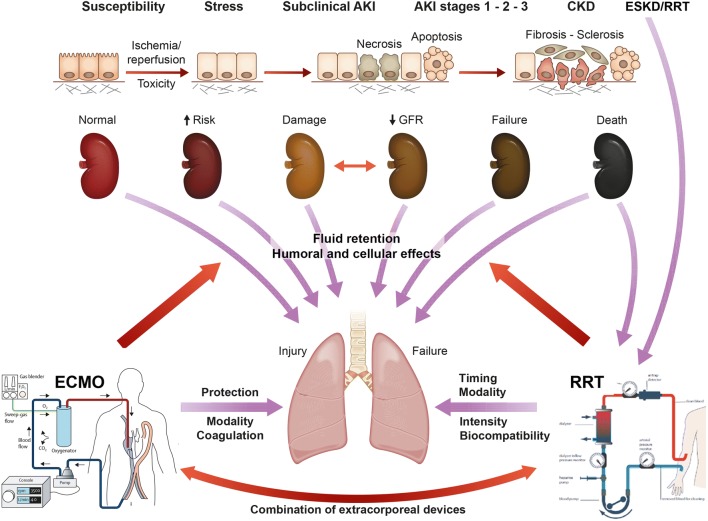
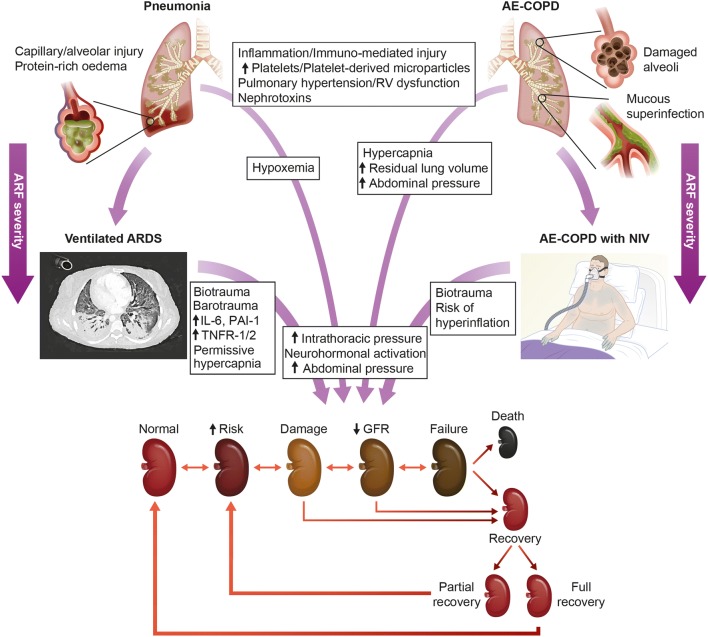
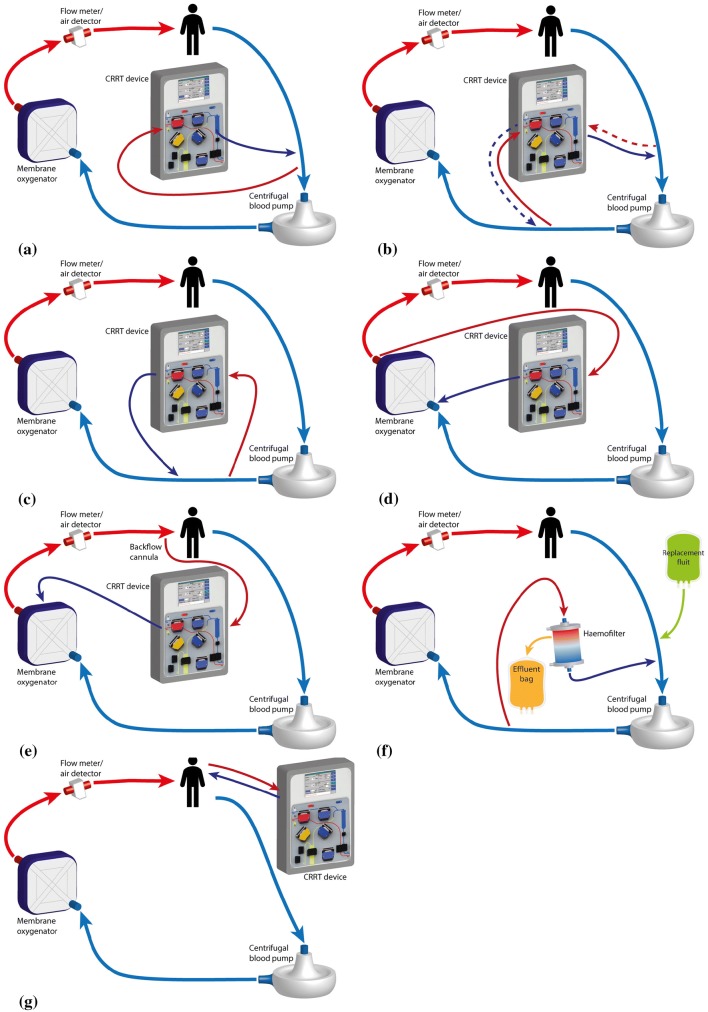
Methods: A consensus conference on the spectrum of lung-kidney interactions in critical illness was held under the auspices of the Acute Disease Quality Initiative (ADQI) in Innsbruck, Austria, in June 2018. Through review and critical appraisal of the available evidence, the current state of research, and both clinical and research recommendations were described on the following topics: epidemiology, pathophysiology and strategies to mitigate pulmonary dysfunction among patients with acute kidney injury and/or kidney dysfunction among patients with acute respiratory failure/acute respiratory distress syndrome. Furthermore, emphasis was put on patients receiving organ support (RRT, IMV and/or ECMO) and its impact on lung and kidney function.
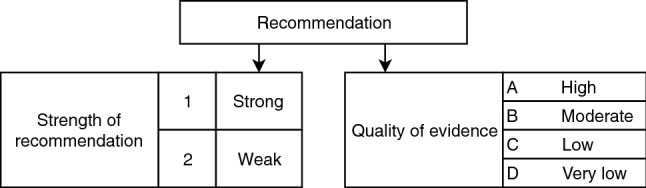
Conclusion: The ADQI 21 conference found significant knowledge gaps about organ crosstalk between lung and kidney and its relevance for critically ill patients. Lung protective ventilation, conservative fluid management and early recognition and treatment of pulmonary infections were the only clinical recommendations with higher quality of evidence. Recommendations for research were formulated, targeting lung-kidney interactions to improve care processes and outcomes in critical illness.
Keywords: Acute kidney injury; Acute respiratory distress syndrome; Extracorporeal membrane oxygenation; Renal replacement therapy; Water-electrolyte balance.
Conflict of interest statement
MJ has received honoraria and research support from Baxter Healthcare Corp, AM-Pharma, CLS Behring, Fresenius, and Astute Medical. LGF has received honoraria and research support from Astute Medical, La Jolla Pharmaceuticals, Medibeacon, Baxter, and Fresenius. PMH has received honoraria and research support from Baxter and CytoSorbent. MO has received honoraria from Fresenius Medical and Baxter and has an advisory role to Biomerieux and Nxstage. JP has received speaker’s honoraria from Fresenius Medical, Baxter and Nikkiso, research support from Biomerieux and Abbott, and has consulted for Nikkiso, Baxter, Medibeacon and Quark Pharma. SMB has consulted and received research support from Baxter Health Care. MD has received research support from MSD and from ASTUTE medical, speaker fees from MSD, Astellas and Bristol-Myers-Squibb, support to organize educational meetings from MSD, Astellas, and Jazz Pharma and has participated in an advisory board from SANOFI-AVENTIS. VF has received honoraria from HepaWash. EH has received speaker’s fee and travel fee from Alexion, AM Pharma, Sopachem, and Bellco. M. Maggiorini has a MAB membership from Baxter and has received an unrestricted research grant from Baxter. M. Meersch has received lecture fees from Astute Medical, Fresenius Medical and Baxter. PTM has advisory board memberships with FAST Biomedical, AM-Pharma, Sphingotec. TS has an advisory board membership with Xenios and has received speaker fees from Getinge, Xenios, Zoll, Orion Pharma, and Fresenius. JAK has received consulting fees and research support from Astute Medical, Baxter and Fresenius. None of the other authors have any conflicts of interest to declare with regard to this manuscript.
Figures
Comment in
-
Lung-kidney cross-talk in the critically ill: insights from the Lung Safe study.Intensive Care Med. 2020 May;46(5):1072-1073. doi: 10.1007/s00134-020-05962-2. Epub 2020 Feb 24. Intensive Care Med. 2020. PMID: 32095847 Free PMC article. No abstract available.
References
-
- Hoste EA, Bagshaw SM, Bellomo R, Cely CM, Colman R, Cruz DN, Edipidis K, Forni LG, Gomersall CD, Govil D, Honore PM, Joannes-Boyau O, Joannidis M, Korhonen AM, Lavrentieva A, Mehta RL, Palevsky P, Roessler E, Ronco C, Uchino S, Vazquez JA, Vidal Andrade E, Webb S, Kellum JA. Epidemiology of acute kidney injury in critically ill patients: the multinational AKI-EPI study. Intensive Care Med. 2015;41:1411–1423. - PubMed
-
- Ostermann M, Chang RW. Impact of different types of organ failure on outcome in intensive care unit patients with acute kidney injury. J Crit Care. 2011;26:635 e631–635 e610. - PubMed
-
- Faubel S, Edelstein CL. Mechanisms and mediators of lung injury after acute kidney injury. Nat Rev Nephrol. 2016;12:48–60. - PubMed
-
- Darmon M, Clec’h C, Adrie C, Argaud L, Allaouchiche B, Azoulay E, Bouadma L, Garrouste-Orgeas M, Haouache H, Schwebel C, Goldgran-Toledano D, Khallel H, Dumenil AS, Jamali S, Souweine B, Zeni F, Cohen Y, Timsit JF. Acute respiratory distress syndrome and risk of AKI among critically ill patients. Clin J Am Soc Nephrol. 2014;9:1347–1353. - PMC - PubMed
MeSH terms
LinkOut - more resources
Full Text Sources
Other Literature Sources
