


Hermetia illucens in diets for zebrafish (Danio rerio): A study of bacterial diversity by using PCR-DGGE and metagenomic sequencing
- PMID: 31821372
- PMCID: PMC6903733
- DOI: 10.1371/journal.pone.0225956
Hermetia illucens in diets for zebrafish (Danio rerio): A study of bacterial diversity by using PCR-DGGE and metagenomic sequencing
Abstract
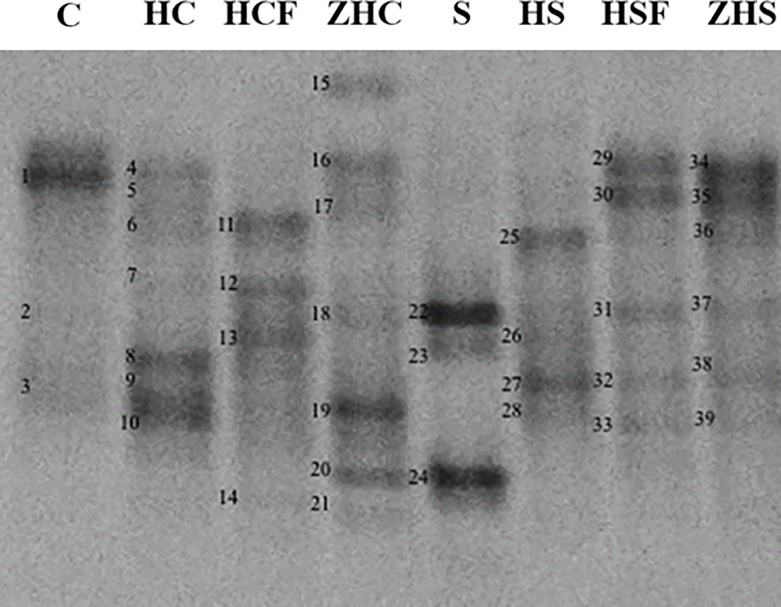
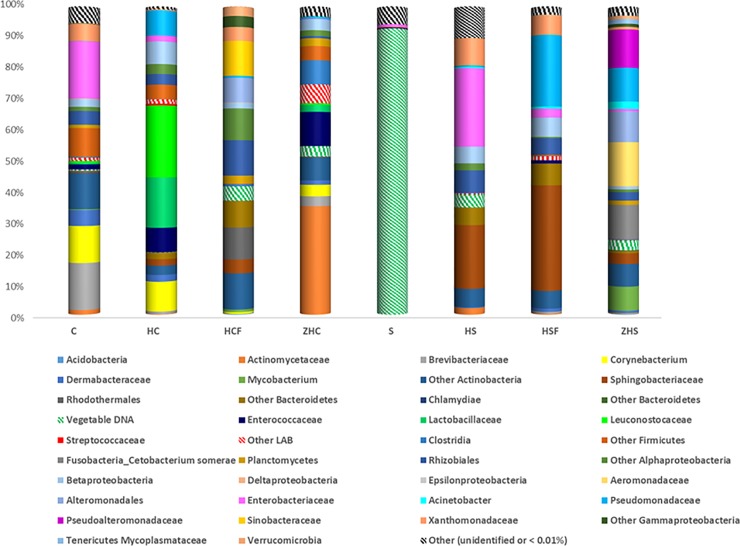
In the present research, bacterial diversity was studied during a 6-month feeding trial utilizing zebrafish (Danio rerio) fed Hermetia illucens reared on different substrates with an emphasis on fish gut bacterial diversity. A polyphasic approach based on viable counting, PCR-DGGE and metagenomic 16S rRNA gene amplicon target sequencing was applied. Two different H. illucens groups were reared on coffee by-products (C) or a mixture of vegetables (S). Viable counts showed a wide variability based on substrate. PCR-DGGE and Illumina sequencing allowed the major and minor bacterial taxa to be detected. Both samples of larvae and their frass reared on the S substrate showed the highest richness and evenness of bacterial communities, whereas zebrafish (ZHC) fed H. illucens reared on substrate C and zebrafish (ZHS) fed H. illucens reared on substrate S had the lowest bacterial richness and evenness. A stimulating effect of bioactive compounds from coffee by-products on the occurrence of Lactobacillaceae and Leuconostoccaceae in H. illucens reared on substrate C has been hypothesized. Zebrafish gut samples originating from the two feeding trials showed complex microbial patterns in which Actinobacteria and Alteromonadales were always detected, irrespective of the diet used. Enterobacteriaceae in fish guts were more abundant in ZHS than in ZHC, thus suggesting an influence of the bioactive compounds (chlorogenic and caffeic acids) in the substrate on Enterobacteriaceae in fish guts. ZHC showed a higher abundance of Clostridia than did ZHS, which was likely explained by stimulating activity on the bacteria in this class by the bioactive compounds contained in H. illucens reared on substrate C. An influence of the microbiota of H. illucens or insect-derived bioactive compounds on the gut microbiota of zebrafish has been suggested. The presence of bacteria consistently associated with zebrafish guts has been found irrespective of the diet, thus attesting to the likely stability of the core fish microbiota.
Conflict of interest statement
The authors have declared that no competing interests exist.
Figures
References
-
- Rumpold BA, Schlüter OK. Nutritional composition and safety aspects of edible insects. Molecul Nutr Food Res. 2013; 57: 802–823. - PubMed
-
- van Huis A, Van Itterbeeck J, Klunder H, Mertens E, Halloran A, Vantomme P. Edible insects: Future prospects for food and feed security. Rome: Food and Agriculture Organization of the United Nations. FAO Forestry Paper, FAO; 2013; 187 pp. Eds. http://www.fao.org/docrep/018/i3253e/i3253e14.pdf
-
- EFSA Scientific Committee, 2015. Scientific opinion on a risk profile related to production and consumption of insects as food and feed. EFSA J. 13(10) (4257), 60 10.2903/j.efsa.2015.4257 - DOI
MeSH terms
Substances
LinkOut - more resources
Full Text Sources
