Review
. 2019 Dec 9;36(6):582-596.
doi: 10.1016/j.ccell.2019.10.007.

Adenosine Metabolism: Emerging Concepts for Cancer Therapy

Affiliations
Review

Adenosine Metabolism: Emerging Concepts for Cancer Therapy

Detlev Boison et al. Cancer Cell. .

Abstract

Adenosine is a key metabolic and immune-checkpoint regulator implicated in the tumor escape from the host immune system. Major gaps in knowledge that impede the development of effective adenosine-based therapeutics include: (1) lack of consideration of redundant pathways controlling ATP and adenosine levels; (2) lack of distinction between receptor-dependent and -independent effects of adenosine, and (3) focus on extracellular adenosine without consideration of intracellular metabolism and compartmentalization. In light of current clinical trials, we provide an overview of adenosine metabolism and point out the need for a more careful evaluation of the entire purinome in emerging cancer therapies.

Keywords: adenosine; adenosine kinase; adenosine receptors; biochemistry; cancer; epigenetics; immune checkpoint; intracellular; metabolism; therapy.


Conflict of interest statement

Declaration of interests – The authors declare no competing interests.

Figures

Figure 1.
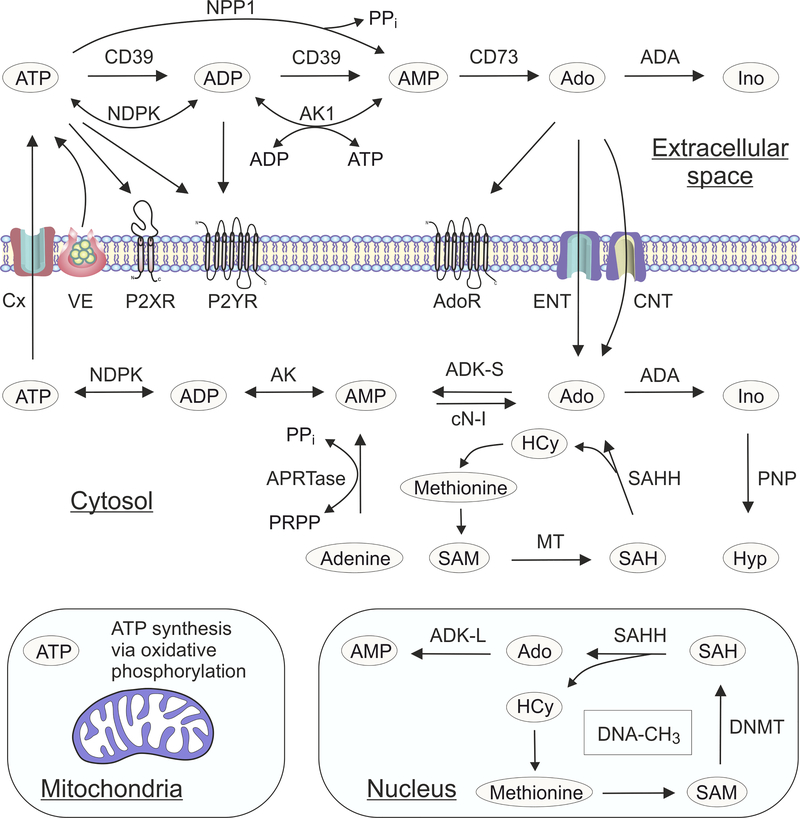
Figure 1.. Compartmentalization of adenosine biochemistry.
Extracellular purine turnover is comprised of the release of endogenous ATP upon cell damage or via non-lytic mechanisms of vesicular exocytosis (VE), connexin hemichannels (Cx) and other ion channels and transporters; the triggering of signaling events via nucleotide (P2XR and P2YR) and adenosine (AdoR) selective receptors; the metabolism of nucleotides and nucleosides; and the uptake of nucleotide-derived adenosine via equilibrative (ENT) and concentrative (CNT) nucleoside transporters. General schemes of adenosine producing and removing pathways have included a role for the enzymes nucleoside triphosphate diphosphohydrolase-1 (NTPDase1/CD39), nucleotide pyrophosphatase/ phosphodiesterase-1 (NPP1), ecto-5′-nucleotidase/CD73 and adenosine deaminase (ADA). In addition, counteracting adenylate kinase-1 (AK1) and nucleotide diphosphokinase (NDPK) activities contribute to the regeneration of extracellular ATP via reversible phosphotransfer reactions. Intracellular adenosine metabolism depends on the cytoplasmic form of adenosine kinase (ADK-S), and the enzymes ADA, cytosolic nucleotidase (cN-I), purine nucleoside phosphorylase (PNP), and adenine phosphoribosyl transferase (APRTase). S-Adenosylhomocysteine (SAH) can also be hydrolyzed to adenosine (Ado) and homocysteine (HCy) by SAH hydrolase (SAHH), while S-adenosylmethionine (SAM) serves as the donor of a methyl group in the transmethylation reactions catalyzed by methyltransferases (MT). Because mitochondria are the main source of ATP production, mitochondrial bioenergetics is tightly linked to adenosine homeostasis. In the cell nucleus adenosine is part of the transmethylation pathway, which adds methyl groups to DNA (DNA-CH3) with DNA methyltransferase (DNMT). The nuclear form of adenosine kinase (ADK-L) drives the flux of methyl groups through the pathway leading to increased DNA and histone methylation. For the sake of clarity only the most important enzymes are mentioned.
Figure 2.
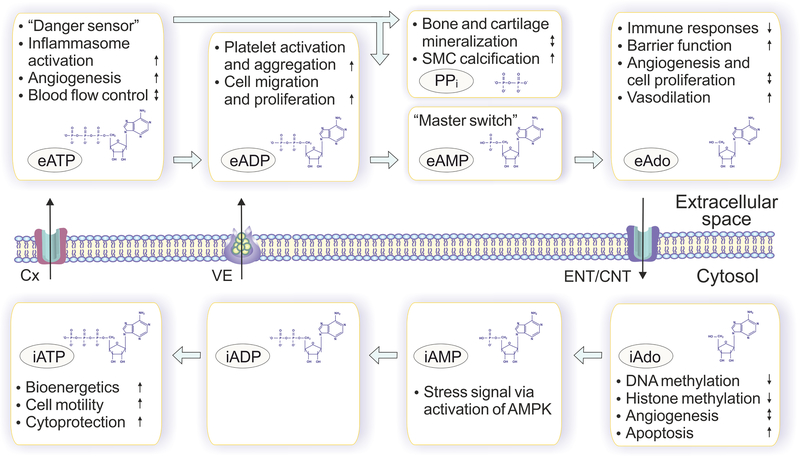
Figure 2.. Extracellular (e) and intracellular (i) mechanisms of action of ATP, adenosine and other purines.
Intracellular ATP (iATP) is primarily utilized to drive energy-requiring processes such as active transport, cell motility and biosynthesis, whereas extracellular ATP (eATP) and its dephosphorylated metabolites are powerful signaling molecules, which trigger diverse cell-specific responses both in autocrine and paracrine fashions. Extracellular ATP and ADP (eADP) generally act as pro-inflammatory and prothrombotic molecules, while adenosine has a non-redundant counteracting role in attenuating inflammation and tissue damage. As for extracellular AMP (eAMP), it primarily serves as a “master switch” metabolite that determines the balance between anti-inflammatory adenosine-producing and pro-inflammatory ATP-regenerating pathways. Yet another important by-product of ecto-nucleotidase reaction, PPi, can also mediate diverse physiological effects, particularly ensuring bone matrix mineralization and smooth muscle cell (SMC) calcification. Along with commonly accepted adenosine receptor-mediated pathways, adenosine mediates crucial biological effects via receptor-independent mechanisms based on intracellular biochemical pathways, which affect methylation reactions and related signaling pathways.
Figure 3.
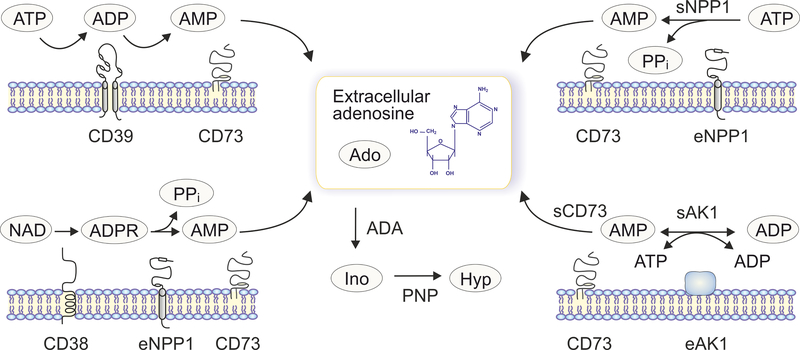
Figure 3.. Redundancy of ectoenzymatic pathways controlling extracellular adenosine.
Along with the “classical” ATP-inactivating/adenosine-producing chain mediated via stepwise CD39 and CD73 reactions (upper left), additional ectoenzymatic pathways can contribute to the generation of eADO. Those include the direct breakdown of ATP via AMP into adenosine through the NPP1-CD73 axis (upper right), adenylate kinase-1 (AK1) mediated transphosphorylation of ADP and subsequent hydrolysis of the generated AMP by CD73 (lower right), as well as an alternative adenosine-producing route from extracellular NAD via the CD38-NPP1-CD73 axis (lower left). Importantly, both soluble (“s”) and extracellular membrane-bound (“e”) enzymes can contribute to these adenosine-producing pathways. The extracellularly generated adenosine can be taken up by the cells or further converted into extracellular inosine (Ino) and hypoxanthine (Hyp) via sequential ADA and PNP reactions.
Figure 4.
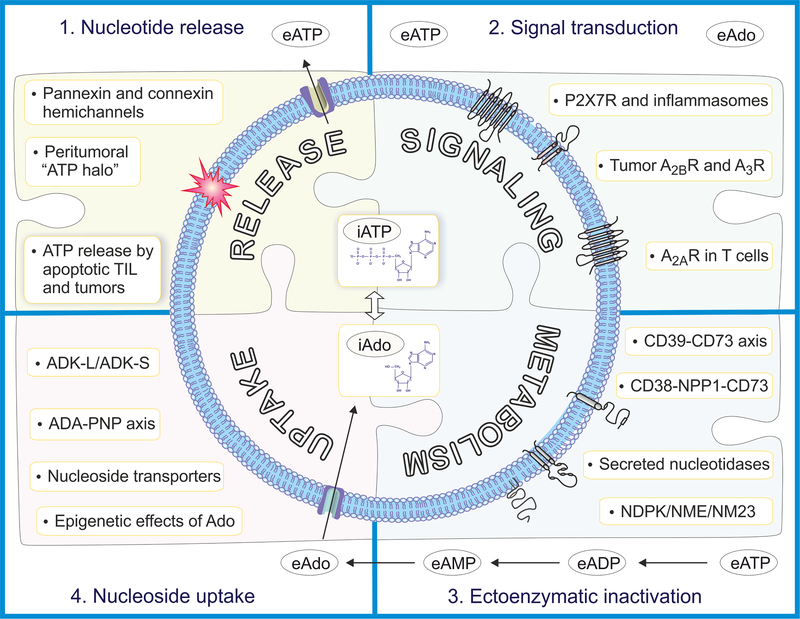
Figure 4.. Key components of cellular purine turnover: promising targets in anti-cancer therapy.
Possible targets for anti-cancer therapy fall into four categories: (1) ATP release by apoptotic tumor-infiltrating lymphocytes (TIL) and tumors as well as the release of ATP through pannexin and connexin hemichannels creates a peritumoral “ATP halo”, which is also a source for the production of adenosine via ectoenzymes. Therefore, targeting the release of ATP would constitute a rational approach for anti-cancer therapy. (2) Both ATP and adenosine feed into signaling pathways, thought to promote cancer growth and malignancy. Possible therapeutic targets are P2X7 receptors and inflammasomes, A2A receptors on T cells, and A2B and A3 receptors on tumors. (3) The extracellular metabolism of ATP into adenosine via the CD39-CD73 axis, the CD38-NPP1-CD73 axis, or the NDPK/NME/NM23 axis in conjunction with secreted nucleotidases is a well-established target system in cancer therapy. (4) Finally, the intracellular uptake of adenosine and its intracellular and intranuclear metabolism constitutes a novel frontier for cancer therapy. In particular, the epigenetic effects of adenosine determined by the ADK-L/ADK-S ratio, may offer the therapeutic opportunity to modify the epigenetic signature of cancer cells through epigenetic reprogramming by adenosine. The intracellular equilibrium also depends on its uptake via nucleoside transporters and metabolism via the ADA-PNP axis.

References

    1. Allard B, Longhi MS, Robson SC, and Stagg J (2017). The ectonucleotidases CD39 and CD73: Novel checkpoint inhibitor targets. Immunol Rev 276, 121–144. - PMC - PubMed
    1. Allard B, Turcotte M, Spring K, Pommey S, Royal I, and Stagg J (2014). Anti-CD73 therapy impairs tumor angiogenesis. Int J Cancer 134, 1466–1473. - PubMed
    1. Antonioli L, Blandizzi C, Pacher P, and Hasko G (2013). Immunity, inflammation and cancer: a leading role for adenosine. Nat Rev Cancer 13, 842–857. - PubMed
    1. Armstrong JM, Chen JF, Schwarzschild MA, Apasov S, Smith PT, Caldwell C, Chen P, Figler H, Sullivan G, Fink S, et al. (2001). Gene dose effect reveals no Gs-coupled A2A adenosine receptor reserve in murine T-lymphocytes: studies of cells from A2A-receptor-gene-deficient mice. Biochem J 354, 123–130. - PMC - PubMed
    1. Bastid J, Regairaz A, Bonnefoy N, Dejou C, Giustiniani J, Laheurte C, Cochaud S, Laprevotte E, Funck-Brentano E, Hemon P, et al. (2015). Inhibition of CD39 enzymatic function at the surface of tumor cells alleviates their immunosuppressive activity. Cancer Immunol Res 3, 254–265. - PubMed

Publication types

LinkOut - more resources