


Microparticles from aged packed red blood cell units stimulate pulmonary microthrombus formation via P-selectin
- PMID: 31821908
- PMCID: PMC7061313
- DOI: 10.1016/j.thromres.2019.11.028
Microparticles from aged packed red blood cell units stimulate pulmonary microthrombus formation via P-selectin
Abstract
Introduction: During storage, packed red blood cells undergo a series of physical, metabolic, and chemical changes collectively known as the red blood cell storage lesion. One key component of the red blood cell storage lesion is the accumulation of microparticles, which are submicron vesicles shed from erythrocytes as part of the aging process. Previous studies from our laboratory indicate that transfusion of these microparticles leads to lung injury, but the mechanism underlying this process is unknown. In the present study, we hypothesized that microparticles from aged packed red blood cell units induce pulmonary thrombosis.
Materials and methods: Leukoreduced, platelet-depleted, murine packed red blood cells (pRBCS) were prepared then stored for up to 14 days. Microparticles were isolated from stored units via high-speed centrifugation. Mice were transfused with microparticles. The presence of pulmonary microthrombi was determined with light microscopy, Martius Scarlet Blue, and thrombocyte stains. In additional studies microparticles were labelled with CFSE prior to injection. Murine lung endothelial cells were cultured and P-selectin concentrations determined by ELISA. In subsequent studies, P-selectin was inhibited by PSI-697 injection prior to transfusion.
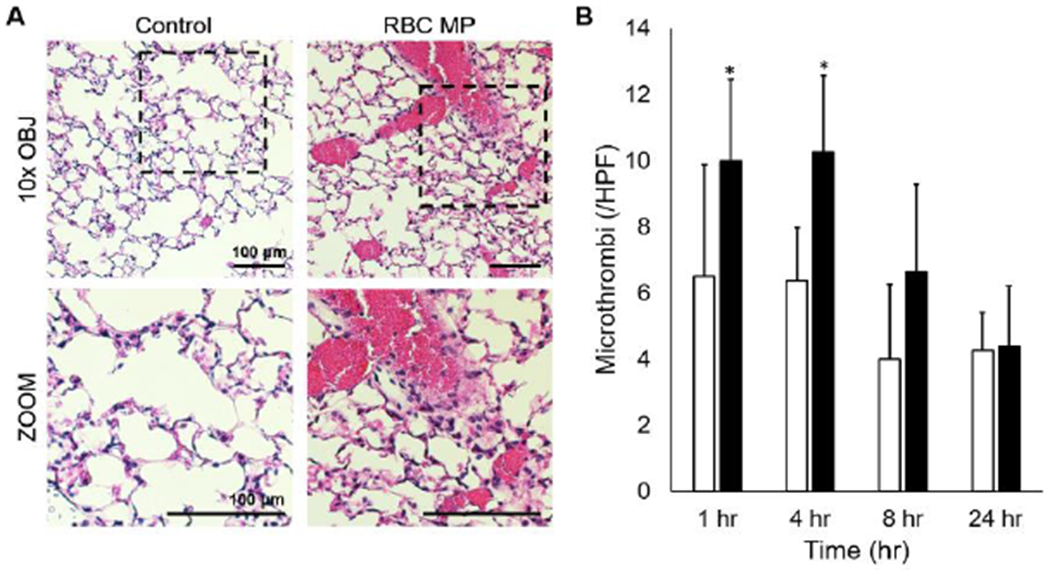
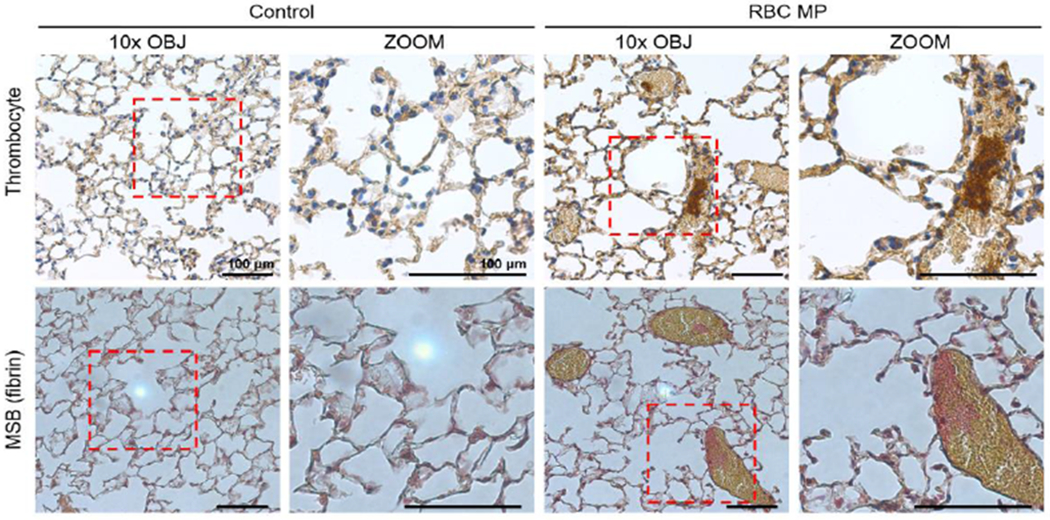
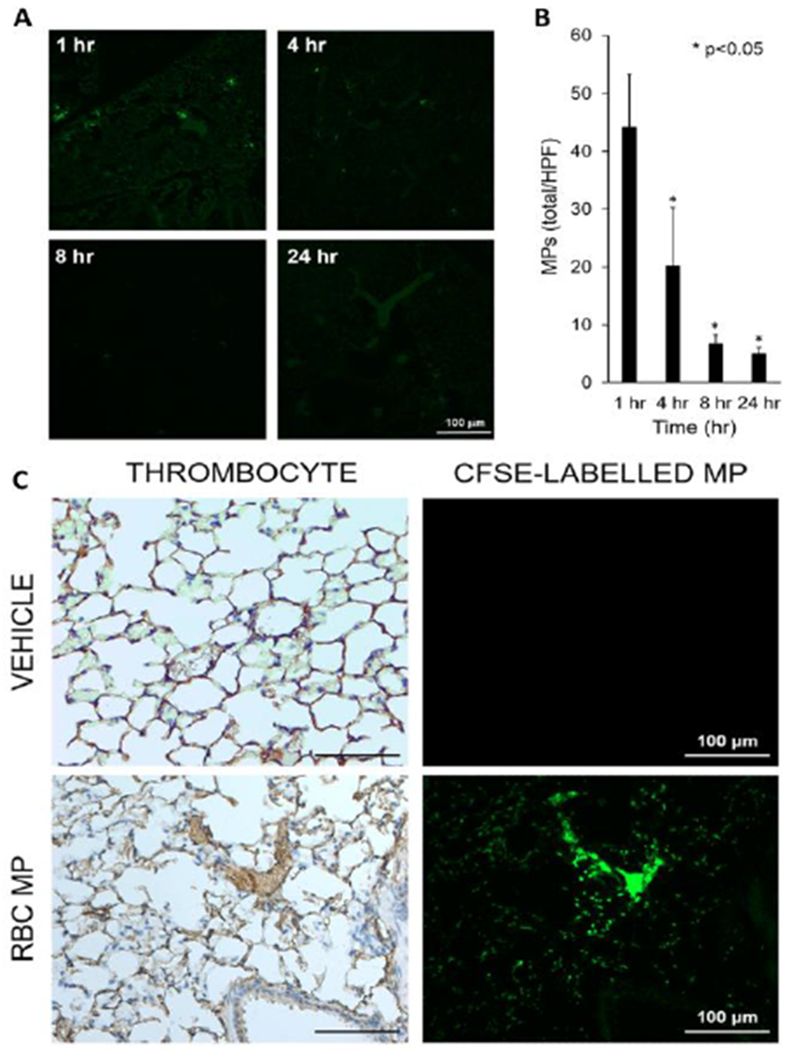
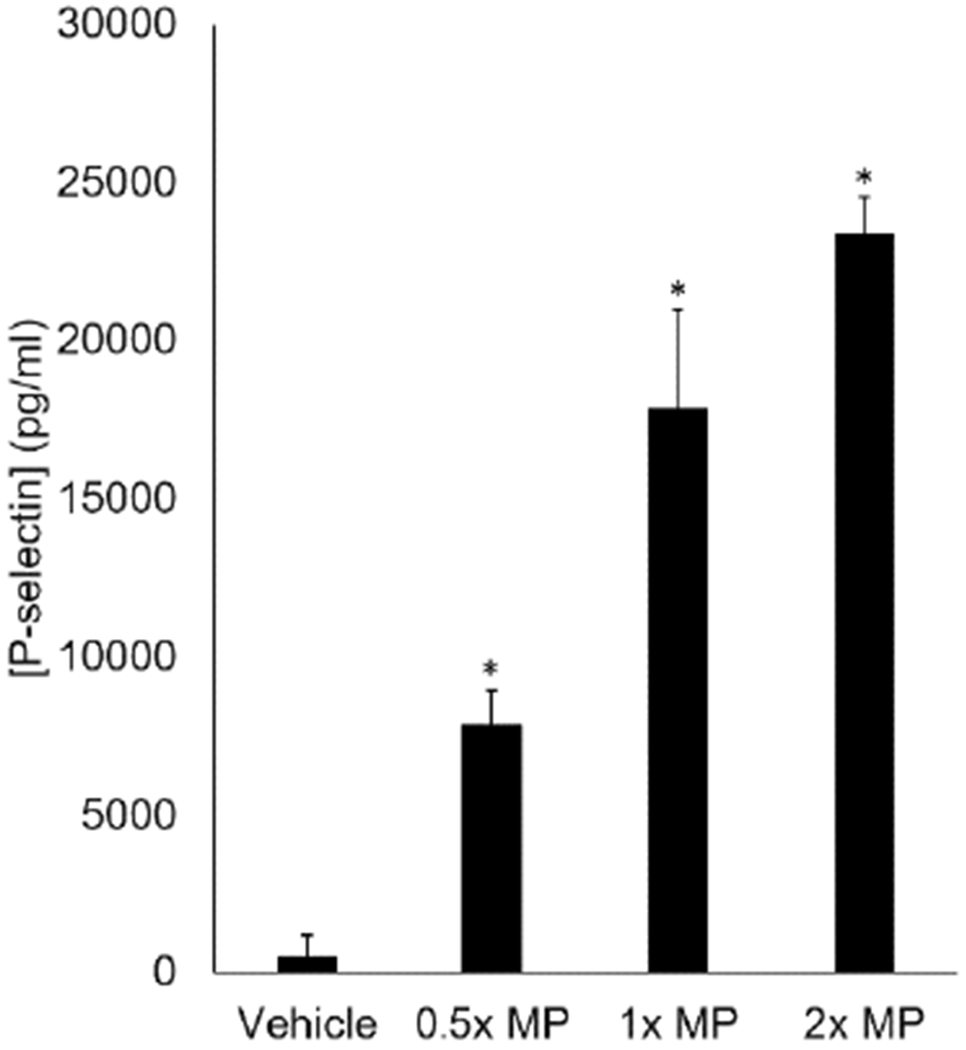
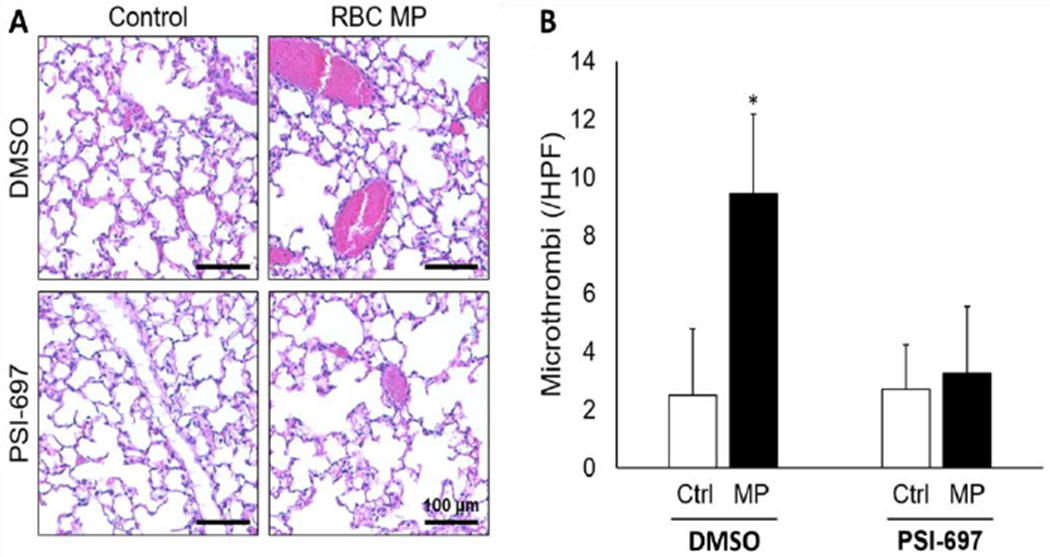
Results: We observed an increase in microthrombi formation in lung vasculature in mice receiving microparticles from stored packed red blood cell units as compared with controls. These microthrombi contained platelets, fibrin, and microparticles. Treatment of cultured lung endothelial cells with microparticles led to increased P-selectin in the media. Treatment of mice with a P-selectin inhibitor prior to microparticle infusion decreased microthrombi formation.
Conclusions: These data suggest that microparticles isolated from aged packed red blood cell units promote the development of pulmonary microthrombi in a murine model of transfusion. This pro-thrombotic event appears to be mediated by P-selectin.
Keywords: Endothelial activation; P-selectin; Pulmonary thrombus; RBC microparticles.
Copyright © 2019 Elsevier Ltd. All rights reserved.
Conflict of interest statement
Figures
References
-
- Rhee P, Joseph B, Pandit V, et al. Increasing trauma deaths in the United States. Ann Surg. 2014;260(1):13–21. - PubMed
-
- Evans JA, van Wessem KJ, McDougall D, Lee KA, Lyons T, Balogh ZJ. Epidemiology of traumatic deaths: comprehensive population-based assessment. World J Surg. 2010;34(1):158–163. - PubMed
-
- Kauvar DS, Lefering R, Wade CE. Impact of hemorrhage on trauma outcome: an overview of epidemiology, clinical presentations, and therapeutic considerations. J Trauma. 2006;60(6 Suppl):S3–11. - PubMed
-
- Sauaia A, Moore FA, Moore EE, et al. Epidemiology of trauma deaths: a reassessment. J Trauma. 1995;38(2):185–193. - PubMed
Publication types
MeSH terms
Substances
Grants and funding
LinkOut - more resources
Full Text Sources
Medical
