


Malnutrition is common in children with cerebral palsy in Saudi Arabia - a cross-sectional clinical observational study
- PMID: 31823743
- PMCID: PMC6905047
- DOI: 10.1186/s12883-019-1553-6
Malnutrition is common in children with cerebral palsy in Saudi Arabia - a cross-sectional clinical observational study
Abstract
Background: Cerebral palsy (CP) is considered as the main cause of severe physical impairment and malnutrition in children. This cross-sectional study intended to survey the nutritional status of children cerebral palsy in Riyadh, Saudi Arabia.
Methods: We examined 74 children (age: 1-10 yrs) with CP, who attended Sultan Bin Abdulaziz Humanitarian City (SBAHC), Riyadh Saudi Arabia. Data on age, general demographics, nutritional status, and dietary intake were collected. A child was considered underweight, wasted, stunted or thin if the standard deviation scores for his/her weight for age, weight for height, height for age and body mass index for age were ≤ -2.0 standard deviation (SD) using WHO growth standards. Multivariable logistic regression identified the factors associated with nutritional indicators.
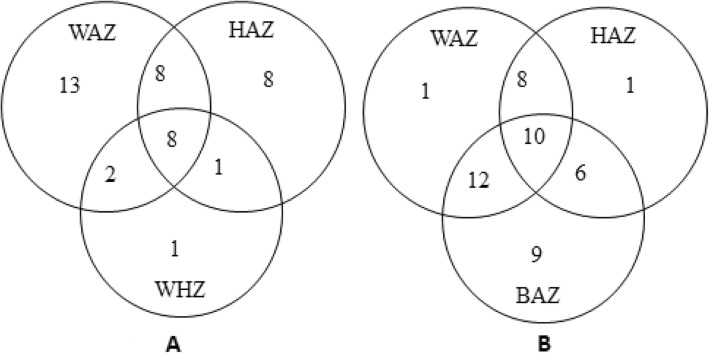
Results: More than half (56.4%) of the children with cerebral palsy were malnourished as they had z-score below <-2 SD in at least one of the four indicators. Thinness (50%) was the most common form of malnutrition, followed by underweight, stunting, and wasting. Arm anthropometrics gave similar results on the percent number of malnourished children. Factors that were independently associated with malnutrition with an adjusted OR (aOR) were as follow: age ≤ 5 yrs. (aOR: 4.29); presence of cognitive impairment (aOR: 4.13); presence of anemia (aOR: 3.41) and inadequate energy intake (aOR: 4.86) (p, for all trends <0.05).
Conclusion: Children with cerebral palsy of the current study have impaired growth and nutritional status as assessed by all four common nutritional status indicators. Further large-scale community-based studies for in-depth evaluation of nutritional status and growth patterns in children with CP are needed.
Keywords: Cerebral palsy; Dietary intake; Growth; Nutritional status; Saudi Arabia.
Conflict of interest statement
The authors declare that they have no competing interests.
Figures
References
-
- Shetty T, Parab S, Ganesan S, Agarwal B, Mullerpatan R. Lower extremity muscle strength and endurance in ambulatory children with cerebral palsy. Crit Rev Phys Rehab Med. 2019;31(1):1. doi: 10.1615/CritRevPhysRehabilMed.2019030243. - DOI
-
- Levitt S, Addison A. Treatment of cerebral palsy and motor delay. Wiley-Blackwell. 2018.
Publication types
MeSH terms
Grants and funding
LinkOut - more resources
Full Text Sources
Medical
Miscellaneous
