


Lessons learned from engaging communities for Ebola vaccine trials in Sierra Leone: reciprocity, relatability, relationships and respect (the four R's)
- PMID: 31829223
- PMCID: PMC6907283
- DOI: 10.1186/s12889-019-7978-4
Lessons learned from engaging communities for Ebola vaccine trials in Sierra Leone: reciprocity, relatability, relationships and respect (the four R's)
Abstract
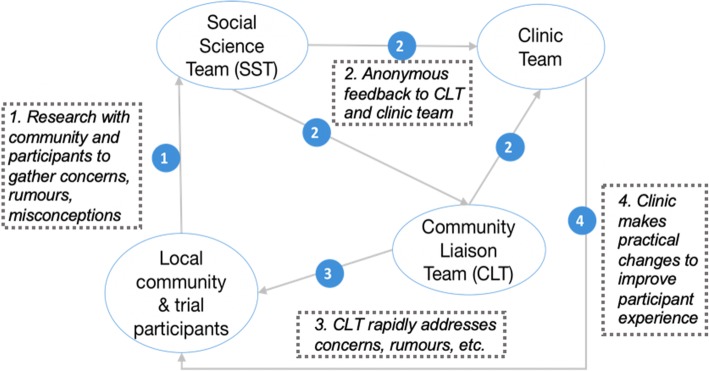
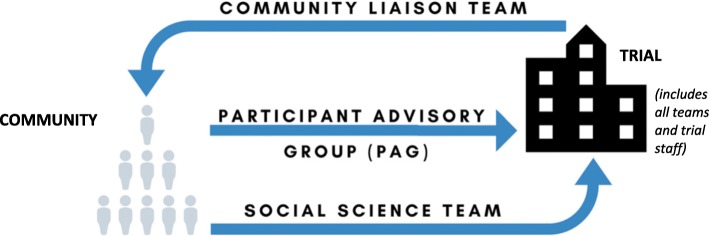
Background: Building trust and engaging the community are important for biomedical trials. This was core to the set up and delivery of the EBOVAC-Salone and PREVAC Ebola vaccine trials in Sierra Leone during and following the 2014-2016 West African Ebola epidemic. Local community liaison teams (CLT) engaged with the community through public meetings, radio chat shows, and other activities, while a social science team (SST) assessed community members' and participants' perceptions and regularly updated the clinical team to adapt procedures to improve the acceptability and compliance of the trial. The objective of this study was to examine the community engagement (CE) program in these trials and to identify potential barriers and facilitators.
Methods: Fifteen CLT and SST members participated in in-depth interviews and 23 community members attended three focus groups to discuss the Ebola vaccine trials and their experiences and perspectives of the CE activities.
Results: A key aim of the CE program was to build trust between the community and the trial. Four main principles (the "four R's") evolved from the discussions with team members and the community that influenced this trust: reciprocity, relatability, relationships and respect. The CLT and SST ensured reciprocal communication between the trial team and the community. The CLT delivered key messages from the trial, whilst the SST completed ethnographic research in the field to uncover rumors and perceptions of the trial in the community. These ethnographic findings were shared with the CLT and addressed in targeted messaging to the community. Both the CLT and SST approached the communities in an egalitarian manner, by dressing modestly, speaking local dialects, and using relatable examples. Appreciation and understanding of the importance of interpersonal relationships and respect for the people, their customs, and traditions also played a large role in the CE program.
Conclusion: These findings provide an in-depth understanding of how interdisciplinary community liaison and social science teams can work with a clinical team to strengthen trust. The four R's suggest the ways in which trust relations are central to CE and confidence in vaccine trials, and could offer an approach to CE in vaccine trials.
Keywords: Community engagement; Disease preparedness; Ebola; Sierra Leone; Vaccine trials.
Conflict of interest statement
The authors declare that they have no competing interests.
Figures
References
MeSH terms
Substances
LinkOut - more resources
Full Text Sources
Medical
