


Impact of Different Sampling Schemes for Decision Making in Soil-Transmitted Helminthiasis Control Programs
- PMID: 31829425
- PMCID: PMC7289558
- DOI: 10.1093/infdis/jiz535
Impact of Different Sampling Schemes for Decision Making in Soil-Transmitted Helminthiasis Control Programs
Abstract
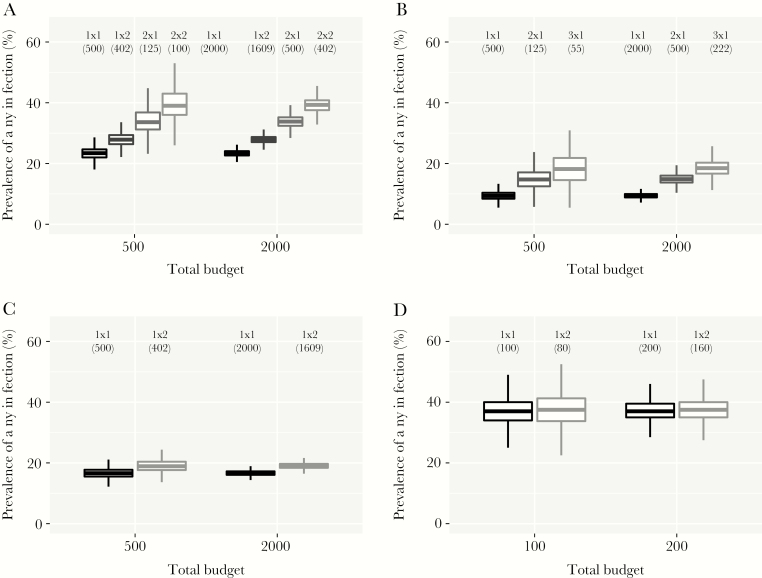
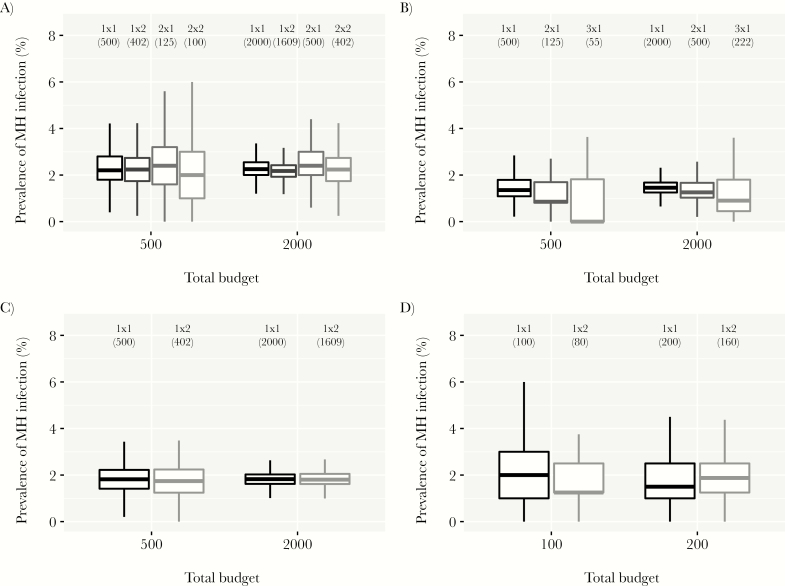
Starting and stopping preventive chemotherapy (PC) for soil-transmitted helminthiasis is typically based on the prevalence of infection as measured by Kato-Katz (KK) fecal smears. Kato-Katz-based egg counts can vary highly over repeated stool samples and smears. Consequentially, the sensitivity of KK-based surveys depends on the number of stool samples per person and the number of smears per sample. Given finite resources, collecting multiple samples and/or smears means screening fewer individuals, thereby lowering the statistical precision of prevalence estimates. Using population-level data from various epidemiological settings, we assessed the performance of different sampling schemes executed within the confines of the same budget. We recommend the use of single-slide KK for determining prevalence of moderate-to-heavy intensity infection and policy decisions for starting and continuing PC; more sensitive sampling schemes may be required for policy decisions involving stopping PC. Our findings highlight that guidelines should include specific guidance on sampling schemes.
Keywords: Kato-Katz; fecal egg counts; moderate-to-heavy infection; prevalence; soil-transmitted helminths.
© The Author(s) 2019. Published by Oxford University Press for the Infectious Diseases Society of America.
Figures
References
-
- World Health Organization. Preventive chemotherapy in human helminthiasis. Coordinated use of anthelminthic drugs in control interventions: a manual for health professionals and programme managers 2006. Available at: https://apps.who.int/iris/handle/10665/43545. Accessed 20 July 2017.
-
- World Health Organization. Helminth control in school-age children: a guide for managers of control programmes 2011. Available at: https://www.who.int/neglected_diseases/resources/9789241548267/en/. Accessed 18 July 2019.
-
- World Health Organization. Preventive chemotherapy to control soil-transmitted helminth infections in at-risk population groups 2017. Available at: https://www.who.int/nutrition/publications/guidelines/deworming/en/. Accessed 17 February 2018.
-
- Levecke B, Brooker SJ, Knopp S, et al. . Effect of sampling and diagnostic effort on the assessment of schistosomiasis and soil-transmitted helminthiasis and drug efficacy: a meta-analysis of six drug efficacy trials and one epidemiological survey. Parasitology 2014; 141:1826–40. - PubMed
Publication types
MeSH terms
Substances
Grants and funding
LinkOut - more resources
Full Text Sources
