. 2020 Jan 16;5(1):e131491.
doi: 10.1172/jci.insight.131491.

Structure-function relationships of HDL in diabetes and coronary heart disease

Affiliations

Structure-function relationships of HDL in diabetes and coronary heart disease

Mathias Cardner et al. JCI Insight. .

Abstract

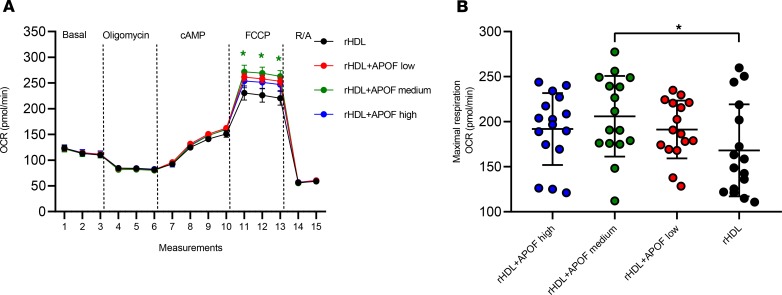
High-density lipoproteins (HDL) contain hundreds of lipid species and proteins and exert many potentially vasoprotective and antidiabetogenic activities on cells. To resolve structure-function-disease relationships of HDL, we characterized HDL of 51 healthy subjects and 98 patients with diabetes (T2DM), coronary heart disease (CHD), or both for protein and lipid composition, as well as functionality in 5 cell types. The integration of 40 clinical characteristics, 34 nuclear magnetic resonance (NMR) features, 182 proteins, 227 lipid species, and 12 functional read-outs by high-dimensional statistical modeling revealed, first, that CHD and T2DM are associated with different changes of HDL in size distribution, protein and lipid composition, and function. Second, different cellular functions of HDL are weakly correlated with each other and determined by different structural components. Cholesterol efflux capacity (CEC) was no proxy of other functions. Third, 3 potentially novel determinants of HDL function were identified and validated by the use of artificially reconstituted HDL, namely the sphingadienine-based sphingomyelin SM 42:3 and glycosylphosphatidylinositol-phospholipase D1 for the ability of HDL to inhibit starvation-induced apoptosis of human aortic endothelial cells and apolipoprotein F for the ability of HDL to promote maximal respiration of brown adipocytes.

Keywords: Atherosclerosis; Cardiology; Diabetes; Lipoproteins; Metabolism.


Conflict of interest statement

Conflict of interest: UL declares the receipt of modest speaker or advisory honorary from Amgen, Sanofi, Medicines Company, and Novartis, as well as research grants from Amgen and Bayer.

Figures

Figure 1
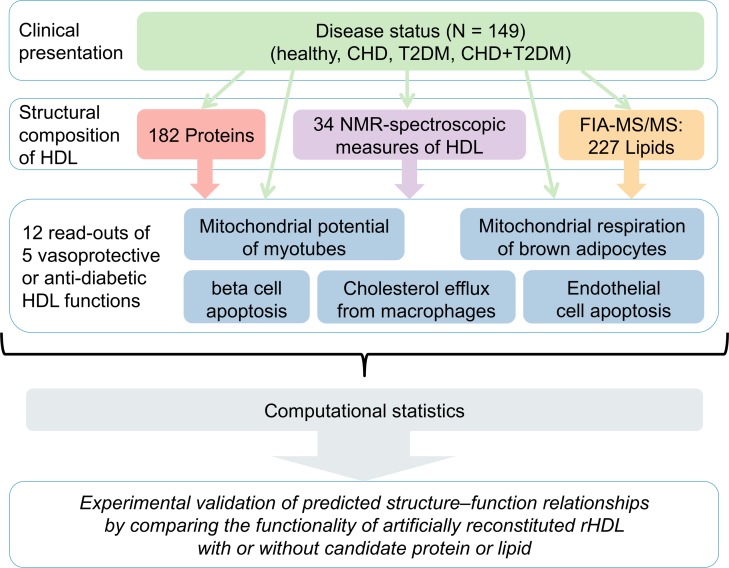
Figure 1. Scheme summarizing the strategy and workflow toward a probabilistic graphical model integrating disease status with structure of HDL and cellular responses to HDL.
FIA-MS/MS, flow injection analysis–tandem mass spectrometry.
Figure 2
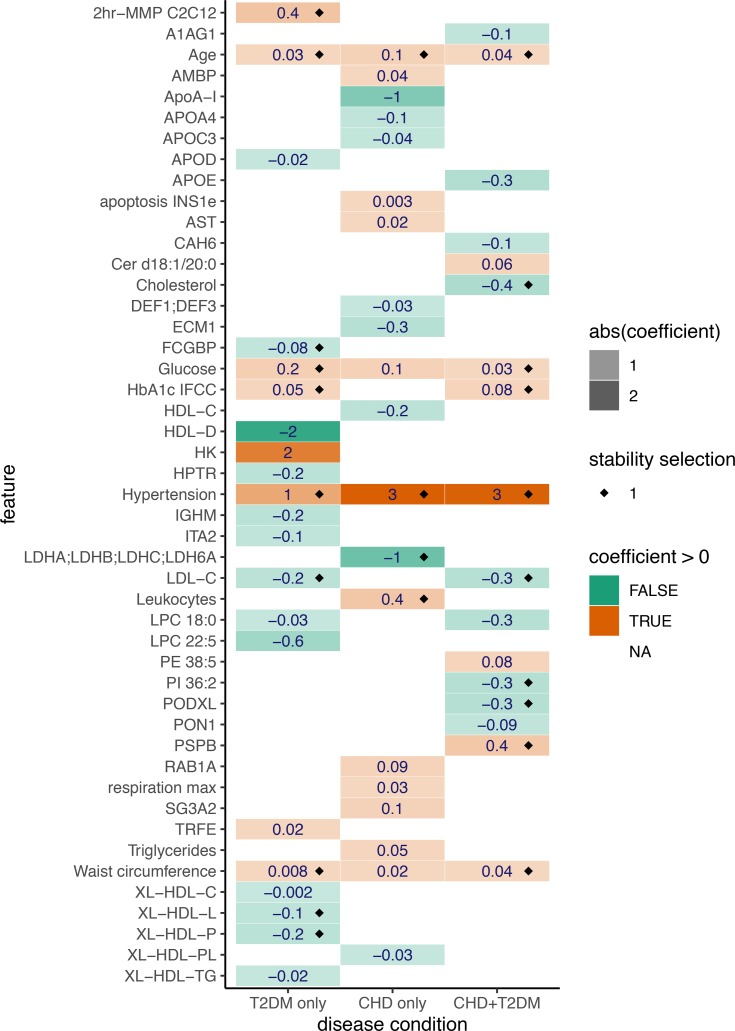
Figure 2. Logistic regressions of disease conditions as explained by clinical covariates, as well as functional and structural features of HDL.
Colors indicate the signs of the printed regression coefficients estimated using elastic net regularization. The color intensity reflects the absolute value (magnitude) of a given regression coefficient. White cells correspond to coefficients estimated as zero due to regularization. Diamonds indicate features chosen by stability selection, with fewer than 2 expected false selections per disease condition.
Figure 3
Figure 3. Multivariate analysis of disease status and HDL function regressed on HDL structure and subclasses using sparse partial least squares, adjusted for clinical covariates.
The heat map shows the regression coefficients for features (rows) with respect to responses (columns), and the color gradient indicates the magnitude and sign of each coefficient. All features were standardized to have mean zero and variance 1, and the regression coefficients should be interpreted in a relative rather than an absolute sense. White cells correspond to coefficients, which — due to sparsity constraints — are estimated as zero. Rows and columns are clustered based on correlation distance, thereby indicating similarity of regression coefficient profiles. The color code left of the heatmap indicates the data source of each feature.
Figure 4
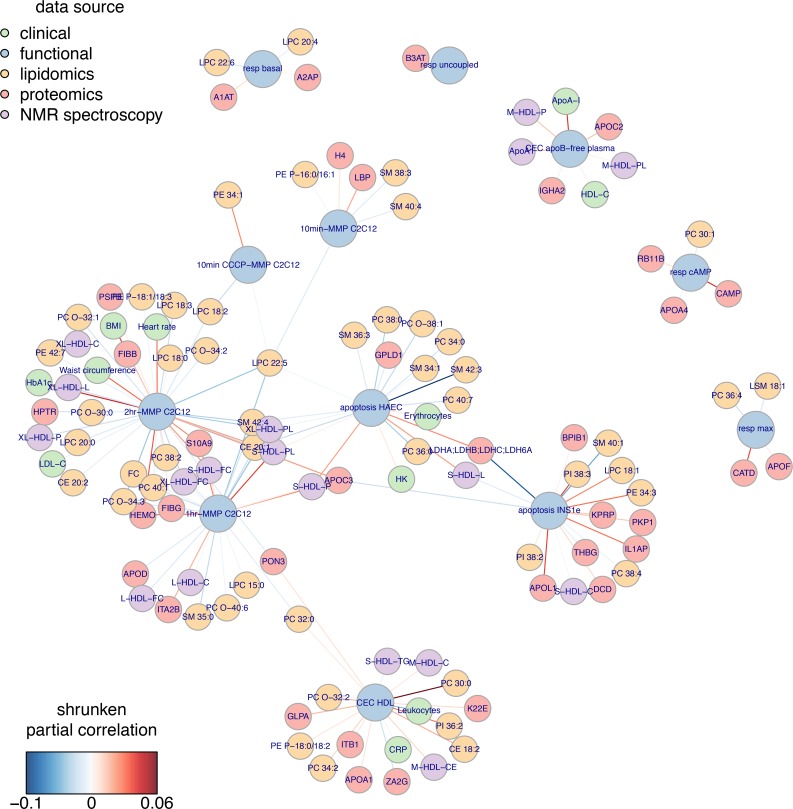
Figure 4. Gaussian graphical model estimating conditional dependencies between HDL function, structure, and subclasses, adjusted for clinical covariates.
For legibility, we show only the bipartite subgraph connecting HDL functions to other features. Edges (lines) indicate partial correlations between HDL functions (blue) and proteins (red), lipid species (orange), and abundance of HDL subclasses (violet). Clinical features (green) are included to adjust for potential confounding. The gradient edge color indicates whether the corresponding partial correlation is positive (red) or negative (blue).
Figure 5
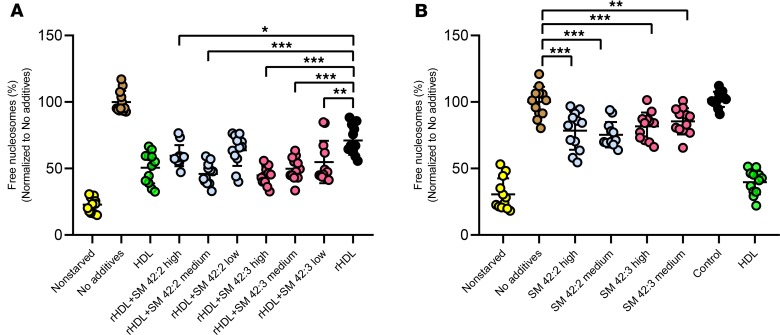
Figure 5. Sphingomyelins SM 42:2 and SM 42:3 decrease apoptosis in human aortic endothelial cells (HAECs).
(A) Reconstituted HDL (rHDL) contain 3 different concentrations of SM 42:2 or SM 42:3, which correspond to the lowest, median, and highest concentration relative to phosphatidylcholine in native HDL. HAECs were starved in the absence or presence of ± 20 μg/mL rHDL for 16 hours. Apoptosis was recorded by using the free nucleosome assay. (B) SM 42:2 and SM 42:3 were reconstituted into unilamellar vesicles with 2 different concentrations. HAECs were starved in absence and presence of unilamellar vesicle ± SM 42:2 or SM 42:3 for 16 hours, and apoptosis was recorded by free nucleosome assay. Data are presented as mean ± SD of 3 independent experiments, each with 4 replicates, and were analyzed by 1-way ANOVA coupled with Dunnett’s test for multiple comparisons against rHDL and no additives. ***P < 0.001; **P < 0.01; *P < 0.05.
Figure 6
Figure 6. HDL-associated glycosylphosphatidyl-inositol specific phospholipase D1 (GPLD1) decreases apoptosis in human aortic endothelial cells (HAECs).
(A) Reconstituted HDL (rHDL) were made with 3 different concentrations of GPLD1, reflecting the lowest, median, and highest concentration relative to apolipoprotein A-I (apoA-I) encountered in native HDL. HAECs were starved in the absence or presence of 20 μg/mL rHDL. Data represent mean ± SD of 3 independent experiments, each with 4 replicates, and were analyzed by 1-way ANOVA coupled with Dunnett’s test for multiple comparisons against rHDL. (B) HAECs were starved in the absence or presence of 20 μg/mL rHDL ± GPLD1 or 200 ng/mL free GPLD1 for 16 hours. (C) A total of 25 μg/mL native HDL or rHDL ± GPLD1 were preincubated with 1 μg/mL IgG or anti-GPLD1 antibody. Cells were starved with HDL or rHDL ± antibodies for 16 hours. Apoptosis was recorded by free nucleosome assay. (B and C) Data represent mean ± SD of 3 independent experiments, each with 4 replicates, and were analyzed by 1-way ANOVA coupled with Tukey’s test for multiple comparisons. ***P < 0.001; **P < 0.01; *P < 0.05.
Figure 7
Figure 7. Apolipoprotein F (apoF) increases maximal respiration of human multipotent adipose–derived stem (hMADS) cells.
Reconstituted HDL (rHDL) were prepared with 3 different concentrations of apoF, reflecting the lowest, medium, and highest concentration relative to apoA-I encountered in native HDL. (A and B) Oxygen consumption rate curves (A) and maximal mitochondrial respiration (B) in brown hMADS cells. Data represent mean ± SD of 3 independent experiments, each with 4 replicates, and were analyzed by 1-way ANOVA coupled with Dunnett’s test for multiple comparisons against rHDL. *P < 0.05.

Similar articles

Cited by

References

    1. Holmes MV, Ala-Korpela M, Smith GD. Mendelian randomization in cardiometabolic disease: challenges in evaluating causality. Nat Rev Cardiol. 2017;14(10):577–590. doi: 10.1038/nrcardio.2017.78. - DOI - PMC - PubMed
    1. März W, et al. HDL cholesterol: reappraisal of its clinical relevance. Clin Res Cardiol. 2017;106(9):663–675. doi: 10.1007/s00392-017-1106-1. - DOI - PMC - PubMed
    1. Annema W, von Eckardstein A. High-density lipoproteins. Multifunctional but vulnerable protections from atherosclerosis. Circ J. 2013;77(10):2432–2448. doi: 10.1253/circj.CJ-13-1025. - DOI - PubMed
    1. von Eckardstein A, Widmann C. High-density lipoprotein, beta cells, and diabetes. Cardiovasc Res. 2014;103(3):384–394. doi: 10.1093/cvr/cvu143. - DOI - PubMed
    1. Tall AR, Rader DJ. Trials and Tribulations of CETP Inhibitors. Circ Res. 2018;122(1):106–112. doi: 10.1161/CIRCRESAHA.117.311978. - DOI - PMC - PubMed

Publication types