Cutaneous leishmaniasis in Syria: A review of available data during the war years: 2011-2018
- PMID: 31830034
- PMCID: PMC6907761
- DOI: 10.1371/journal.pntd.0007827
Cutaneous leishmaniasis in Syria: A review of available data during the war years: 2011-2018
Abstract
Background: Cutaneous leishmaniasis (CL) has historically been reported from Syria. Since 2011, the country has been affected by a war, which has impacted health and health services. Over the same period, an increase in the number of cases of CL has been reported from several areas across the country and by a number of authors. This study aims to provide the first quantitative evidence of the epidemiological evolution of CL in Syria during the war.
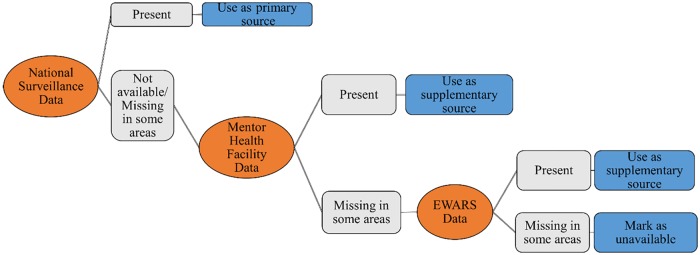
Materials and methods: Data on number of CL cases for the period 2011-2018 were extracted from three different surveillance systems: the Ministry of Health (MoH) routine surveillance system, the MoH/WHO sentinel-syndromic Early Warning Alert and Response System (EWARS), and surveillance data collected by the international nongovernmental organization (NGO) the MENTOR Initiative. Data were cleaned and merged to generate the best possible estimates on number of CL cases; incidence of CL was also calculated based on data on resident population. Data reported from the years preceding the conflict (2007-2010) were also added to the analysis for comparative purposes.
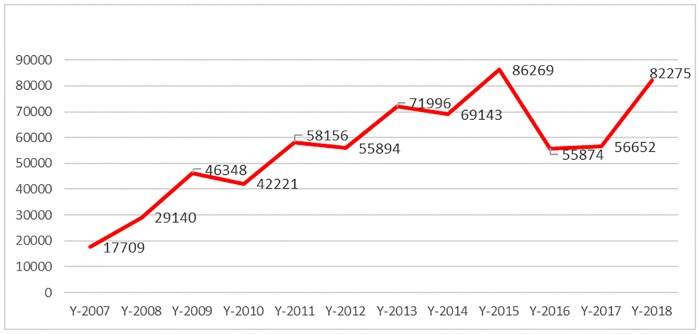
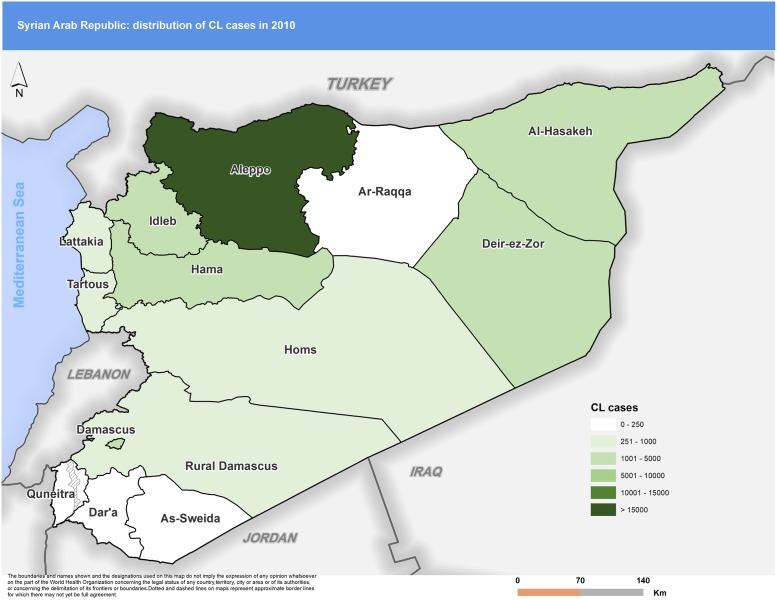
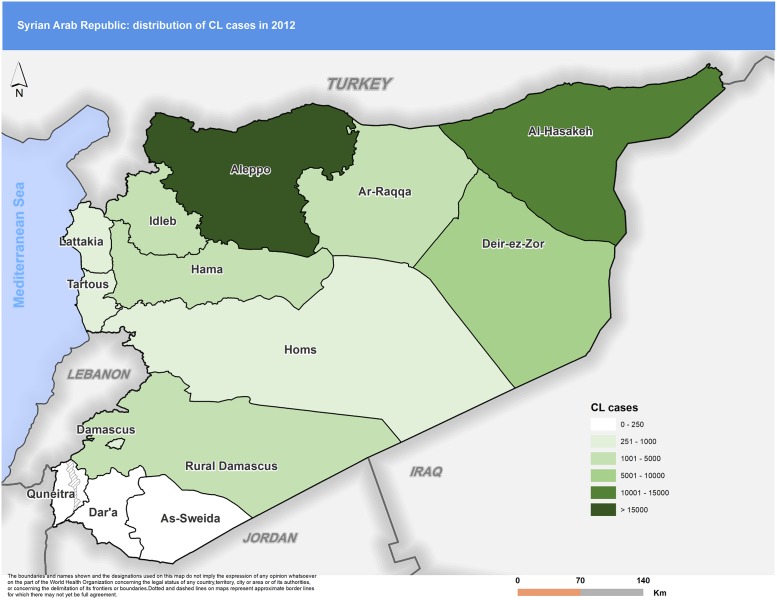
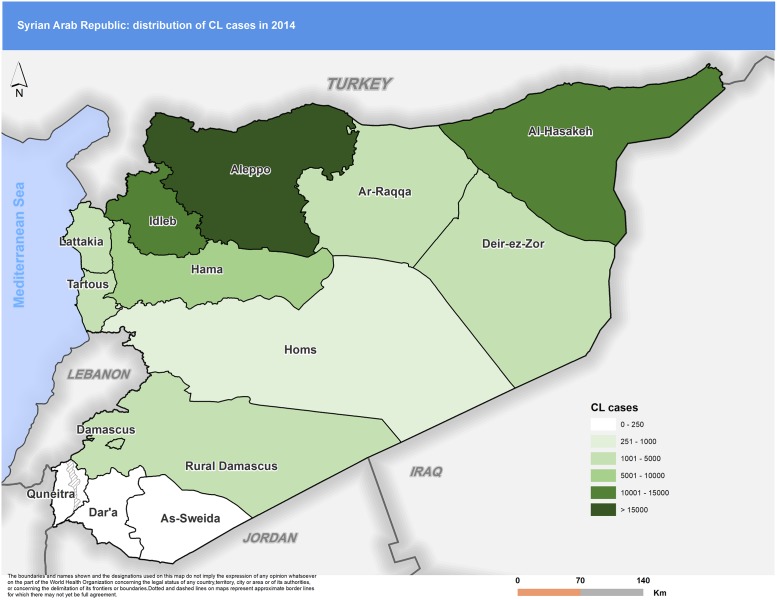
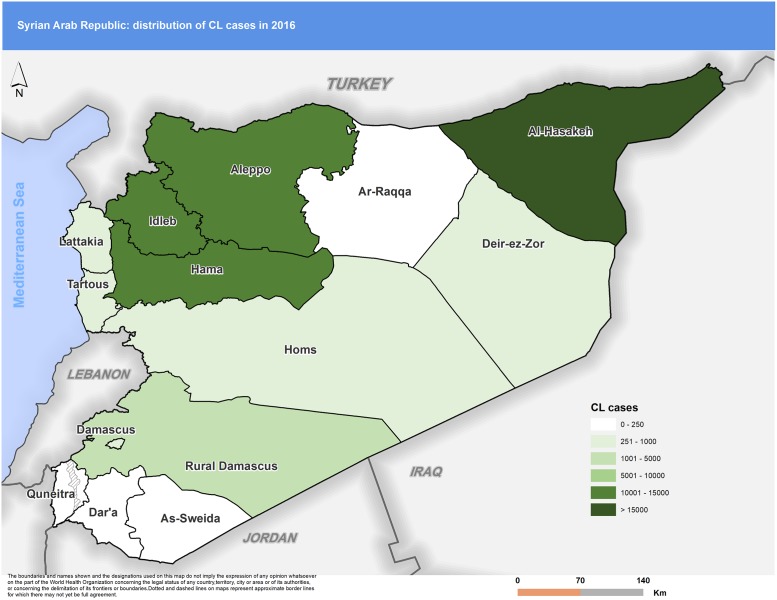
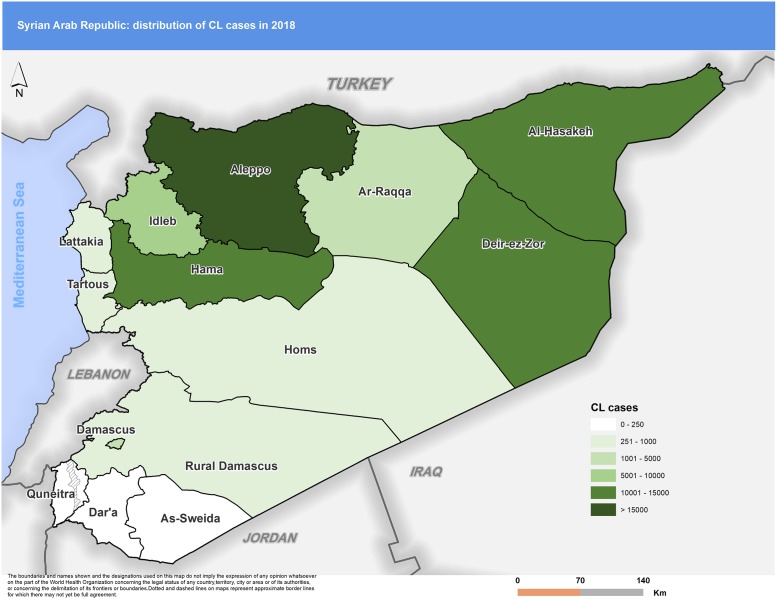
Results: The analysis of data from the three available sources over the period considered indicates that number of reported cases progressively grew from prewar levels to reach a peak in 2015, decreased in 2016, remained stable in 2017, and increased again in 2018. Such a trend was mirrored by changes in incidence of infection. Some governorates, which used to report low numbers of CL cases, started recording higher number of cases after the onset of the war.
Conclusion: The war coincided with a major rise in reported number of CL cases and incidence of infection, although an increasing trend was already appreciable before its onset.
Conflict of interest statement
The authors have declared that no competing interests exist.
Figures
References
-
- Russell A. The natural history of Aleppo, and parts adjacent. Containing a description of the city, and the principal natural productions in its neighbourhood; together with an account of the climate, inhabitants, and diseases; particularly of the plague, with methods used by the Europeans for their preservation. By Alex. Russell, M.D. London: Printed for A. Millar, in the Strand; 1756.
-
- Rioux JA, Dereure J, Khiami A, Pratlong F, Sirdar K, Lambert M. Eco-epidemiology of leishmaniases in Syria. 1. Infection of Psammomys obesus Cretzschmar (Rodentia-Gerbillidae) with Leishmania major Yakimoff and Schokhor (Kinetoplastida-Trypanosomatidae). Ann Parasitol Hum Comp 1990; 65(5–6): 203–07. 10.1051/parasite/1990655203 - DOI - PubMed
Publication types
MeSH terms
Grants and funding
LinkOut - more resources
Full Text Sources
Other Literature Sources