. 2020 Jan 16;27(1):47-56.e15.
doi: 10.1016/j.chembiol.2019.11.006. Epub 2019 Dec 9.

Degradation of Polycomb Repressive Complex 2 with an EED-Targeted Bivalent Chemical Degrader

Affiliations

Degradation of Polycomb Repressive Complex 2 with an EED-Targeted Bivalent Chemical Degrader

Frances Potjewyd et al. Cell Chem Biol. .

Abstract

Protein degradation via the use of bivalent chemical degraders provides an alternative strategy to block protein function and assess the biological roles of putative drug targets. This approach capitalizes on the advantages of small-molecule inhibitors while moving beyond the restrictions of traditional pharmacology. Here, we report a chemical degrader (UNC6852) that targets polycomb repressive complex 2 (PRC2). UNC6852 contains an EED226-derived ligand and a ligand for VHL which bind to the WD40 aromatic cage of EED and CRL2VHL, respectively, to induce proteasomal degradation of PRC2 components, EED, EZH2, and SUZ12. Degradation of PRC2 with UNC6852 blocks the histone methyltransferase activity of EZH2, decreasing H3K27me3 levels in HeLa cells and diffuse large B cell lymphoma (DLBCL) cells containing EZH2 gain-of-function mutations. UNC6852 degrades both wild-type and mutant EZH2, and additionally displays anti-proliferative effects in this cancer model system.

Keywords: Proteolysis-Targeting Chimera (PROTAC); bivalent chemical degrader; diffuse large B cell lymphoma (DLBCL); embryonic ectoderm development (EED); enhancer of zeste homolog 2 (EZH2); histone methyltransferase (HMT); polycomb repressive complex 2 (PRC2); suppressor of zeste homolog 12 (SUZ12); von Hippel-Lindau (VHL).


Conflict of interest statement

DECLARATION OF INTERESTS

The authors declare no competing interests.

Figures
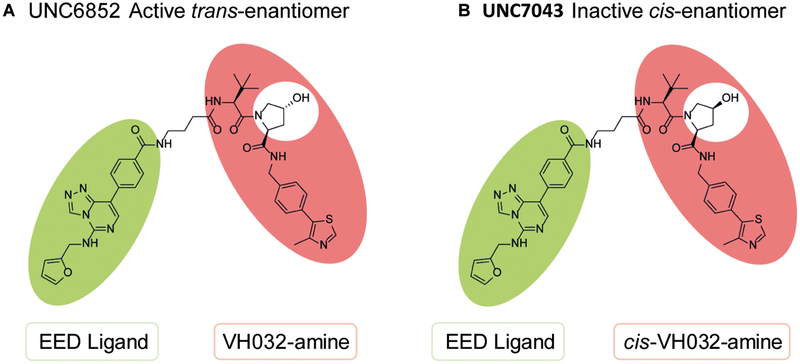
Figure 1.
Figure 1.. Chemical structures of UNC6852 and UNC7043.
(A) UNC6852 is a bivalent chemical degrader of PRC2 containing an EED ligand (green) and a VHL ligand (coral). (B) UNC7043 is a corresponding inactive control compound which contains a cis-hydroxyproline amino acid, abrogating binding to VHL.
Figure 2.
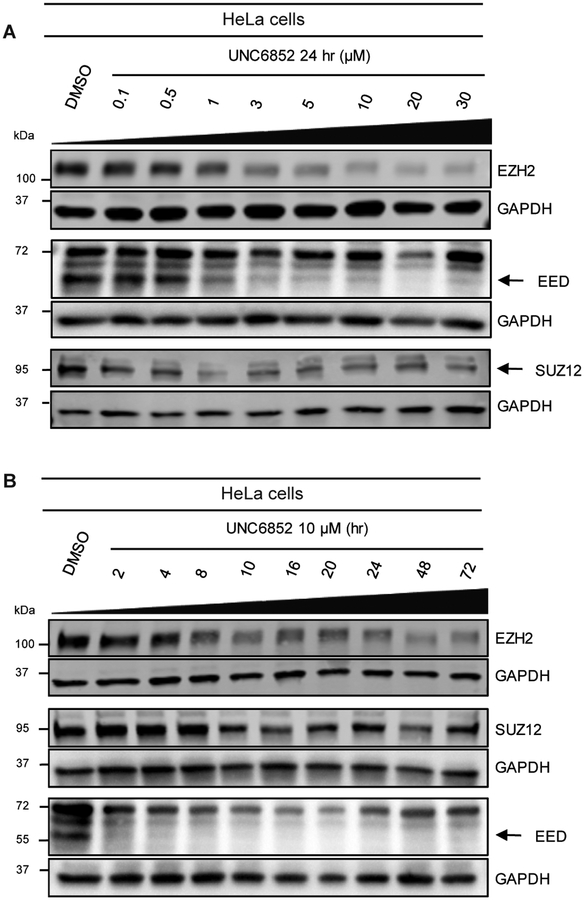
Figure 2.. UNC6852 degrades PRC2 components EED, EZH2, and SUZ12 in HeLa cells.
(A) Western blot analysis of PRC2 components following UNC6852 treatment in a dose response fashion (0 – 30 μM, 24 hours). (B) Western blot analysis of PRC2 components following treatment of UNC6852 (10 μM) from 2 to 72 hrs. Data are representative of at least two biological replicates. Quantification of these results are reported in Supplementary Figure S4.
Figure 3.
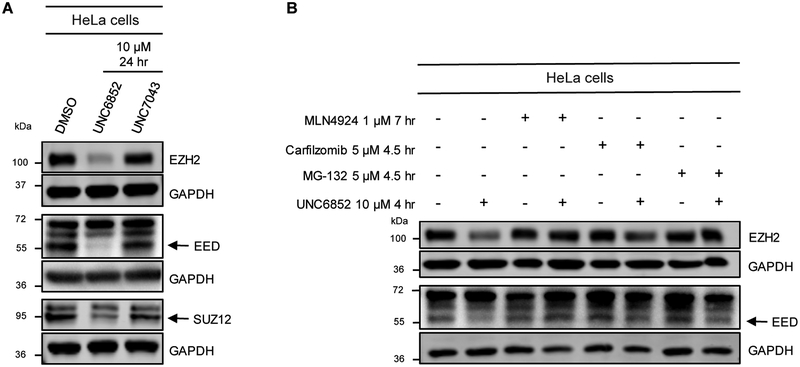
Figure 3.. PRC2 components are not degraded upon treatment with proteasome inhibitors or negative control compound UNC7043.
(A) Western blot analysis of PRC2 components upon treatment of HeLa cells with UNC6852 and negative control compound UNC7043 (10 μM for 24 hours). (B) Western blot analysis of PRC2 components in HeLa cells pre-treated with proteasome inhibitors MLN4924 (1 μM for 7 hours), Carfilzomib and MG-132 (5 μM for 4.5 hours), followed by UNC6852 4 hrs at 10 μM. Data are representative of at least two biological replicates.
Figure 4.
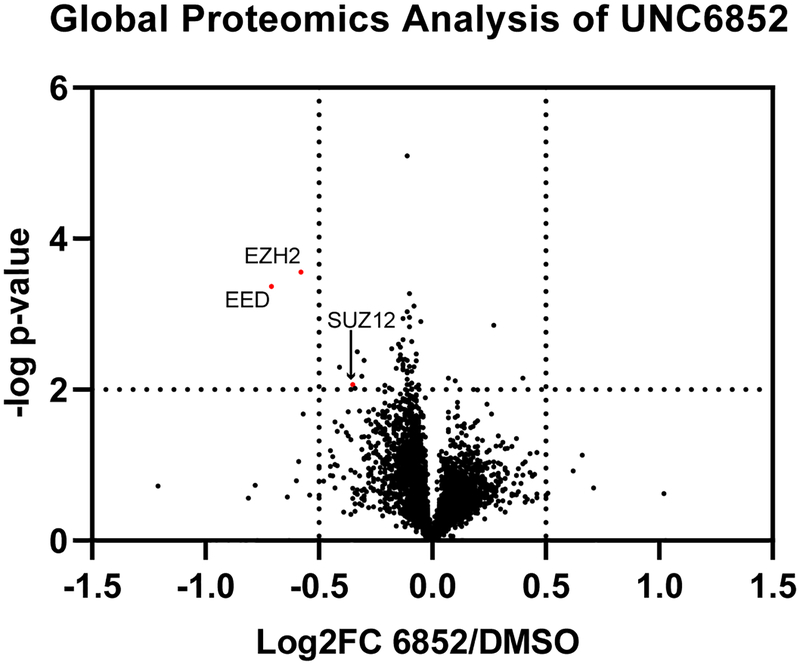
Figure 4.. UNC6852 selectively degrades PRC2.
Quantitative proteomics results showing relative abundance of proteins in HeLa cells treated with DMSO, UNC6852, or UNC7043 (10 μM, 24 hrs). Of the total 5,452 quantifiable proteins, EED and EZH2 were selectively degraded by UNC6852 within the proteome. Significant degradation was defined by a p-value of <0.01 and a log2 fold change ratio of −0.5 (UNC6852 treated/DMSO treated). Data shown are three replicates measured in a single 10-plex TMT experiment.
Figure 5.
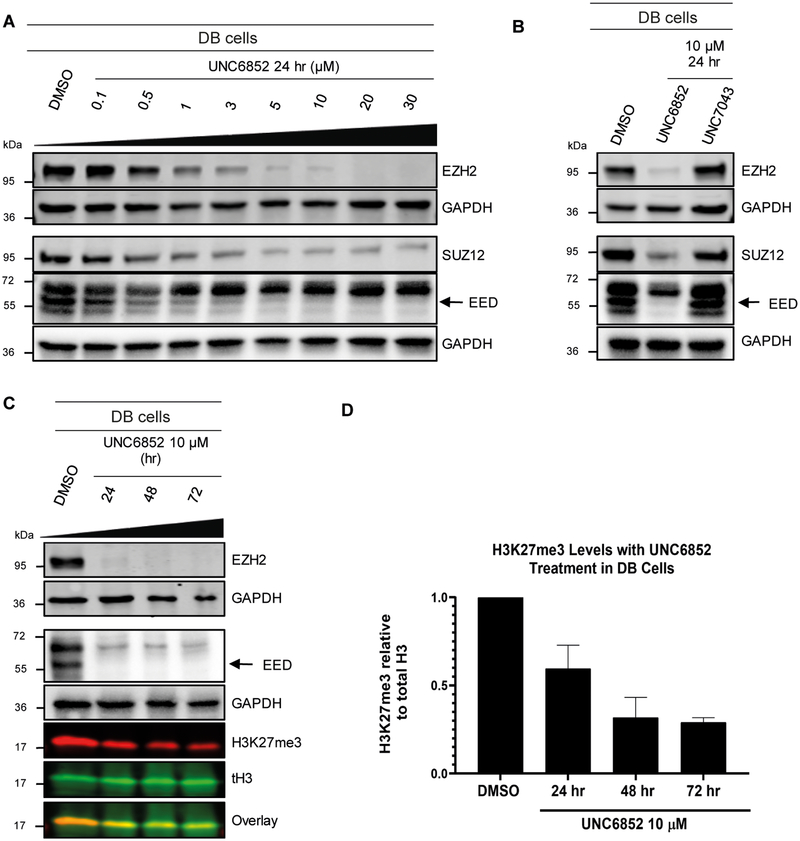
Figure 5.. UNC6852 degrades PRC2 and reduces H3K27me3 levels in EZH2Y641N DB cells.
(A) Western blot analysis of the degradation of EED, EZH2, and SUZ12 in DB cells containing a heterozygous EZH2Y641N mutation treated with UNC6852 (0.1 – 30 μM for 24 hours). (B) Western blot analysis following treatment of DB cells with UNC6852 or negative control compound UNC7043 (10 μM for 24 hours). (C) Western blot analysis of PRC2 components and H3K27me3 in DB cells treated with UNC6852 in a time dependent fashion (10 μM for 24, 48 and 72 hours). (D) Quantification of H3K27me3 levels relative to total H3 in C. DMSO control was normalized to 1. Data are representative of at least two biological replicates. Data are represented as mean ± standard deviation
Figure 6.
Figure 6.. UNC6852 decreases cell proliferation in EZH2 mutant DLBCL cell lines.
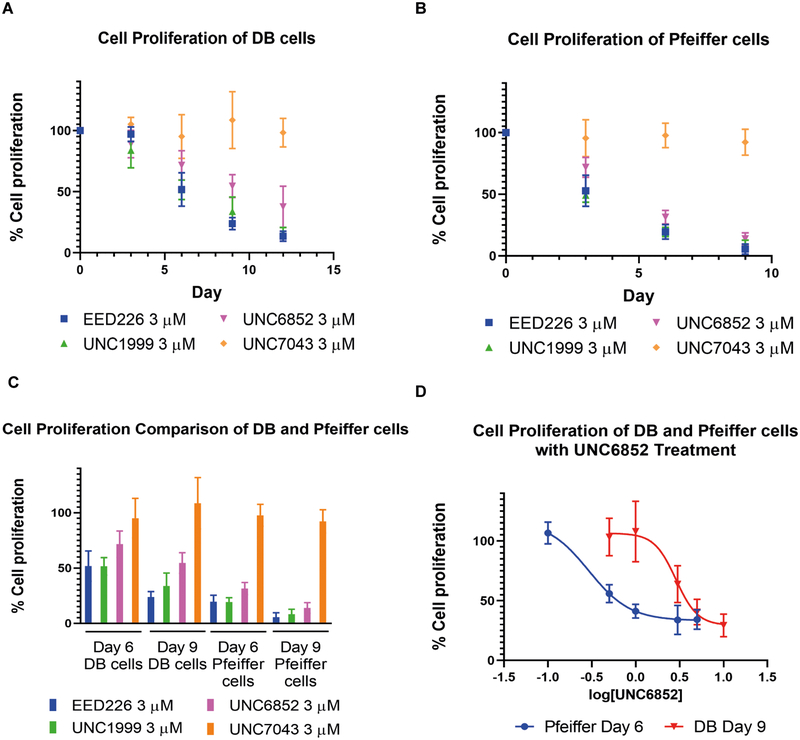
(A) Proliferation effects on DB cells upon treatment with EED226, UNC1999, UNC6852, and UNC7043 (3 μM) reported relative to DMSO treatment. Corresponding cell viability data are shown in Supplementary Figure S7A. (B) Proliferation effects on Pfeiffer cells upon treatment with EED226, UNC1999, UNC6852, and UNC7043 (3 μM) reported relative to DMSO treatment. Corresponding cell viability data are shown in Supplementary Figure S7B. (C) Quantification of proliferation effects shown in A and B at day 6 and day 9 time points. (D) UNC6852 displays a concentration dependent inhibition of DB cell proliferation after 9 days of treatment (0.5 – 10 μM, EC50 = 3.4 ± 0.77 μM) and Pfeiffer cell proliferation after 6 days of treatment (0.1 – 5 μM, EC50 = 0.41 ± 0.066 μM). Corresponding cell viability data are shown in Supplementary Figures S7D and S7F. Data are represented as the mean of three biological replicates ± standard deviation (A-D).

Comment in

References

    1. An S and Fu L (2018). Small-molecule PROTACs: An emerging and promising approach for the development of targeted therapy drugs, EBioMedicine, 36, 553–562. - PMC - PubMed
    1. Baker T et al. (2015). Acquisition of a single EZH2 D1 domain mutation confers acquired resistance to EZH2-targeted inhibitors, Oncotarget, 6, 32646–32655. - PMC - PubMed
    1. Barnash KD et al. (2017). Discovery of Peptidomimetic Ligands of EED as Allosteric Inhibitors of PRC2, ACS Comb. Sci, 19, 161–172. - PMC - PubMed
    1. Bondeson DP et al. (2015). Catalytic in vivo protein knockdown by small-molecule PROTACs, Nat. Chem. Biol, 11, 611–617. - PMC - PubMed
    1. Bracken AP et al. (2003). EZH2 is downstream of the pRB-E2F pathway, essential for proliferation and, EMBO Journal, 22, 5323–5335. - PMC - PubMed

Publication types