


Ionic direct current modulation evokes spike-rate adaptation in the vestibular periphery
- PMID: 31831760
- PMCID: PMC6908704
- DOI: 10.1038/s41598-019-55045-6
Ionic direct current modulation evokes spike-rate adaptation in the vestibular periphery
Abstract
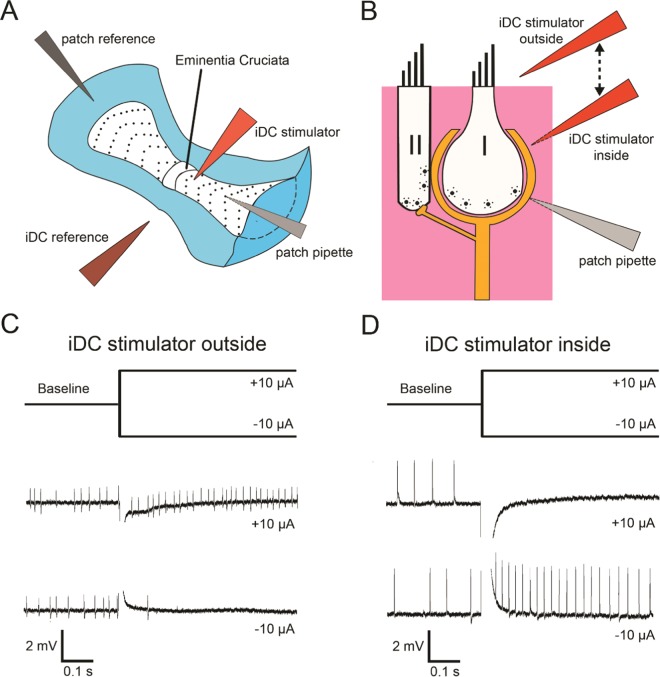
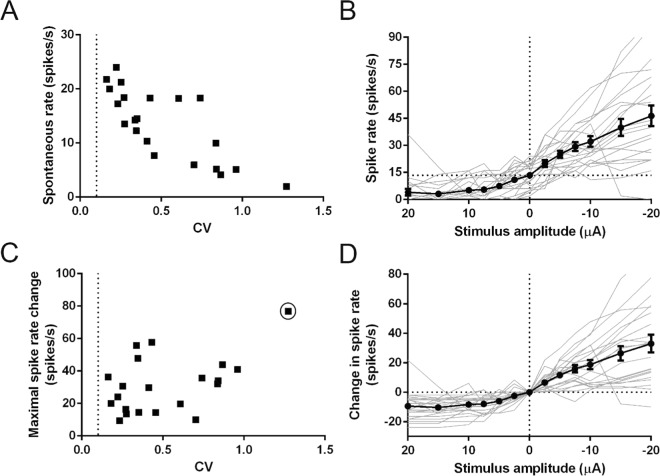
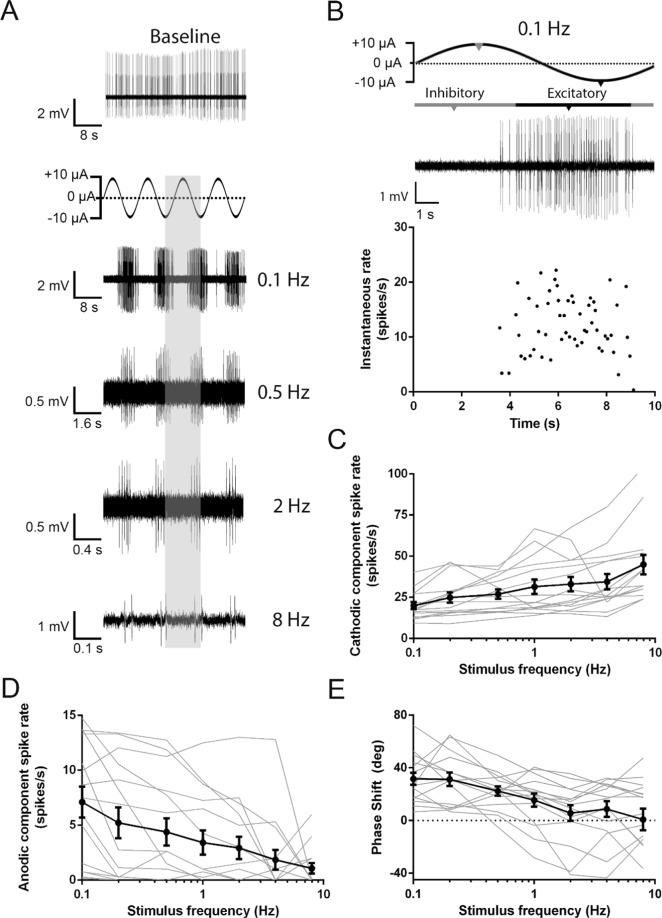
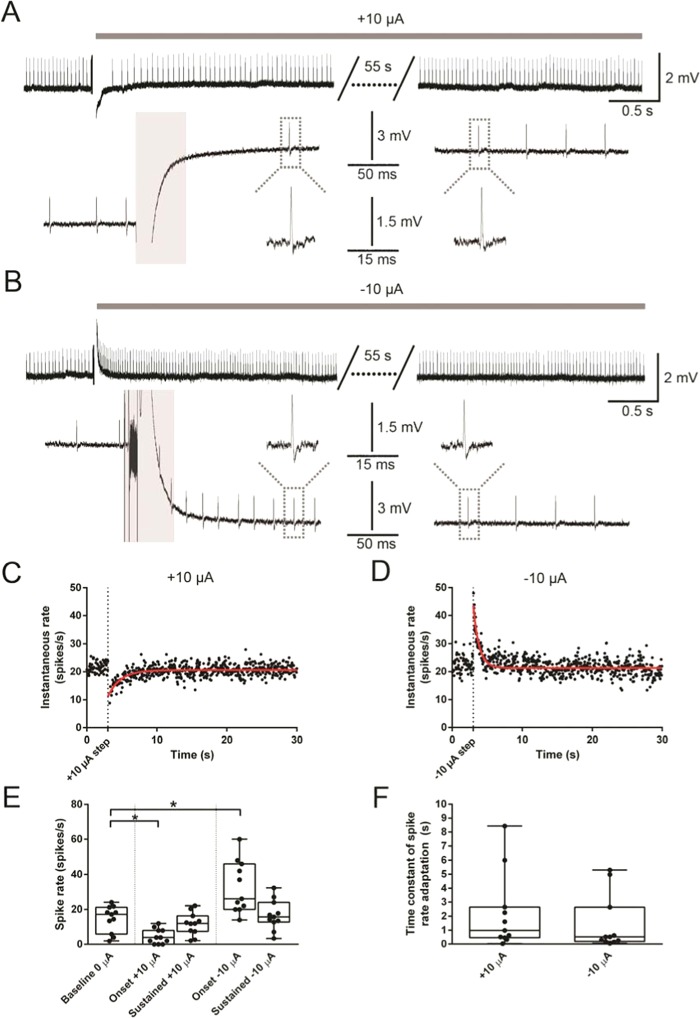
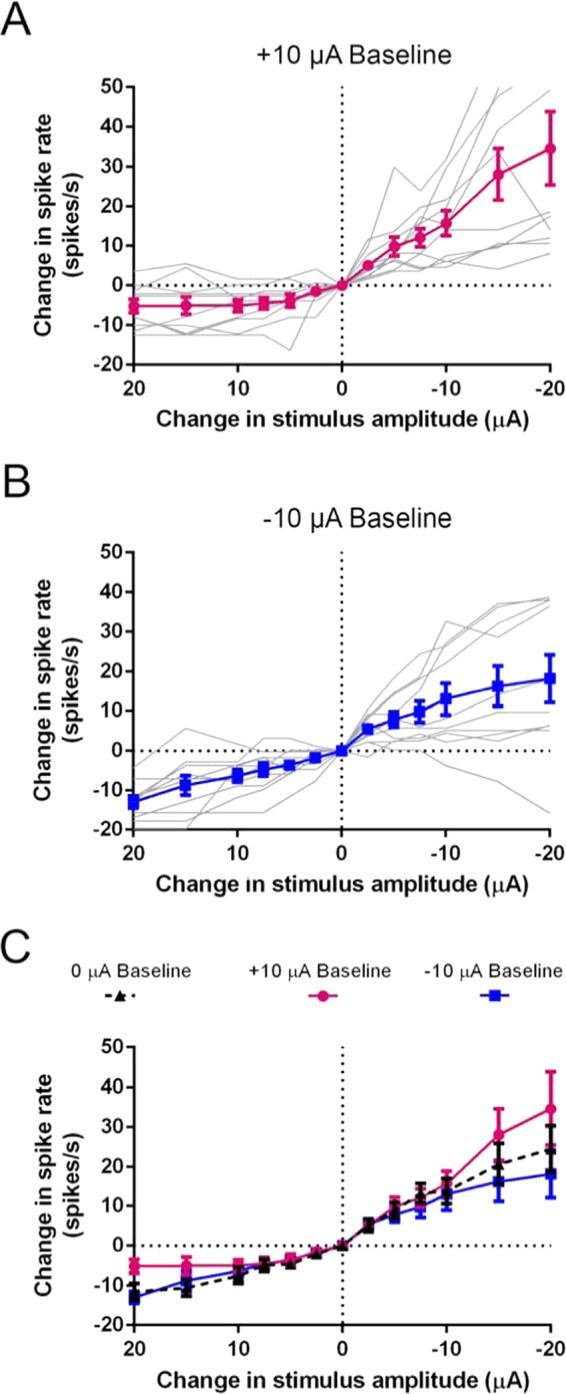
Recent studies have shown that ionic direct current (iDC) can modulate the vestibular system in-vivo, with potential benefits over conventional pulsed stimulation. In this study, the effects of iDC stimulation on vestibular nerve fiber firing rate was investigated using loose-patch nerve fiber recordings in the acutely excised mouse crista ampullaris of the semicircular canals. Cathodic and anodic iDC steps instantaneously reduced and increased afferent spike rate, with the polarity of this effect dependent on the position of the stimulating electrode. A sustained constant anodic or cathodic current resulted in an adaptation to the stimulus and a return to spontaneous spike rate. Post-adaptation spike rate responses to iDC steps were similar to pre-adaptation controls. At high intensities spike rate response sensitivities were modified by the presence of an adaptation step. Benefits previously observed in behavioral responses to iDC steps delivered after sustained current may be due to post-adaptation changes in afferent sensitivity. These results contribute to an understanding of peripheral spike rate relationships for iDC vestibular stimulation and validate an ex-vivo model for future investigation of cellular mechanisms. In conjunction with previous in-vivo studies, these data help to characterize iDC stimulation as a potential therapy to restore vestibular function after bilateral vestibulopathy.
Conflict of interest statement
Dr. Fridman is an inventor on the following patents associated with the Safe Direct Current Stimulation technology: Fridman, G, Safe Direct Current Stimulator Design for Reduced Power and Increased Reliability, JHU PCT/US2018/041246, 62/529,611 (pending) Fridman, G, Chiang, B, Della Santina CC, Implantable Vestibular Prosthesis and Methods for Sensing Head Motion and Conveying the Signals Representing Head Movements to the Vestibular Nerve., JHU US Pat. US20120277835 A1, 2012 (awarded) Fridman, G, Della Santina CC, Artifact Control and Miniaturization of the Safe DC Stimulator for Neural Prostheses, JHU 9,572,979 (awarded)
Figures
References
-
- Gensberger K. D., Kaufmann A.-K., Dietrich H., Branoner F., Banchi R., Chagnaud B. P., Straka H. Galvanic Vestibular Stimulation: Cellular Substrates and Response Patterns of Neurons in the Vestibulo-Ocular Network. Journal of Neuroscience. 2016;36(35):9097–9110. doi: 10.1523/JNEUROSCI.4239-15.2016. - DOI - PMC - PubMed
Publication types
MeSH terms
Grants and funding
- R01 DC012957/DC/NIDCD NIH HHS/United States
- R01 NS092726/NS/NINDS NIH HHS/United States
- R01DC009255/U.S. Department of Health & Human Services | NIH | National Institute on Deafness and Other Communication Disorders (NIDCD)/International
- R01DC006476/U.S. Department of Health & Human Services | NIH | National Institute on Deafness and Other Communication Disorders (NIDCD)/International
LinkOut - more resources
Full Text Sources
