


A systematic review and meta-analysis of the prevalence and complications of paraphenylenediamine-containing hair dye poisoning in developing countries
- PMID: 31831919
- PMCID: PMC6892014
- DOI: 10.4103/ijp.IJP_246_17
A systematic review and meta-analysis of the prevalence and complications of paraphenylenediamine-containing hair dye poisoning in developing countries
Abstract
Background: Suicide is a public health problem, and the number of paraphenylenediamine (PPD)-containing hair dye poisoning with suicidal intentions is increasing in developing countries. In order to better understand this situation, we aimed to conduct a systematic review and meta-analysis to estimate the prevalence and complications associated with hair dye poisoning in developing countries.
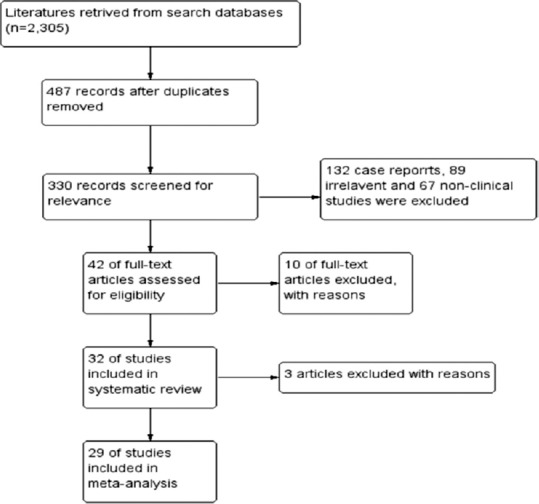
Methods: We conducted a systematic review of epidemiological studies using MeSh terms and text keywords to identify studies from the inception to March 2016 about hair dye poisoning with suicidal intentions in developing countries. A meta-analysis was used to calculate the pooled prevalence proportion of hair dye poisoning and its major complications. Data extraction, data analysis, and risk of bias assessment were performed.
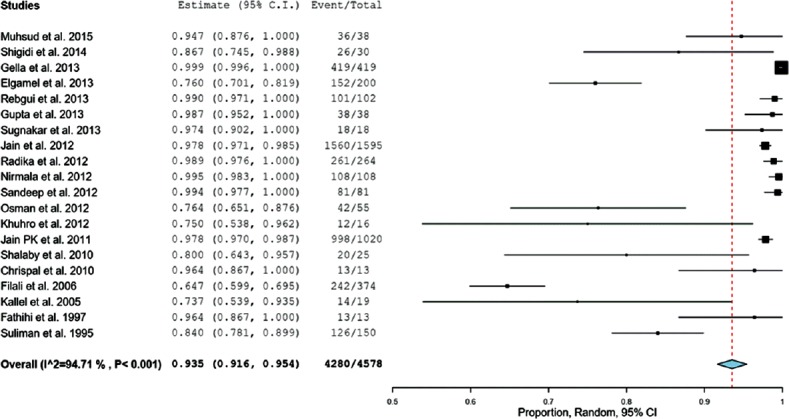
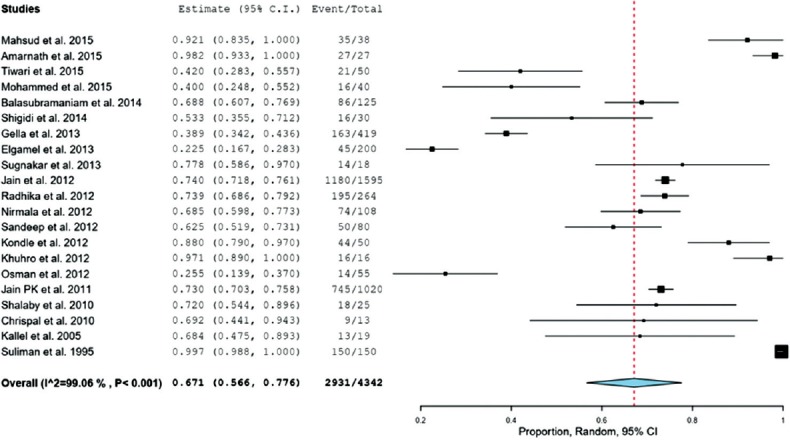
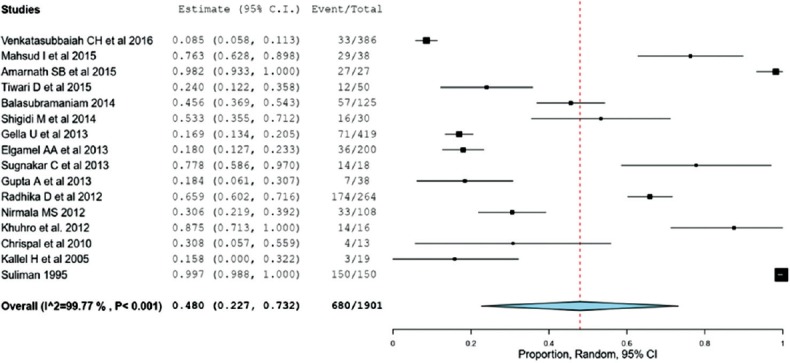
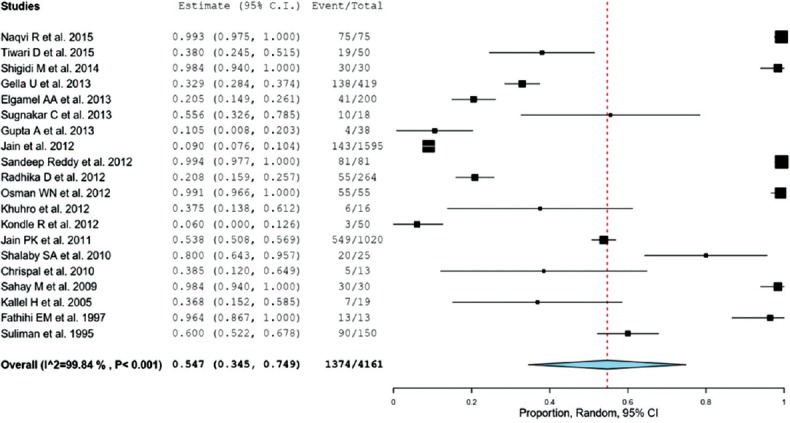
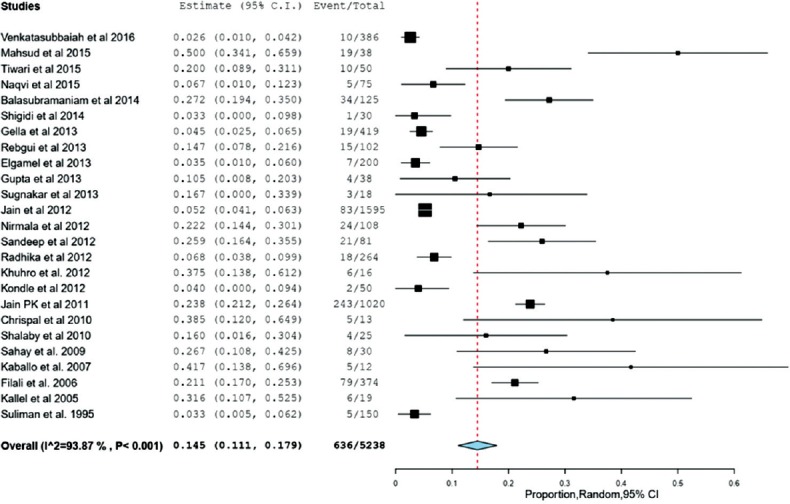
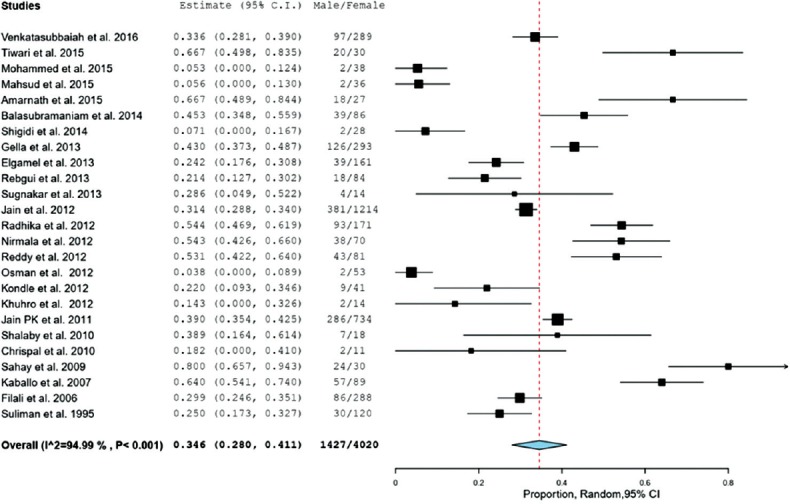
Results: Thirty-two studies were included in the systematic review and 29 of these studies containing 5,559 subjects covering six countries were included in the meta-analysis. The pooled prevalence proportion of hair dye poisoning with suicidal intentions was 93.5% (95% confidence interval [CI] = 91.6-95.4) with a mortality rate of 14.5% (95% CI = 11.1-17.9). Of these, 73.8% were female, and 26.2% were male (sex ratio: 2.7:1). The occurrence of angioneurotic edema in hair poisoning patients was 67.1% (95% CI = 56.6-77.6), and tracheostomy intervention was considered in 47.9% (95% CI = 22.7-73.2) patients with respiratory distress. Acute renal failure was noticed in 54.7% (95% CI = 34.5-74.9) of the pooled samples and mortality rates were 14.5% (95% CI = 11.1-17.9). The pooled rate of the population studied from Asia and Africa showed 94.6% (95% CI = 92.5-96.7) and 82.9% (95% CI = 70.6-95.3), respectively, ingested hair dye with suicidal intentions. Further, studies carried out in Africa showed slightly higher mortality of 15.1% (95% CI = 6.56-23.7) than the Asians 14.3% (95% CI = 10.5-18.1).
Conclusion: This meta-analysis provided clear evidence of the prevalence of hair dye poisoning among individuals with suicidal intentions and had given robust evidence for policy making to curtail emerging PPD-containing hair dye poisoning in developing countries.
Keywords: Developing countries; hair dye poisoning; hair dye toxicity; household poisoning; paraphenylenediamine poisoning; suicides.
Copyright: © 2019 Indian Journal of Pharmacology.
Conflict of interest statement
There are no conflicts of interest.
Figures
References
-
- World Health Organization. Suicide. [Last accessed on 2016 Mar 28]. Available from: http://www.who.int/mediacentre/factsheets/fs398/en.html .
-
- Nohynek GJ, Antignac E, Re T, Toutain H. Safety assessment of personal care products/cosmetics and their ingredients. Toxicol Appl Pharmacol. 2010;243:239–59. - PubMed
-
- Jain PK, Agarwal N, Sharma AK, Akhtar A. Prospective study of ingestional hair dye poisoning in Northern India (Prohina) J Clin Med Res. 2011;3:9–19.
-
- Goebel C, Diepgen TL, Krasteva M, Schlatter H, Nicolas JF, Blömeke B, et al. Quantitative risk assessment for skin sensitisation: Consideration of a simplified approach for hair dye ingredients. Regul Toxicol Pharmacol. 2012;64:459–65. - PubMed
-
- Yazar K, Boman A, Lidén C. P-phenylenediamine and other hair dye sensitizers in Spain. Contact Dermatitis. 2012;66:27–32. - PubMed
Publication types
MeSH terms
Substances
LinkOut - more resources
Full Text Sources
