


Animal Models for Studies of Keloid Scarring
- PMID: 31832272
- PMCID: PMC6906757
- DOI: 10.1089/wound.2018.0828
Animal Models for Studies of Keloid Scarring
Abstract
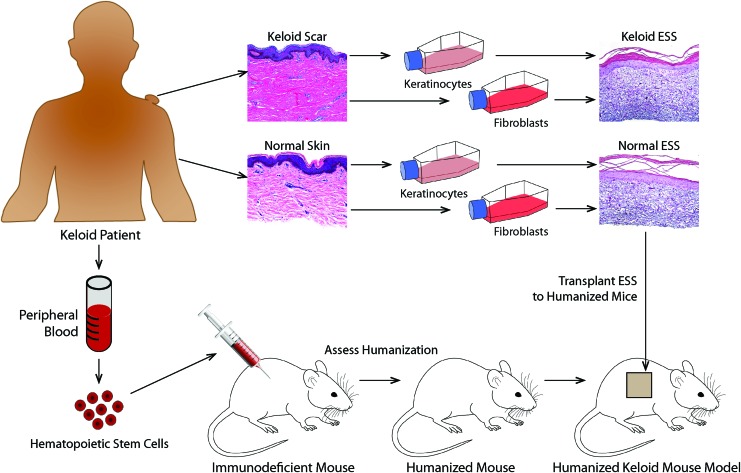
Significance: Keloid scarring is a disfiguring fibroproliferative disorder that can significantly impair the quality of life in affected individuals. The mechanisms that initiate keloid scarring are incompletely understood, and keloids remain one of the most challenging skin conditions to treat. Keloids are unique to humans; thus, the lack of adequate animal models has hindered research efforts aimed at prevention and effective therapeutic intervention. Recent Advances: In the absence of a suitable animal model, keloid researchers often rely on studying excised keloid scar tissue and keloid-derived cultured cells. Recently, in vivo models have been described that involve transplantation to mice of reconstructed skin containing keloid-derived fibroblasts and/or keratinocytes. These mouse-human hybrid animal models display some similarities with keloids and may enable investigation of novel therapies, although no model yet recapitulates all the features of human keloid scarring. Critical Issues: Differences in skin physiology and modes of healing contribute to challenges in modeling keloids in laboratory animals. Furthermore, recent studies suggest that cells of the immune system contribute to keloid pathology. The need to use immunodeficient hosts for transplanted human keloid cells in recently described animal models precludes studying the role of the immune system in keloid scarring. Future Directions: Future animal models may take advantage of humanized mice with immune systems reconstituted using human immune cells. Such models, when combined with grafted tissues prepared using keloid-derived cells, might enable investigation of complex interactions between systemic and local factors that combine to promote keloid scar formation and may aid in the development of novel therapies.
Keywords: animal model; extracellular matrix; fibrosis; keloid; scar; wound healing.
Copyright 2019, Mary Ann Liebert, Inc., publishers.
Figures

References
-
- Van Loey NEE, Van Son MJM. Psychopathology and psychological problems in patients with burn scars. Am J Clin Dermatol 2003;4:245–272 - PubMed
-
- Bock O, Schmid-Ott G, Malewski P, Mrowietz U. Quality of life of patients with keloid and hypertrophic scarring. Arch Dermatol Res 2006;297:433–438 - PubMed
-
- Balci DD, Inandi T, Dogramaci CA, Celik E. DLQI scores in patients with keloids and hypertrophic scars: a prospective case control study. J Dtsch Dermatol Ges 2009;7:688–692 - PubMed
-
- Furtado F, Hochman B, Ferrara SF, et al. . What factors affect the quality of life of patients with keloids? Rev Assoc Med Bras 2009;55:700–704 - PubMed
Publication types
LinkOut - more resources
Full Text Sources
Other Literature Sources
