


Improving the serodiagnosis of canine Leishmania infantum infection in geographical areas of Brazil with different disease prevalence
- PMID: 31832561
- PMCID: PMC6890974
- DOI: 10.1016/j.parepi.2019.e00126
Improving the serodiagnosis of canine Leishmania infantum infection in geographical areas of Brazil with different disease prevalence
Erratum in
-
Erratum regarding missing Declaration of Competing Interest statements in previously published articles.Parasite Epidemiol Control. 2020 Dec 24;11:e00196. doi: 10.1016/j.parepi.2020.e00196. eCollection 2020 Nov. Parasite Epidemiol Control. 2020. PMID: 33426317 Free PMC article.
Abstract
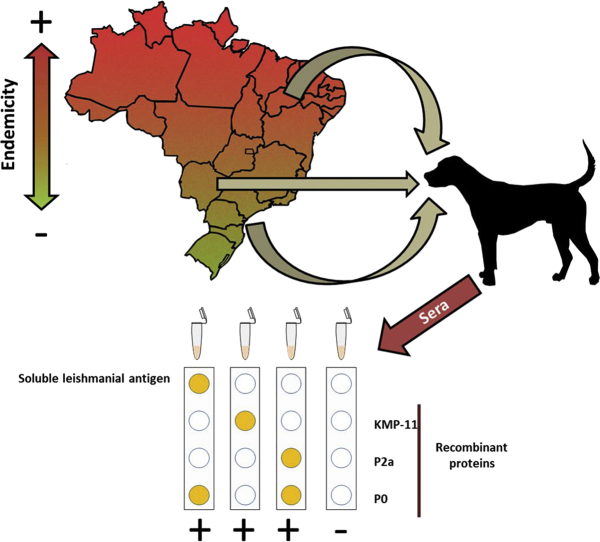
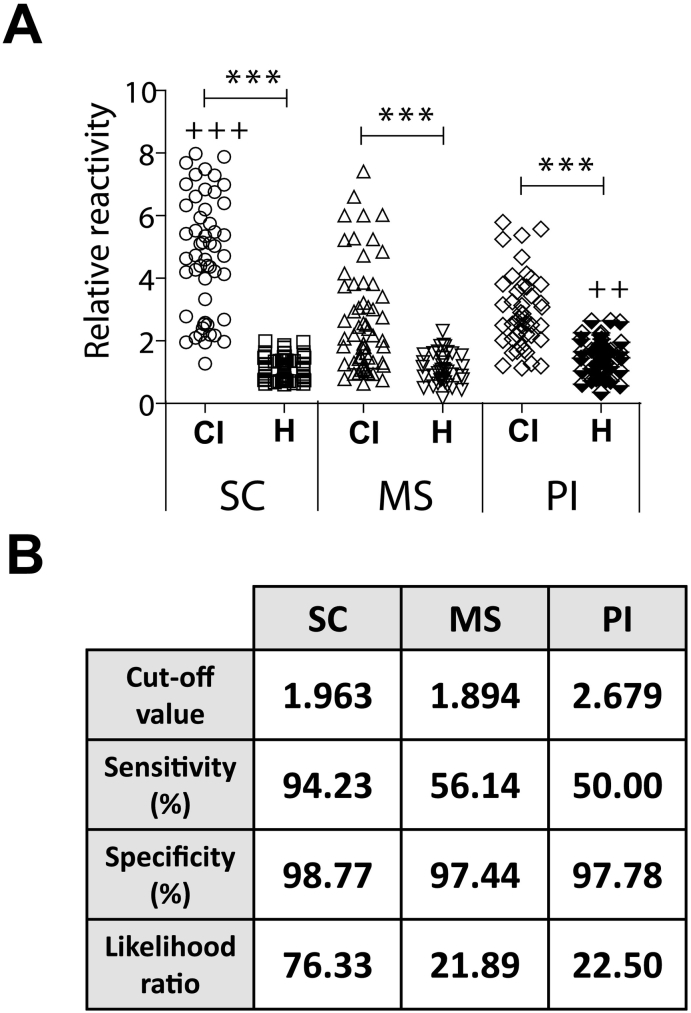
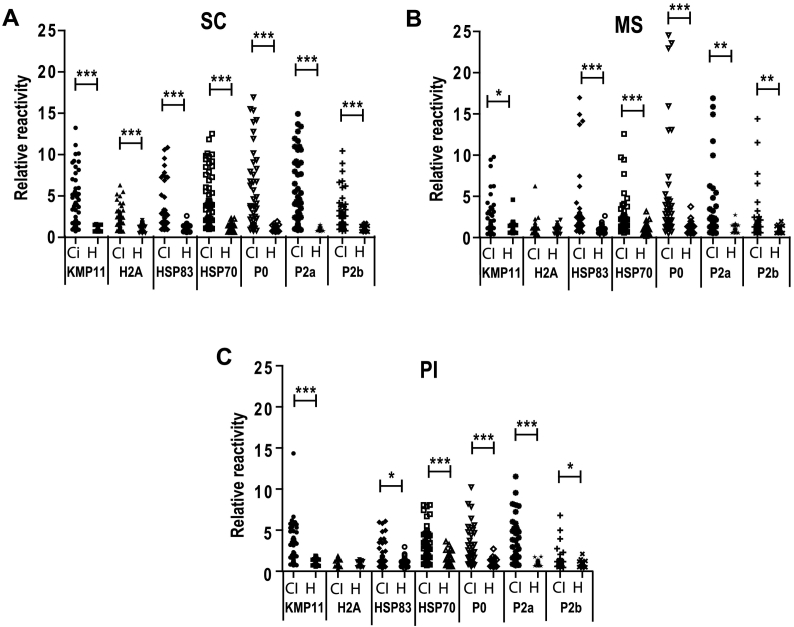
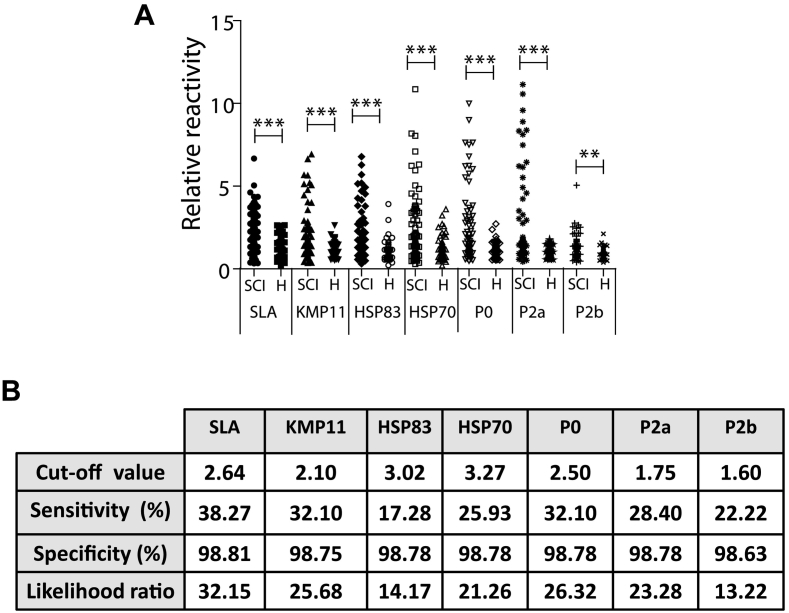
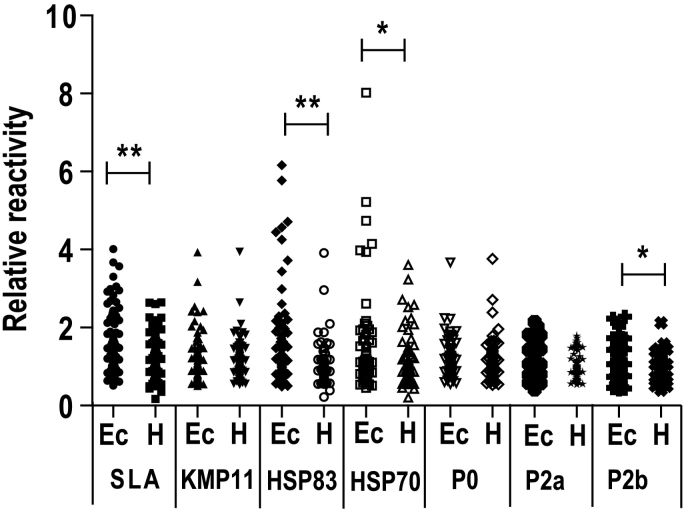
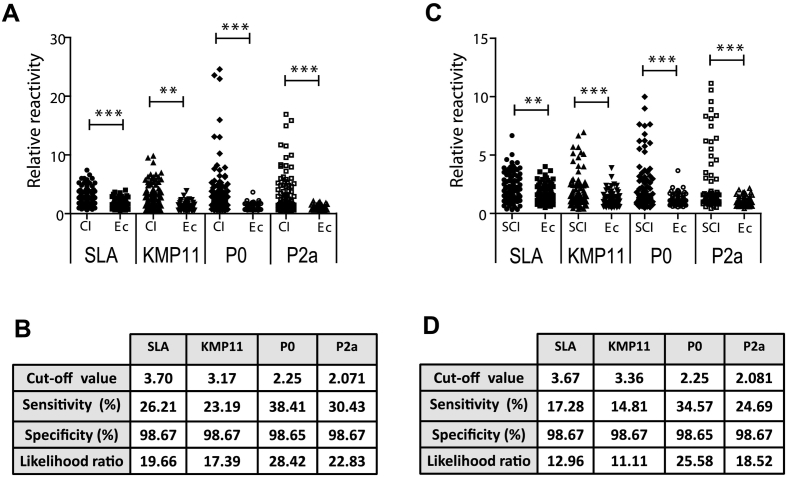
Serodiagnosis of Leishmania infantum infection in dogs relies on the detection of antibodies against leishmanial crude extracts or parasitic defined antigens. The expansion of canine leishmaniasis from geographical areas of Brazil in which the infection is endemic to regions in which the disease is emerging is occurring. This fact makes necessary the analysis of the serodiagnostic capabilities of different leishmanial preparations in distinct geographical locations. In this article sera from dogs infected with Leishmania and showing the clinical form of the disease, were collected in three distinct Brazilian States and were tested against soluble leishmanial antigens or seven parasite individual antigens produced as recombinant proteins. We show that the recognition of soluble leishmanial antigens by sera from these animals was influenced by the geographical location of the infected dogs. Efficacy of the diagnosis based on this crude parasite preparation was higher in newly endemic regions when compared with areas of high disease endemicity. We also show that the use of three of the recombinant proteins, namely parasite surface kinetoplastid membrane protein of 11 kDa (KMP-11), and two members of the P protein family (P2a and P0), can improve the degree of sensitivity without adversely affecting the specificity of the diagnostic assays for canine leishmaniasis, independently of the geographical area of residence. In addition, sera from dogs clinically healthy but infected were also assayed with some of the antigen preparations. We demonstrate that the use of these proteins can help to the serodiagnosis of Leishmania infected animals with subclinical infections. Finally, we propose a diagnostic protocol using a combination of KMP-11, P2a y P0, together with total leishmanial extracts.
Keywords: Antibodies; BB, blocking buffer; CanL, Canine visceral leishmaniasis; Canine leishmaniasis; EDCB, ELISA denaturant coating buffer; ELISA, enzyme-linked immunosorbent assay; HSP, Heat shock protein; KMP-11, Kinetoplastid-membrane protein of 11 kDa; LR, Likelihood ratio; Leishmania; MS, Mato Grosso do Sul State (Brazil); PBS, phosphate saline buffer; PI, Piaui State (Brazil); ROC, Receiver Operating Characteristic; RR, Relative reactivity; RT, Room temperature; Recombinant proteins; SC, Santa Catarina State (Brazil); SLA, Soluble leishmanial antigen; Serodiagnosis; VL, Visceral leishmaniosis; WB, Washing buffer.
© 2019 The Authors.
Figures
References
-
- Abbehusen M.M.C., Almeida V.D.A., Solca M.D.S., Pereira L.D.S., Costa D.J., Gil-Santana L., Bozza P.T., Fraga D.B.M., Veras P.S.T., Dos-Santos W.L.C., Andrade B.B., Brodskyn C.I. Clinical and immunopathological findings during long term follow-up in Leishmania infantum experimentally infected dogs. Sci. Rep. 2017;7:15914. https://www.nature.com/articles/s41598-017-15651-8 - PMC - PubMed
-
- Alves A.S., Mouta-Confort E., Figueiredo F.B., Oliveira R.V., Schubach A.O., Madeira M.F. Evaluation of serological cross-reactivity between canine visceral leishmaniasis and natural infection by Trypanosoma caninum. Res. Vet. Sci. 2012;93:1329–1333. - PubMed
-
- Angel S.O., Requena J.M., Soto M., Criado D., Alonso C. During canine leishmaniasis a protein belonging to the 83-kDa heat-shock protein family elicits a strong humoral response. Acta Trop. 1996;62:45–56. - PubMed
LinkOut - more resources
Full Text Sources
Research Materials
Miscellaneous
