. 2019 Dec 11;20(24):6240.
doi: 10.3390/ijms20246240.

Renal Chemerin Expression is Induced in Models of Hypertensive Nephropathy and Glomerulonephritis and Correlates with Markers of Inflammation and Fibrosis

Affiliations

Renal Chemerin Expression is Induced in Models of Hypertensive Nephropathy and Glomerulonephritis and Correlates with Markers of Inflammation and Fibrosis

Alexander Mocker et al. Int J Mol Sci. .

Abstract

Chemerin and its receptor, chemokine-like receptor 1 (CmklR1), are associated with chemotaxis, inflammation, and endothelial function, especially in metabolic syndrome, coronary heart disease, and hypertension. In humans, circulating chemerin levels and renal function show an inverse relation. So far, little is known about the potential role of chemerin in hypertensive nephropathy and renal inflammation. Therefore, we determined systemic and renal chemerin levels in 2-kidney-1-clip (2k1c) hypertensive and Thy1.1 nephritic rats, respectively, to explore the correlation between chemerin and markers of renal inflammation and fibrosis. Immunohistochemistry revealed a model-specific induction of chemerin expression at the corresponding site of renal damage (tubular vs. glomerular). In both models, renal expression of chemerin (RT-PCR, Western blot) was increased and correlated positively with markers of inflammation and fibrosis. In contrast, circulating chemerin levels remained unchanged. Taken together, these findings demonstrate that renal chemerin expression is associated with processes of inflammation and fibrosis-related to renal damage. However, its use as circulating biomarker of renal inflammation seems to be limited in our rat models.

Keywords: 2-kidney-1-clip; 2k1c; CmklR1; Thy1.1 nephritis; chemerin; renal fibrosis; renal inflammation; renal injury; renovascular hypertension.


Conflict of interest statement

The authors declare no conflict of interest. The funding sources had no role in the design of the study; in the collection, analyses, or interpretation of data; in the writing of the manuscript, or in the decision to publish the results.

Figures
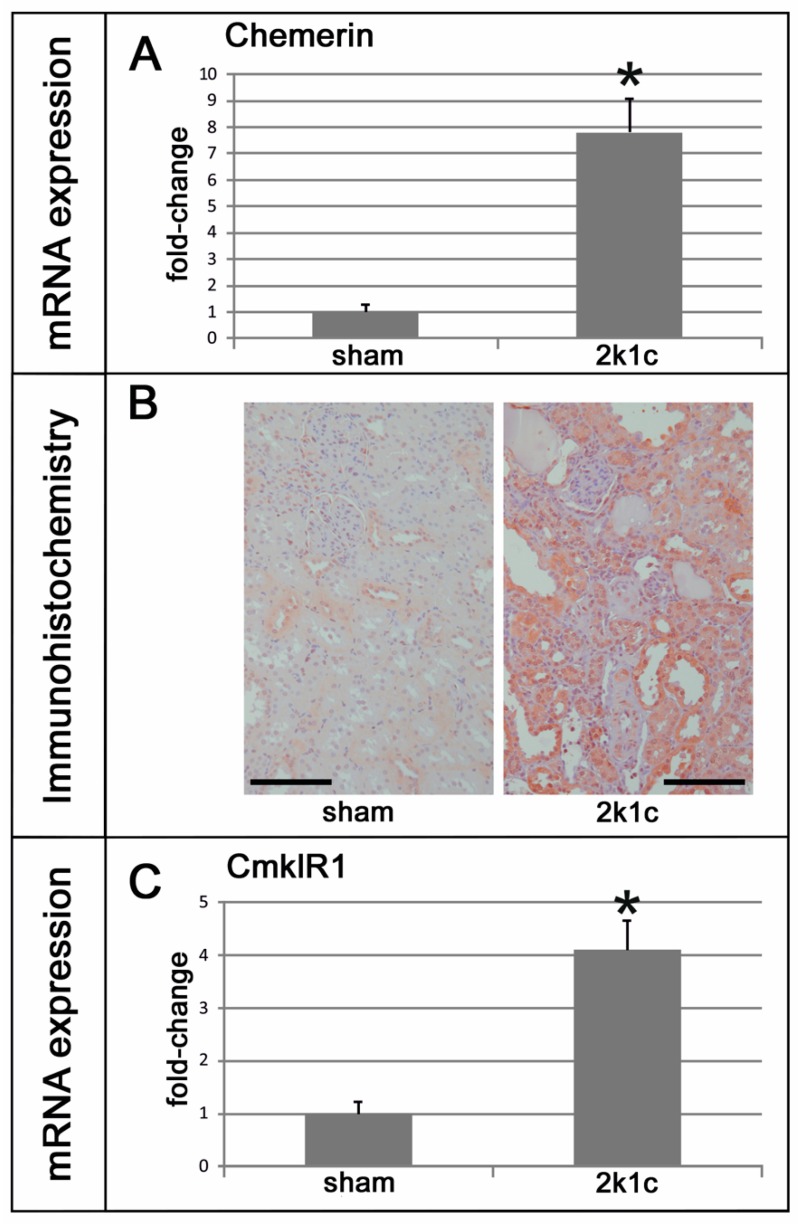
Figure 1
Figure 1
Chemerin and CmklR1 in 2k1c hypertensive nephropathy. (A) Chemerin mRNA expression levels in the kidneys of 2k1c hypertensive (2k1c) and control (sham) rats. (B) Exemplary photomicrographs of renal tissue from hypertensive (2k1c) and control (sham) rats stained for chemerin. Black bar represents 100 µm. (C) CmklR1 mRNA expression levels in the kidneys of 2k1c hypertensive (2k1c) and control (sham) rats. * p < 0.05 vs. sham control kidneys.
Figure 2
Figure 2
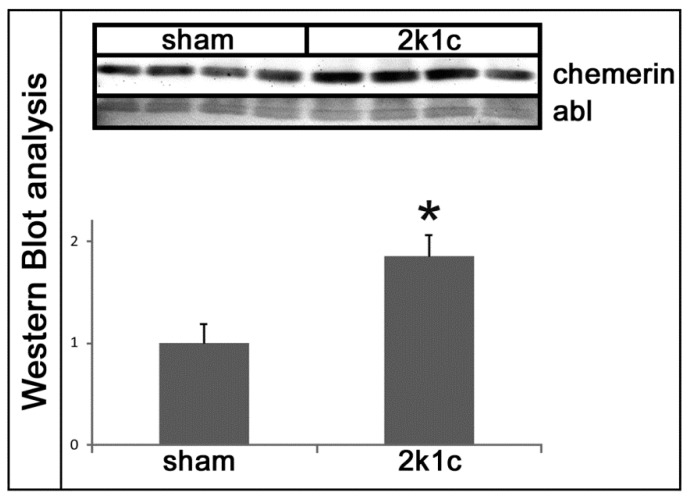
Western blot analysis of chemerin protein expression in the hypertensive kidneys of 2k1c rats. Amido black staining (abl) of the blot served as a loading control. Bar graph: densitometric analysis of Western Blot. * p < 0.05 vs. sham control kidneys.
Figure 3
Figure 3
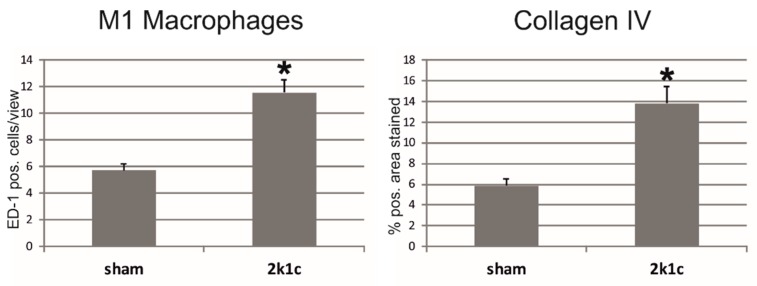
M1 macrophage infiltration and expansion of collagen IV in the tubulointerstitial area of rats with 2k1c hypertensive nephropathy. Sham, control sham operation; ED-1, M1 macrophage marker; * p < 0.05 vs. sham control kidneys, data are means ± error of the mean.
Figure 4
Figure 4
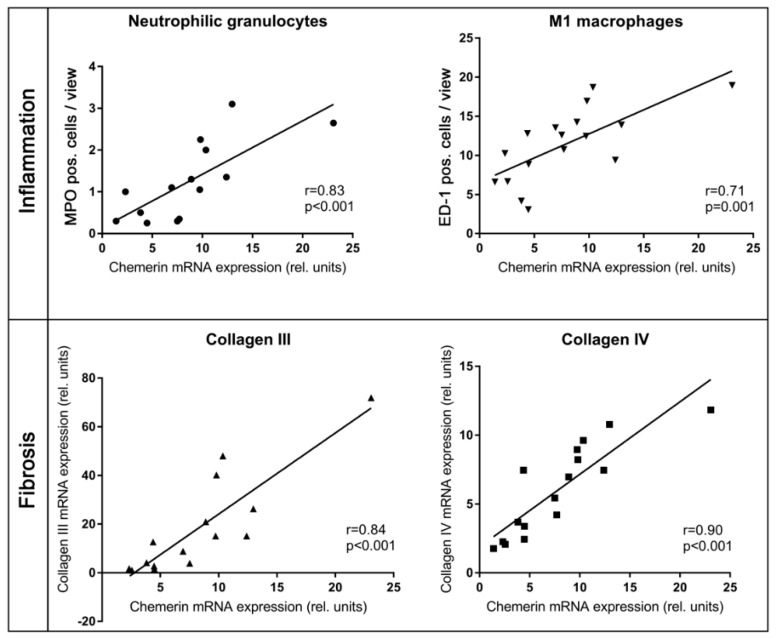
Correlation of chemerin expression with infiltration of neutrophilic granulocytes and M1 macrophages and the expression of collagens III and IV. MPO, myeloperoxidase (marker for neutrophil granulocytes), ED-1, marker for rat M1 macrophages.
Figure 5
Figure 5
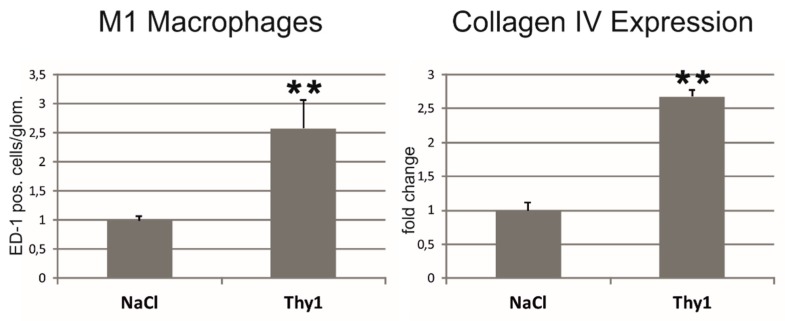
Glomerular M1 macrophage infiltration and collagen IV expression in the renal cortex of rats with anti-Thy1.1 mesangioproliferative glomerulonephritis. NaCl, control vehicle-injected; ED-1, M1 macrophage marker; ** p < 0.01; data are means ± error of the mean.
Figure 6
Figure 6
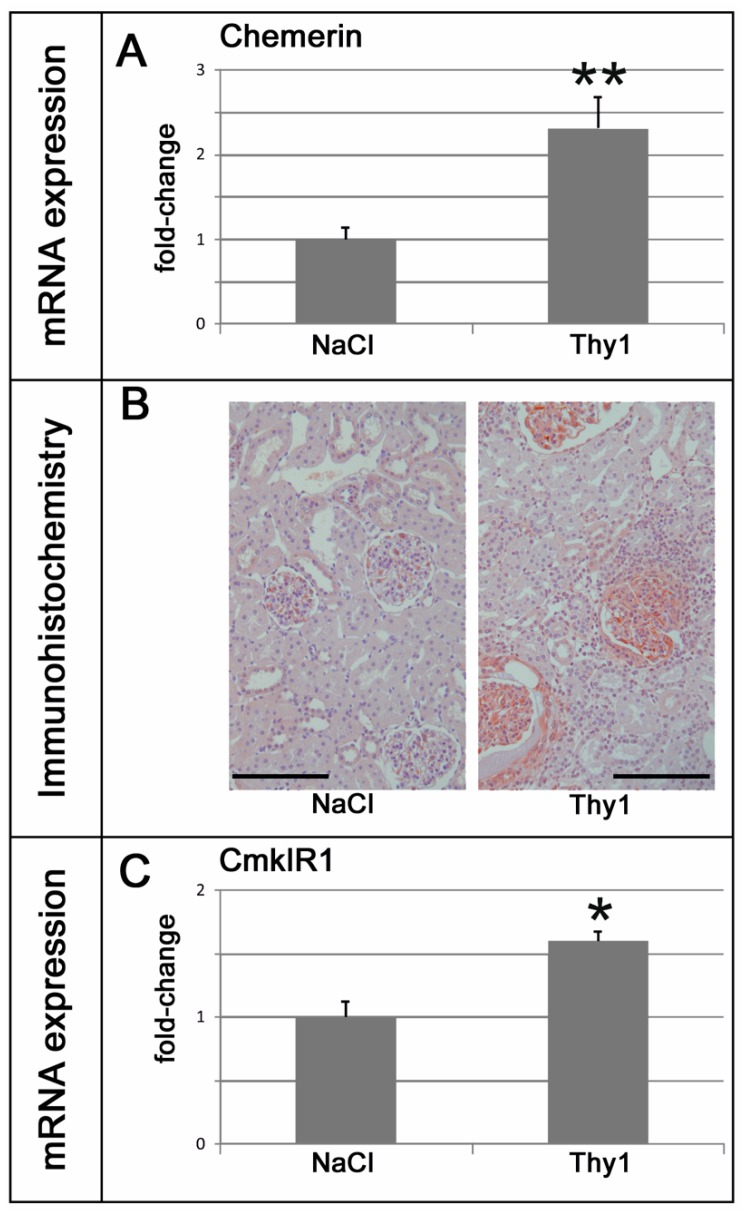
Chemerin and CmklR1 in anti-Thy1.1 glomerulonephritis: (A) mRNA expression of chemerin levels in the kidneys of Thy1.1 nephritic (Thy1) and control (NaCl) rats. (B) Localization of chemerin protein in renal sections of Thy1.1 nephritic and control rats. Black bar represents 100 µm. (C) mRNA expression of the chemerin receptor CmklR1 levels in the kidneys of Thy1.1 nephritic (Thy1) and control (NaCl) rats. NaCl, NaCl infused controls. Thy1, anti-Thy1.1 infused glomerulonephritic animals. ** p < 0.01, * p < 0.05 vs. control kidneys.

References

    1. Breyer M.D., Susztak K. Developing Treatments for Chronic Kidney Disease in the 21st Century. Semin. Nephrol. 2016;36:436–447. doi: 10.1016/j.semnephrol.2016.08.001. - DOI - PMC - PubMed
    1. Ernandez T., Mayadas T.N. The Changing Landscape of Renal Inflammation. Trends Mol. Med. 2016;22:151–163. doi: 10.1016/j.molmed.2015.12.002. - DOI - PMC - PubMed
    1. Hilgers K.F., Hartner A., Porst M., Mai M., Wittmann M., Hugo C., Ganten D., Geiger H., Veelken R., Mann J.F. Monocyte chemoattractant protein-1 and macrophage infiltration in hypertensive kidney injury. Kidney Int. 2000;58:2408–2419. doi: 10.1046/j.1523-1755.2000.00424.x. - DOI - PubMed
    1. Shafi T., Coresh J. 1 - Chronic Kidney Disease: Definition, Epidemiology, Cost, and Outcomes. In: Ikizler T.A., editor. Chronic Kidney Disease, Dialysis, and Transplantation (Fourth Edition), Himmelfarb, J. Eds. Elsevier; Philadelphia, PA, USA: 2019.
    1. Wada T., Matsushima K., Kaneko S. The role of chemokines in glomerulonephritis. Front. Biosci. 2008;13:3966–3974. doi: 10.2741/2984. - DOI - PubMed

MeSH terms

Supplementary concepts

LinkOut - more resources