Trajectory of vitamin D, micronutrient status and childhood growth in exclusively breastfed children
- PMID: 31836749
- PMCID: PMC6910939
- DOI: 10.1038/s41598-019-55341-1
Trajectory of vitamin D, micronutrient status and childhood growth in exclusively breastfed children
Abstract
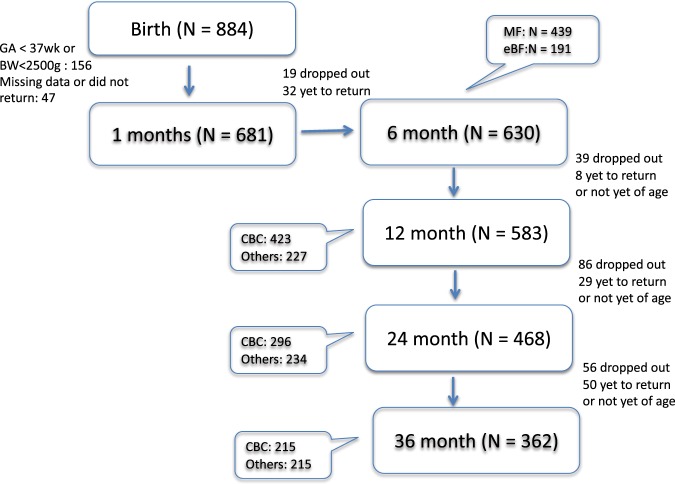
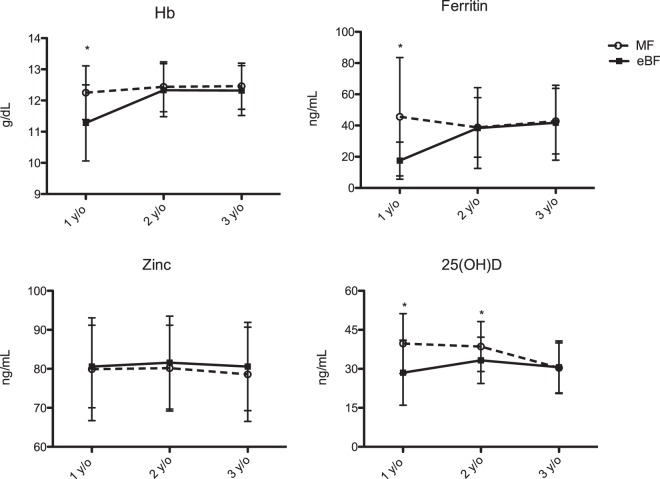
This study aimed to compare the trajectory of serum 25(OH)D, micronutrient levels, and anthropometric measurements between exclusively breastfed and mixed-fed children. This is a prospective cohort study. Anthropometric measurements of the children were obtained during scheduled clinical visits. Tests for 25(OHD), ferritin, zinc and complete blood count were performed yearly until 3 years of age. Clinical records and questionnaires on dietary habits were obtained. The results showed that despite official recommendations on vitamin D/iron supplements for breastfed children, less than 10% of our exclusively breastfed children received regular supplements. Thus, after 1 year, the odds for having iron deficiency anemia and vitamin D insufficiency were 9 [95% CI, 4-19] and 6 [95% CI, 2-16], respectively. Longitudinal follow-up showed the prevalence of iron deficiency to decrease from 34% at 1 year to 2% at age 3 years. However, the prevalence of vitamin D insufficiency remained persistently high throughout the first three years of life (60% at 1 to 44% at 3 years). Very few children had zinc deficiency. Anthropometric measurements showed exclusively breastfed children to have lower mean z-scores for body weight and height when compared to mixed-fed children after 12 months. In conclusion, children who were exclusively breastfed for longer than 4 months without proper supplement were more likely to have transient iron deficiency anemia and persistent vitamin D insufficiency. Their growth became relatively slower after infancy. Whether this was associated with underlying inadequate serum vitamin D and iron level remains an important issue to be explored.
Conflict of interest statement
The authors declare no competing interests.
Figures