


Addressing cost and time barriers in chronic disease management through telemedicine: an exploratory research in select low- and middle-income countries
- PMID: 31839922
- PMCID: PMC6893967
- DOI: 10.1177/2040622319891587
Addressing cost and time barriers in chronic disease management through telemedicine: an exploratory research in select low- and middle-income countries
Erratum in
-
Corrigendum to Addressing cost and time barriers in chronic disease management through telemedicine: an exploratory research in select low-and middle-income countries.Ther Adv Chronic Dis. 2020 Jan 2;11:2040622319900084. doi: 10.1177/2040622319900084. eCollection 2020. Ther Adv Chronic Dis. 2020. PMID: 31921406 Free PMC article.
Abstract
Background: Despite evidence supporting telehealth provision in developed countries, there is limited evidence regarding its economic benefits for patients living in areas where access and cost present major barriers to health care, particularly in low- and middle-income countries (LMICs). This study explores the economic benefits of telemedicine for patients, in terms of cost and times savings, and its potential role in improving chronic disease outcomes.
Methods: This retrospective cross-sectional study compared telemedicine services with hypothetical in-person consultations, with a focus on patient travel time and travel cost savings. A database containing teleconsultation visits (N = 25,182) conducted at health facilities in remote regions of Afghanistan, Pakistan, Tajikistan, and the Kyrgyz Republic, was analyzed. A two-sample homoscedastic t test was used to determine differences between the two groups. A one-way sensitivity analysis was also conducted, presuming in-person teleconsultations at 90%, 75%, and 50%.
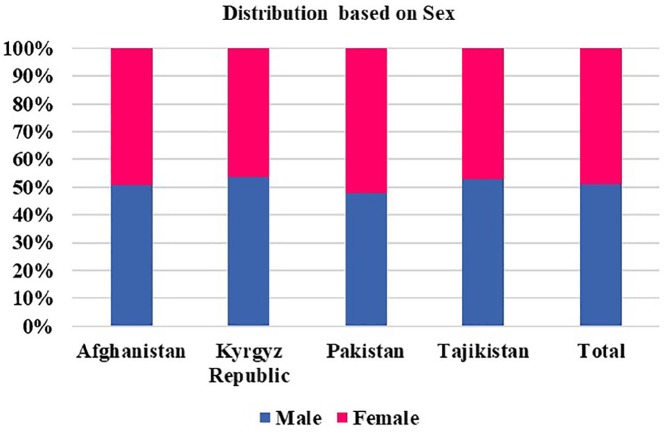
Results: The study extracted data from 25,182 teleconsultation visits (12,814 males; 12,368 females). The cumulative patient savings through the program amounted to USD 9,175,132, and 1,876,146 h, or 213.1 years. A significant difference was seen between the two groups in terms of mean time savings (p-value <0.05), and a nearly significant difference was observed in terms of mean cost savings (p-value = 0.05).
Conclusions: This study suggests that considerable economic benefits imparted to patients in low-resource settings of LMICs via accessing telemedicine. Telemedicine has great potential to improve chronic disease outcomes in low-resource areas by reducing socioeconomic barriers related to cost and access, and increasing uptake of services, thereby enabling early intervention and long-term management.
Keywords: chronic disease; economic evaluation of telemedicine; teleconsultation network; telemedicine; telemedicine cost savings; telemedicine in LMICs; telemedicine time savings; telemedicine user benefits.
© The Author(s), 2019.
Conflict of interest statement
Conflict of interest statement: The author(s) declared no potential conflicts of interest with respect to the research, authorship, and/or publication of this article.
Figures
References
-
- World Health Organization. Chronic diseases and their common risk factors [Internet], 2005. https://www.who.int/chp/chronic_disease_report/media/Factsheet1.pdf
-
- Smith A, Youngberry K, Christie F, et al. The family costs of attending hospital outpatient appointments via videoconference and in person. J Telemed Telecare 2003; 9(2 Suppl.): 58–61. - PubMed
-
- World Health Organization. Global diffusion of eHealth: making universal health coverage achievable. World Health Organization, 2016.
-
- Bynum A, Irwin C, Cranford C, et al. The impact of telemedicine on patients’ cost savings: some preliminary findings. Telemed J E Health 2003; 9: 361–367. - PubMed
-
- Dullet N, Geraghty E, Kaufman T, et al. Impact of a university-based outpatient telemedicine program on time savings, travel costs, and environmental pollutants. Value Health 2017; 20: 542–546. - PubMed
LinkOut - more resources
Full Text Sources
