


Personalized breast cancer screening strategies: A systematic review and quality assessment
- PMID: 31841563
- PMCID: PMC6913984
- DOI: 10.1371/journal.pone.0226352
Personalized breast cancer screening strategies: A systematic review and quality assessment
Abstract
Background: The effectiveness of breast cancer screening is still under debate. Our objective was to systematically review studies assessing personalized breast cancer screening strategies based on women's individual risk and to conduct a risk of bias assessment.
Methods: We followed the standard methods of The Cochrane Collaboration and PRISMA declaration and searched the MEDLINE, EMBASE and Clinical Trials databases for studies published in English. The quality of the studies was assessed using the ISPOR-AMCP-NPC Questionnaire and The Cochrane Risk of Bias Tool. Two independent reviewers screened full texts and evaluated the risk of bias.
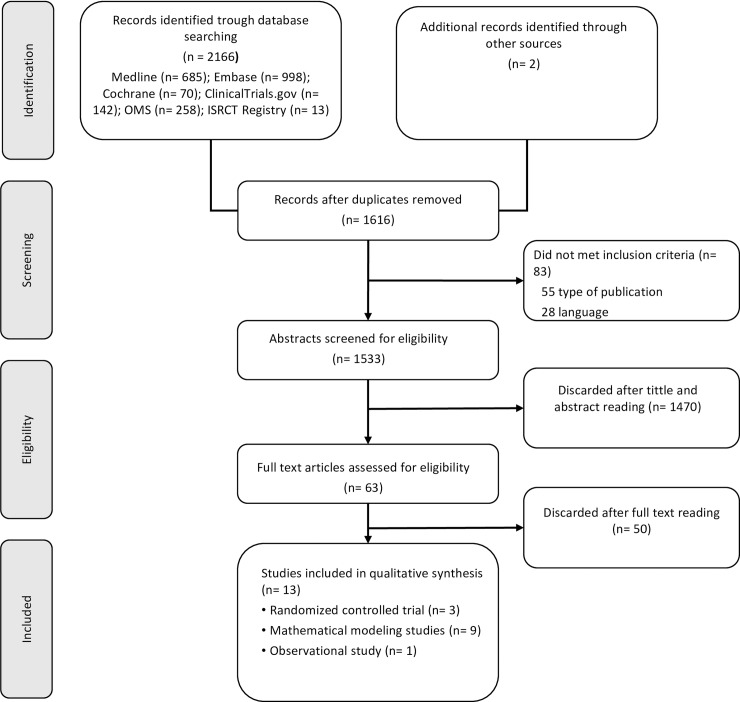
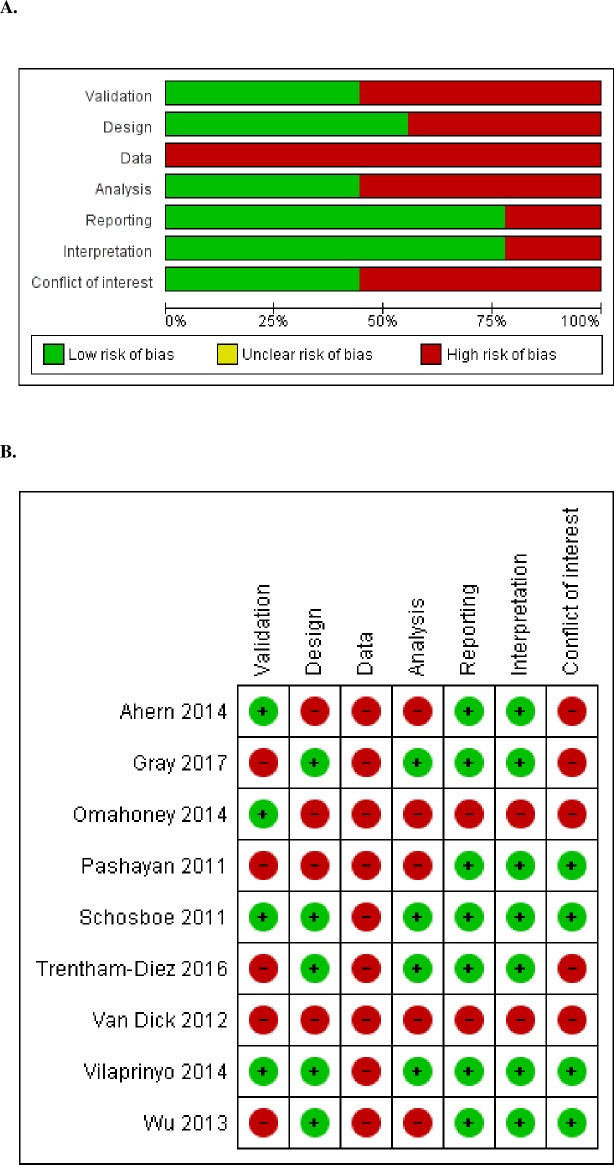
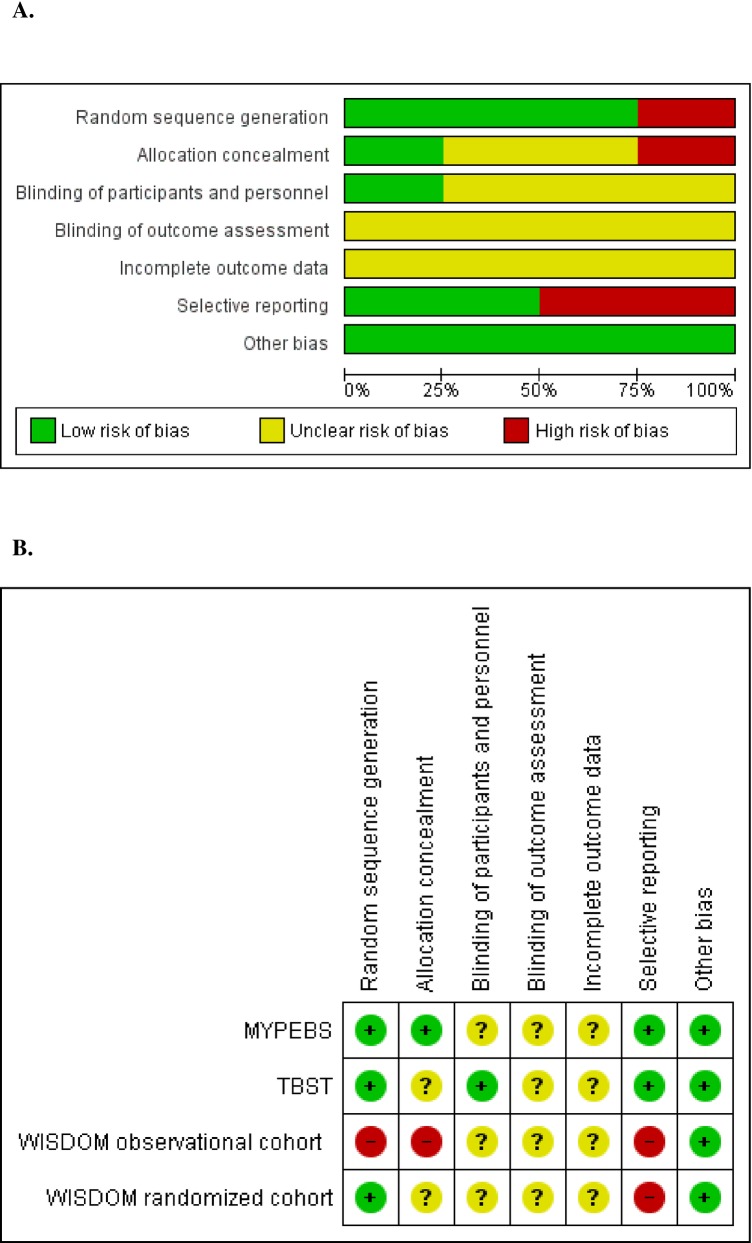
Results: Out of the 1533 initially retrieved citations, we included 13 studies. Three studies were randomized controlled trials, while nine were mathematical modeling studies, and one was an observational pilot study. The trials are in the recruitment phase and have not yet reported their results. All three trials used breast density and age to define risk groups, and two of them included family history, previous biopsies, and genetic information. Among the mathematical modeling studies, the main risk factors used to define risk groups were breast density, age, family history, and previous biopsies. Six studies used genetic information to define risk groups. The most common outcome measures were the gain in quality-adjusted life years (QALY), absolute costs, and incremental cost-effectiveness ratio (ICER), while the main outcome in the observational study was the detection rate. In all models, personalized screening strategies were shown to be effective. The randomized trials were of good quality. The modeling studies showed moderate risk of bias but there was wide variability across studies. The observational study showed a low risk of bias but its utility was moderate due to its pilot design and its relatively small scale.
Conclusions: There is some evidence of the effectiveness of screening personalization in terms of QUALYs and ICER from the modeling studies and the observational study. However, evidence is lacking on feasibility and acceptance by the target population.
Review registration: PROSPERO: CRD42018110483.
Conflict of interest statement
The authors have declared that no competing interests exist
Figures
References
-
- Perry N, Broeders M, de Wolf C, T”rnberg S, Holland R, von Karsa L. European guidelines for quality assurance in breast cancer screening and diagnosis. 2006; Available from: http://screening.iarc.fr/doc/ND7306954ENC_002.pdf - PubMed
-
- Bevers TB, Helvie M, Bonaccio E, Calhoun KE, Daly MB, Farrar WB, et al. Breast Cancer Screening and Diagnosis, Version 3.2018, NCCN Clinical Practice Guidelines in Oncology. J Natl Compr Cancer Netw JNCCN. 2018. November;16(11):1362–89. - PubMed
Publication types
MeSH terms
LinkOut - more resources
Full Text Sources
Medical
