


Clinical significance of self-reported cough intensity and frequency in patients with interstitial lung disease: a cross-sectional study
- PMID: 31842848
- PMCID: PMC6916448
- DOI: 10.1186/s12890-019-1012-6
Clinical significance of self-reported cough intensity and frequency in patients with interstitial lung disease: a cross-sectional study
Abstract
Background: The intensity and frequency of cough remain unclear in interstitial lung disease (ILD). The aim of this study was to evaluate the intensity and frequency of cough in idiopathic interstitial pneumonias (IIPs), connective tissue disease-associated interstitial lung disease (CTD-ILD), and chronic hypersensitivity pneumonia (CHP), and examine their associations with clinical indices.
Methods: In this cross-sectional study, the intensity and frequency of cough were evaluated using a 100-mm visual analogue scale. Scores on the Leicester Cough Questionnaire, chronic dyspnoea scale, and a frequency scale for symptoms of gastro-oesophageal reflux disease (FSSG) were collected. The correlations of cough intensity and frequency with potential predictor variables were tested using bivariate and multiple logistic regression analysis.
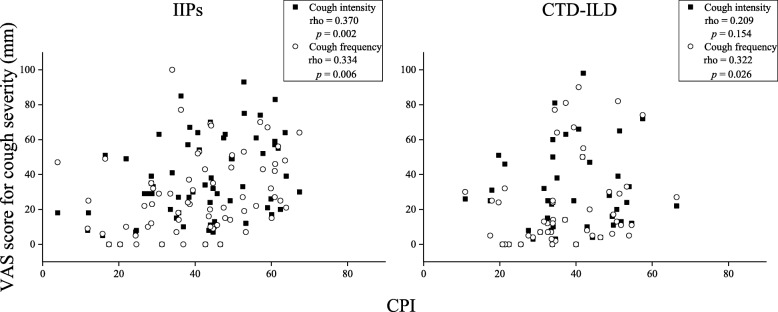
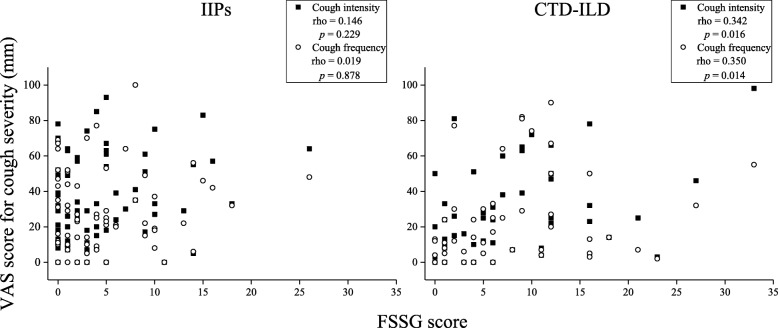
Results: The study included 70 patients with IIPs, 49 with CTD-ILD, and 10 with CHP. Patients with IIPs had the most severe cough intensity among the three patient groups. In patients with IIPs, both the intensity and frequency of cough were negatively associated with the diffusing capacity of the lung for carbon monoxide and positively with the Composite Physiologic Index (CPI). In CTD-ILD, both the intensity and frequency of cough were correlated with a higher FSSG score. In multivariate analysis of patients with ILD, IIPs and the FSSG score were independently associated with both components of cough, and CPI tended to be independently associated with cough frequency. Finally, we examined the features of the differences between cough intensity and frequency in all patients with ILD. Patients in whom cough frequency was predominant had a greater impairment of health status relative to other patients.
Conclusions: Cough intensity was greater in IIPs than in other ILDs. Different clinical indices were associated with patient-reported cough intensity and frequency according to the subtype of ILD. Cough frequency was more strongly associated with health status than was cough intensity. These findings suggest that medical staff could manage patients with ILD by considering cough-related factors when assessing the intensity and frequency of cough.
Keywords: Cough frequency; Cough intensity; Interstitial lung disease.
Conflict of interest statement
The authors declare that they have no competing interests.
Figures
References
-
- Saketkoo LA, Mittoo S, Huscher D, Khanna D, Dellaripa PF, Distler O, et al. Connective tissue disease related interstitial lung diseases and idiopathic pulmonary fibrosis: provisional core sets of domains and instruments for use in clinical trials. Thorax. 2014;69:428–436. doi: 10.1136/thoraxjnl-2013-204202. - DOI - PMC - PubMed
