Review
. 2020 Jan:108:732-748.
doi: 10.1016/j.neubiorev.2019.12.013. Epub 2019 Dec 13.

A neuroscientist's guide to transgenic mice and other genetic tools

Affiliations
Review

A neuroscientist's guide to transgenic mice and other genetic tools

Shaghayegh Navabpour et al. Neurosci Biobehav Rev. 2020 Jan.

Abstract

The past decade has produced an explosion in the number and variety of genetic tools available to neuroscientists, resulting in an unprecedented ability to precisely manipulate the genome and epigenome in behaving animals. However, no single resource exists that describes all of the tools available to neuroscientists. Here, we review the genetic, transgenic, and viral techniques that are currently available to probe the complex relationship between genes and cognition. Topics covered include types of traditional transgenic mouse models (knockout, knock-in, reporter lines), inducible systems (Cre-loxP, Tet-On, Tet-Off) and cell- and circuit-specific systems (TetTag, TRAP, DIO-DREADD). Additionally, we provide details on virus-mediated and siRNA/shRNA approaches, as well as a comprehensive discussion of the myriad manipulations that can be made using the CRISPR-Cas9 system, including single base pair editing and spatially- and temporally-regulated gene-specific transcriptional control. Collectively, this review will serve as a guide to assist neuroscientists in identifying and choosing the appropriate genetic tools available to study the complex relationship between the brain and behavior.

Keywords: Behavior; Brain; CRISPR; Cre; DREADDs; Knockouts; Transgenic mice.


Conflict of interest statement

Declaration of Interest

Declarations of interest: None

Figures
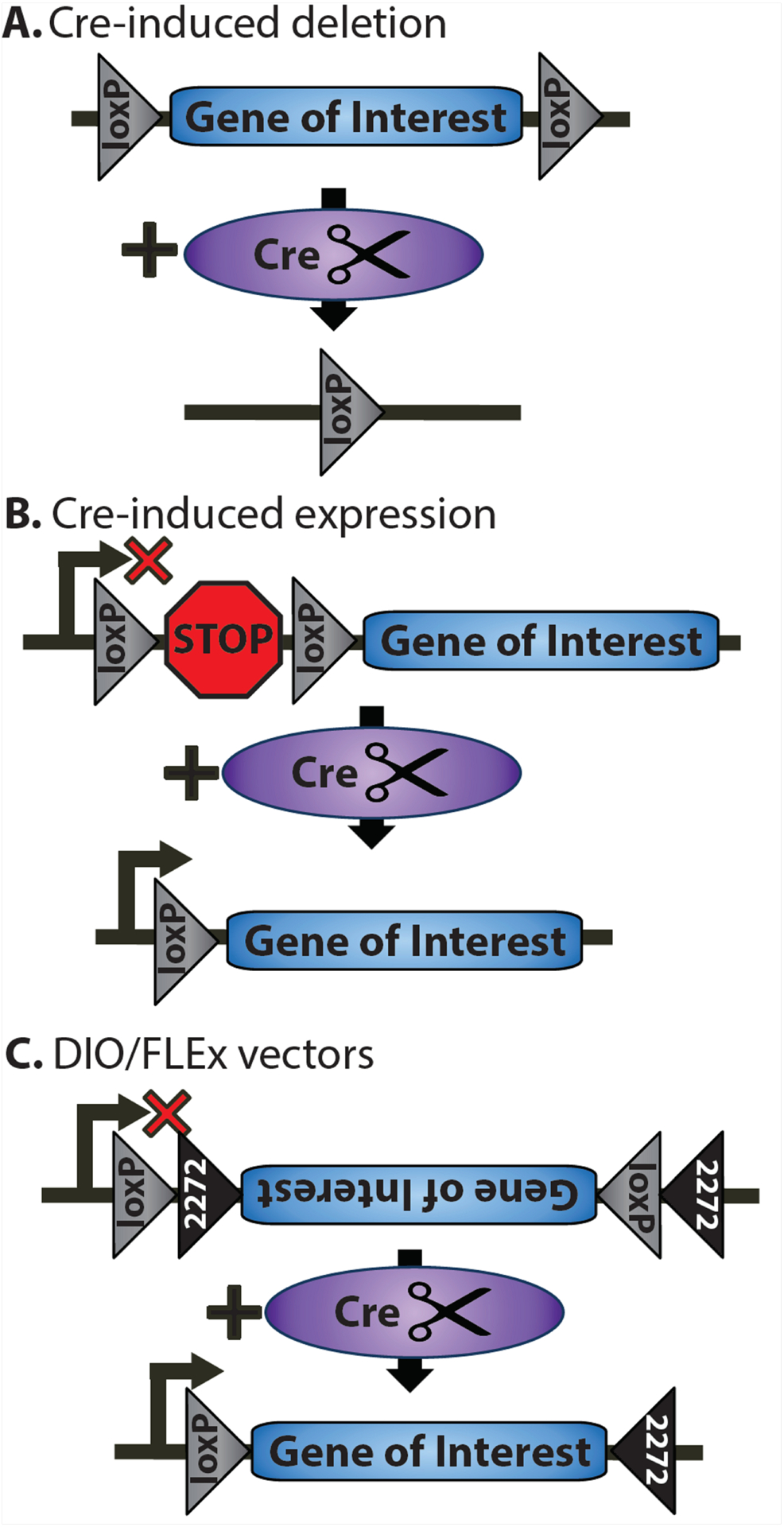
Figure 1.
Figure 1.. Cre-loxP system.
Cre-induced recombination can be used to induce either deletion or expression of a target gene. (A) Schematic depicting Cre-induced deletion. Cre cuts at LoxP sites flanking the gene of interest, removing the gene in any region expressing Cre. (B) Schematic depicting a typical Cre-induced expression system. LoxP sites flank a stop sequence that prevents expression of the gene. Exposure to Cre excises the stop sequence, allowing the target gene to be expressed. (C) Schematic of the DIO (Double Inverted Orientation) system (also called the Flip-Excision (FLEx) system). The vector expresses the gene of interest in an antisense orientation flanked by two unique lox sites (loxP and lox2272). The addition of Cre catalyzes recombination of these two sites that permantly flips the gene into the sense orientation, allowing for expression.
Figure 2.
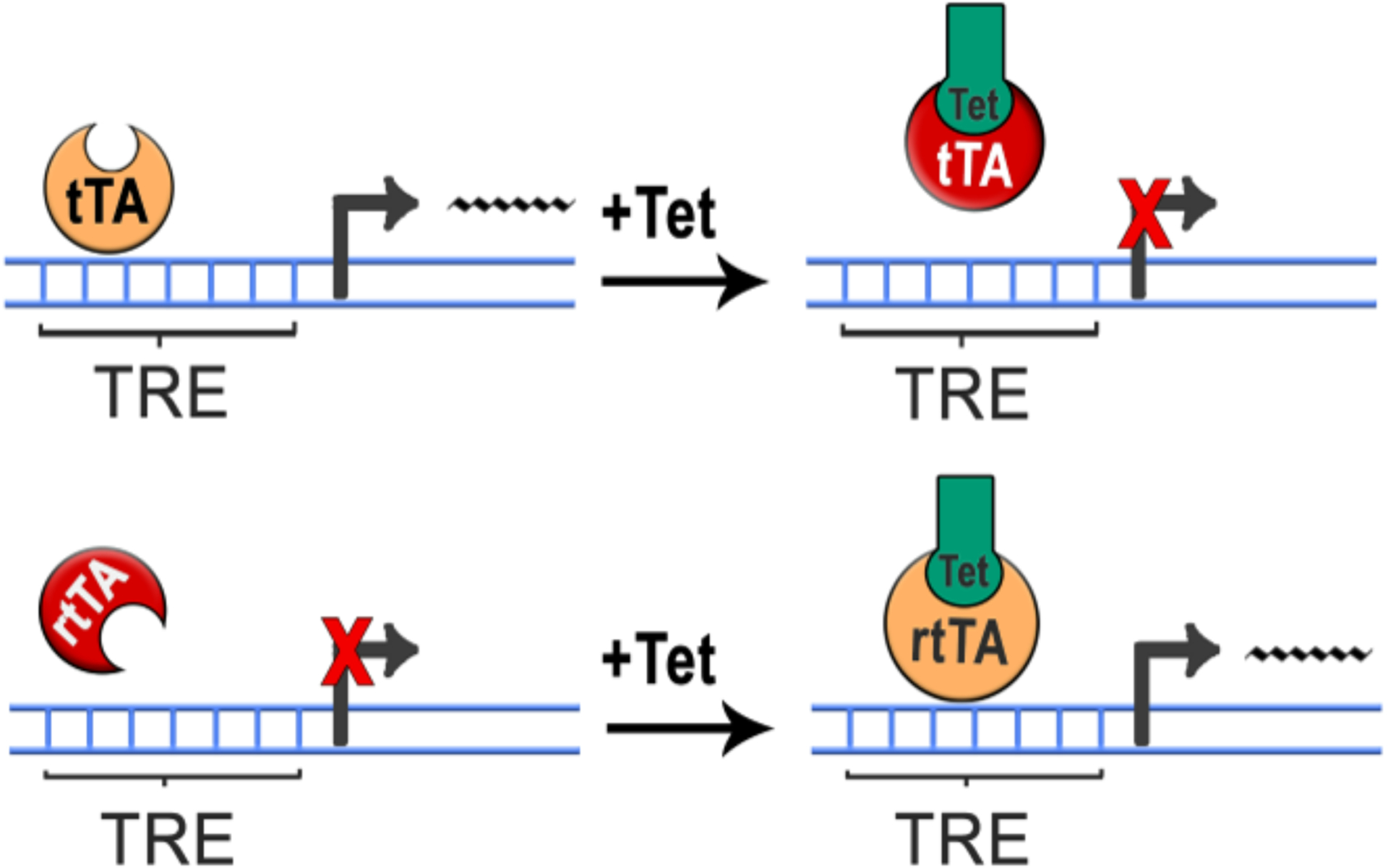
Figure 2.. Tet-inducible systems.
The target gene is under control of the tetracycline-responsive promoter element (TRE), which consists of a TetO binding site fused to a short promoter sequence. Transcriptional control of target gene is achieved by presence or absence of doxycycline (Tet). (A) In the Tet-Off system, the tetracycline-controlled transactivator protein (tTA) binds to the TRE only in the absence of Tet, which allows active transcription of the target gene (left). When Tet is applied, tTA is unable to bind TRE and transcription of the transgene is repressed (right). (B) In the Tet-On system, the reverse tetracycline-controlled transactivator protein (rtTA) only binds to the TRE in the presence of Tet, which allows active transcription of the target gene (right). When Tet is not present, tTA is unable to bind TRE and transcription of the transgene is repressed (left).
Figure 3.
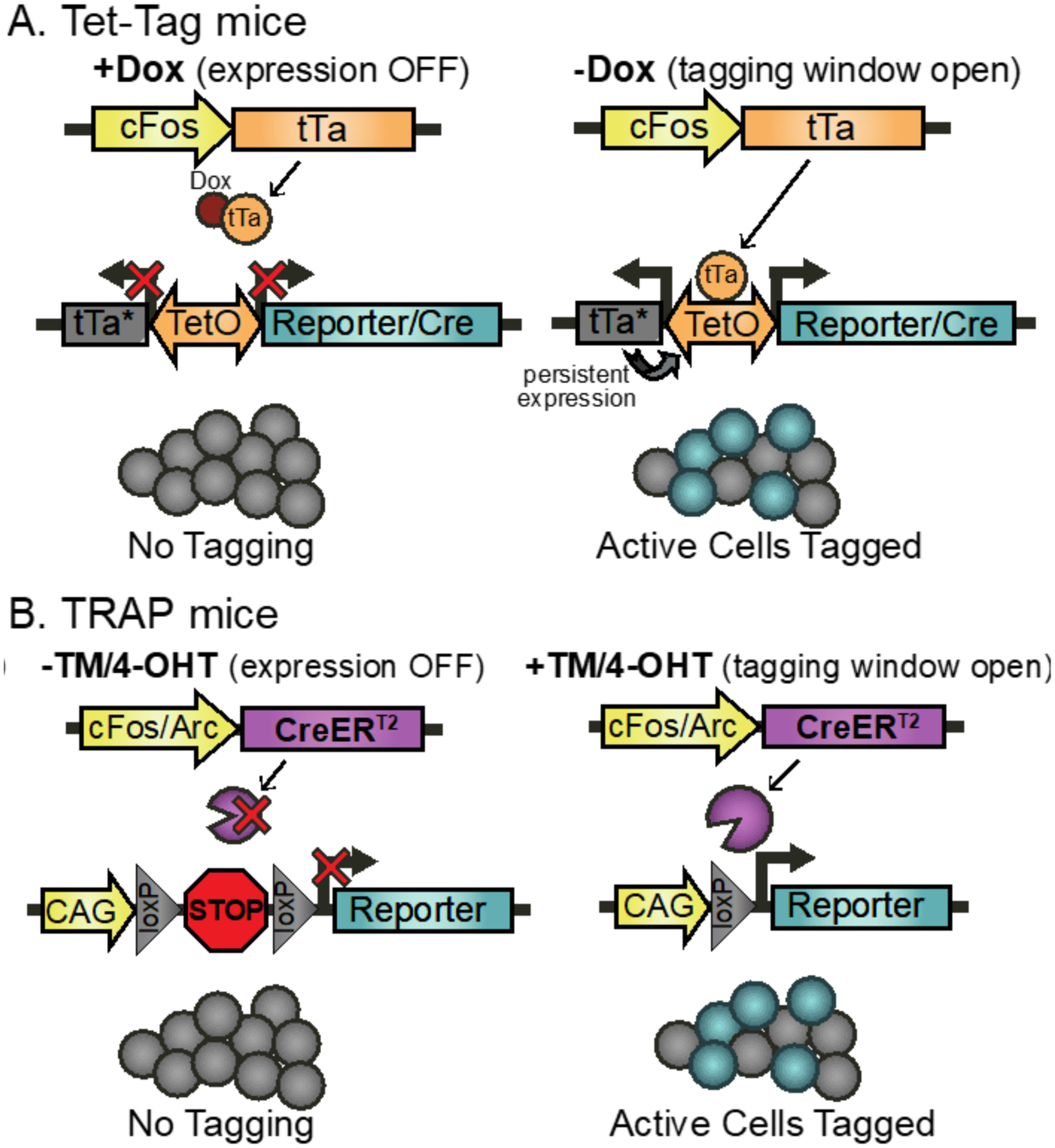
Figure 3.. TetTag and TRAP systems allow neurons active during specific time windows to be persistently tagged.
(A) Tet-tag system. Two transgenes control tagging of active neurons: 1) tTA under the control of the activity-dependent cFos promoter and a TetO promoter that drives both the gene of interest (e.g. a reporter gene) and the dox-insensitive tTA* mutant that drives persistent expression. The presence of Doxycyline (Dox) at rest prevents tTa-TetO-mediated expression (left). Removing Dox (right) opens a temporary tagging window during which tTa binds the TetO promoter and drives expression of the desired gene selectively in cells activated during that window. (B) The TRAP system also requires two transgenes: 1) The tamoxifen-dependent CreERT2 under the control of an activity-sensitive promoter like cFos or Arc and 2) a transgene that expresses the gene of interest (e.g. a reporter gene) in a Cre-dependent manner. In the absence of tamoxifen (TM) or its metabolite 4-OHT (left), Cre is sequestered to the cytoplasm, preventing expression of the target gene. Injecting TM or 4-OHT (right) opens a tagging window in which CreERT2 recombination occurs selectively in activated cells.
Figure 4.
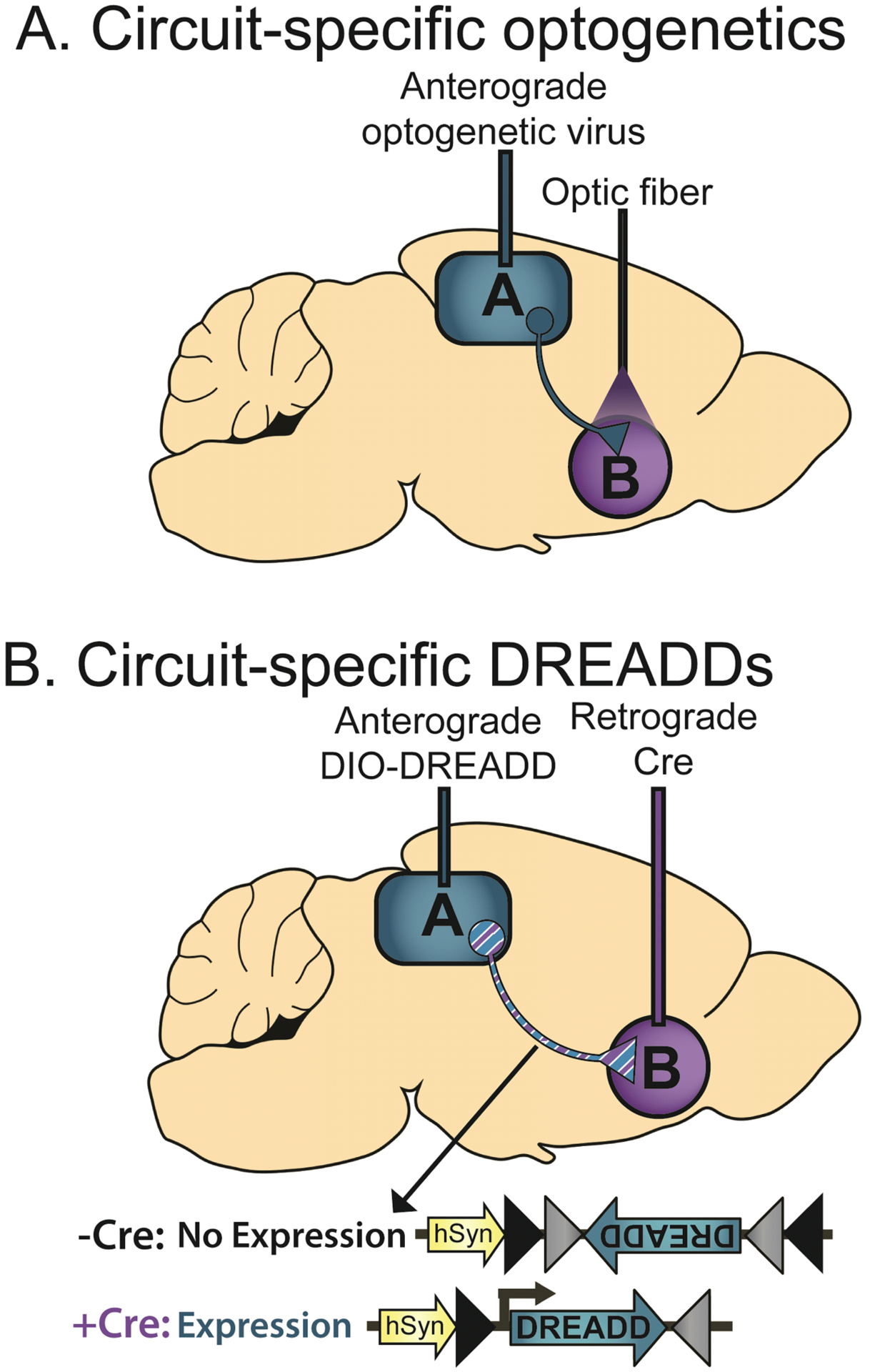
Figure 4.. Circuit-specific use of optogenetics and DREADDs.
(A) An example of the use of optogenetics to selectively interrogate neurons projecting in a specific circuit. Here, an anterograde optogenetic virus (e.g. AAV1-ChR2) is injected into brain region “A” and the terminals are optically stimulated with an optical fiber implanted into efferent region “B” to selectively activate neurons projecting from A to B. (B) An example of the use of DIO-DREADDs to selectively interrogate a neural circuit. An anterograde DIO-DREADD is injected into region A and a retrograde Cre virus is injected into efferent region B. As the DIO-DREADD is inactive in the absence of Cre, only cells that receive both viruses will express DREADDS and will respond to systemic injection of CNO.
Figure 5.
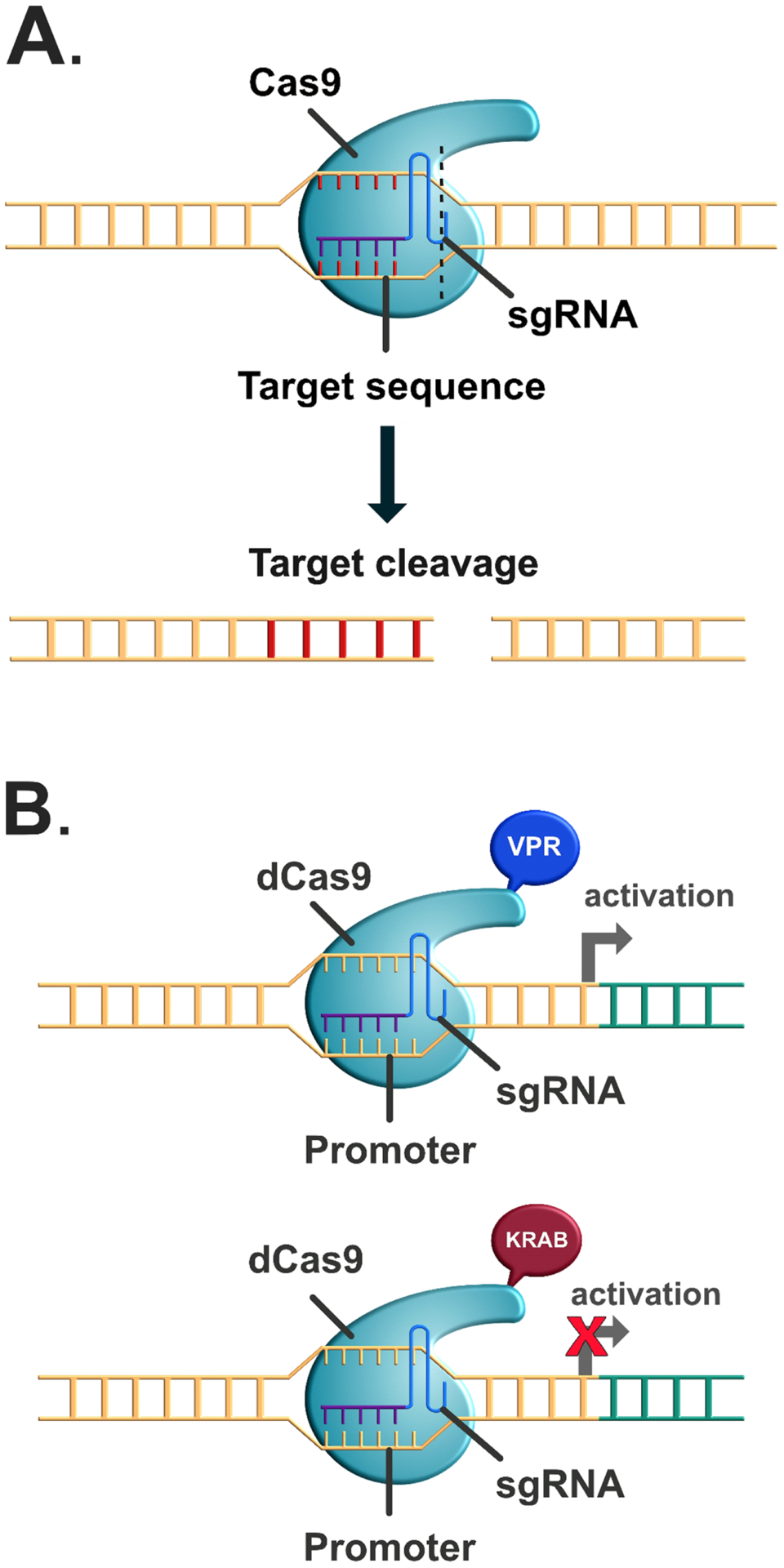
Figure 5.. Basic CRISPR-Cas9 systems.
The CRISPR-Cas9 system can be used to edit a gene out or to control gene-specific transcriptional activation or silencing. (A) In the traditional CRISPR-Cas9 system, the catalytically active Cas9 complex is recruited to a target DNA region via a synthetic guide RNA (sgRNA; top). The Cas9 will “cut” the DNA, resulting in a double-stranded break (bottom). (B) In the CRISPR-dCas9 system, the Cas9 is catalytically inactive, so cannot cut DNA, but can still bind DNA as directed by the sgRNA. The dCas9 is fused to a transcriptional activator such as p65 (top) or repressor such as KRAB (bottom), which allows endogenous transcriptional control without editing the genome.

References

    1. Abe T, Fujimori T, 2013. Reporter mouse lines for fluorescence imaging. Development, growth & differentiation 55, 390–405. - PubMed
    1. Abe T, Kiyonari H, Shioi G, Inoue K, Nakao K, Aizawa S, Fujimori T, 2011. Establishment of conditional reporter mouse lines at ROSA26 locus for live cell imaging. Genesis 49, 579–590. - PubMed
    1. Abram CL, Roberge GL, Hu Y, Lowell CA, 2014. Comparative analysis of the efficiency and specificity of myeloid-Cre deleting strains using ROSA-EYFP reporter mice. J. Immunol. Methods 408, 89–100. - PMC - PubMed
    1. Achterberg KG, Buitendijk GH, Kool MJ, Goorden SM, Post L, Slump DE, Silva AJ, van Woerden GM, Kushner SA, Elgersma Y, 2014. Temporal and region-specific requirements of alphaCaMKII in spatial and contextual learning. J Neurosci 34, 11180–11187. - PMC - PubMed
    1. Adli M, 2018. The CRISPR tool kit for genome editing and beyond. Nat Commun 9, 1911. - PMC - PubMed

Publication types