


Examining the Effect of Hypertonic Saline Administered for Reduction of Intracranial Hypertension on Coagulation
- PMID: 31843691
- PMCID: PMC7050279
- DOI: 10.1016/j.jamcollsurg.2019.11.011
Examining the Effect of Hypertonic Saline Administered for Reduction of Intracranial Hypertension on Coagulation
Abstract
Background: Hypertonic saline (23.4%, HTS) bolus administration is common practice for refractory intracranial hypertension, but its effects on coagulation are unknown. We hypothesize that 23.4% HTS in whole blood results in progressive impairment of coagulation in vitro and in vivo in a murine model of traumatic brain injury (TBI).
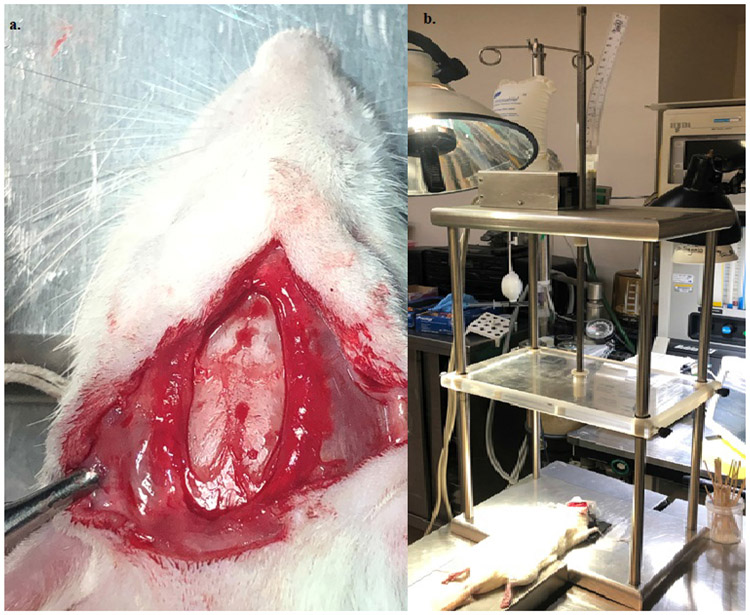
Study design: For the in vitro study, whole blood was collected from 10 healthy volunteers, and citrated native thrombelastography was performed with normal saline (0.9%, NS) and 23.4% HTS in serial dilutions (2.5%, 5%, and 10%). For the in vivo experiment, we assessed the effects of 23.4% HTS bolus vs NS on serial thrombelastography and tail-bleeding times in a TBI murine model (n = 10 rats with TBI and 10 controls).
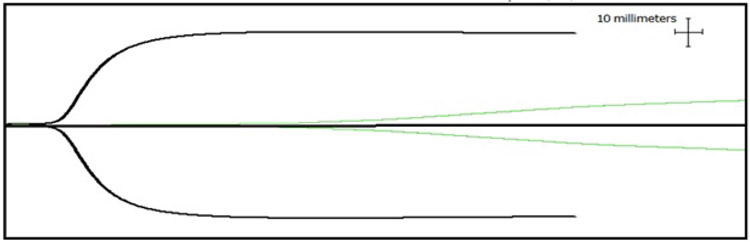
Results: For the in vitro work, clinically relevant concentrations of HTS (2.5% dilution) shortened time to clot formation and increased clot strength (maximum amplitude) compared with control and NS. With higher HTS dosing (5% and 10% blood dilution), there was progressive prolongation of time to clot formation, decreased angle, and decreased maximum amplitude. In the in vivo study, there was no significant difference in thrombelastography measurements or tail-bleeding times after bolus administration of 23.4% HTS compared with NS at 2.5% blood volume.
Conclusions: At clinically relevant dilutions of HTS, there is a paradoxical shortening of time to clot formation and increase in clot strength in vitro and no significant effects in a murine TBI model. However, with excess dilution, caution should be exercised when using serial HTS boluses in TBI patients at risk for trauma-induced coagulopathy.
Copyright © 2019 American College of Surgeons. Published by Elsevier Inc. All rights reserved.
Figures
References
-
- de Crescenzo C, Gorouhi F, Salcedo ES, Galante JM. Prehospital hypertonic fluid resuscitation for trauma patients: A systematic review and meta-analysis. The Journal of Trauma and Acute Care Surgery. 2017;82(5):956–62. - PubMed
-
- Wang H, Cao H, Zhang X, et al. The effect of hypertonic saline and mannitol on coagulation in moderate traumatic brain injury patients. The American Journal of Emergency Medicine. 2017;35(10):1404–7. - PubMed
-
- Kheirabadi BS, Miranda N, Terrazas IB, et al. Does small-volume resuscitation with crystalloids or colloids influence hemostasis and survival of rabbits subjected to lethal uncontrolled hemorrhage? The Journal of Trauma and Acute Care Surgery. 2017;82(1):156–64. - PubMed
Publication types
MeSH terms
Substances
Grants and funding
LinkOut - more resources
Full Text Sources
Miscellaneous
