


Lifetime cardiovascular management of patients with previous Kawasaki disease
- PMID: 31843876
- PMCID: PMC7057818
- DOI: 10.1136/heartjnl-2019-315925
Lifetime cardiovascular management of patients with previous Kawasaki disease
Abstract
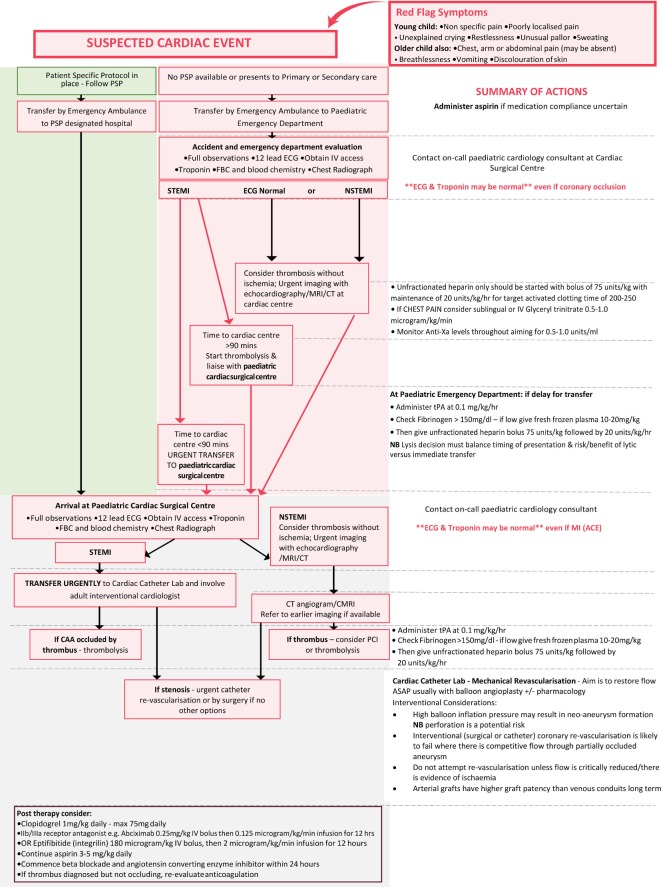
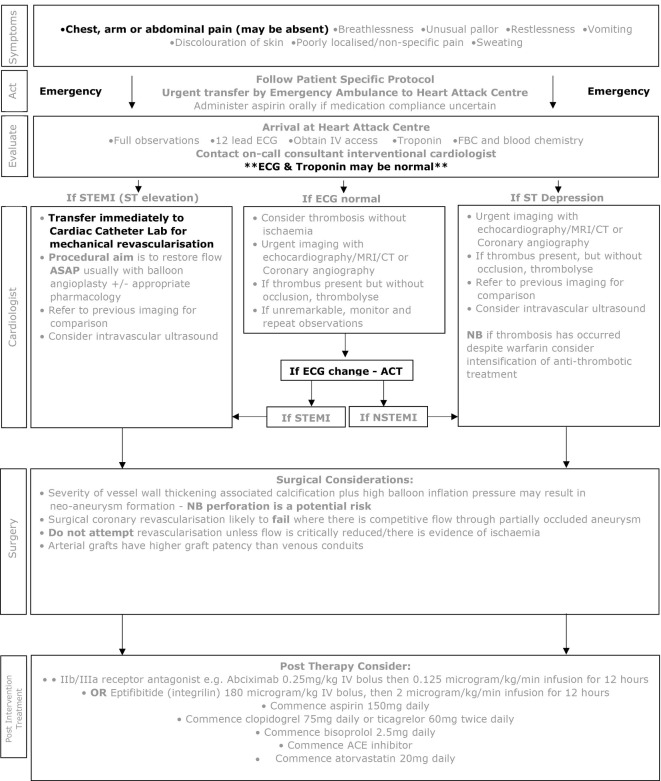
Kawasaki disease (KD) is an inflammatory disorder of young children, associated with vasculitis of the coronary arteries with subsequent aneurysm formation in up to one-third of untreated patients. Those who develop aneurysms are at life-long risk of coronary thrombosis or the development of stenotic lesions, which may lead to myocardial ischaemia, infarction or death. The incidence of KD is increasing worldwide, and in more economically developed countries, KD is now the most common cause of acquired heart disease in children. However, many clinicians in the UK are unaware of the disorder and its long-term cardiac complications, potentially leading to late diagnosis, delayed treatment and poorer outcomes. Increasing numbers of patients who suffered KD in childhood are transitioning to the care of adult services where there is significantly less awareness and experience of the condition than in paediatric services. The aim of this document is to provide guidance on the long-term management of patients who have vascular complications of KD and guidance on the emergency management of acute coronary complications. Guidance on the management of acute KD is published elsewhere.
Keywords: Kawasaki disease; acute coronary syndrome; cardiovascular risk; coronary artery aneurysm; late sequelae; lifetime cardiovascular management; person specific protocol; transitional care.
© Author(s) (or their employer(s)) 2020. Re-use permitted under CC BY-NC. No commercial re-use. See rights and permissions. Published by BMJ.
Conflict of interest statement
Competing interests: PB has received institutional grants from SOBI, Roche, Novartis and Novimmune and consultancy fees from SOBI, Novartis, Roche and UCB. RMRT has received grants and speaker fees from Actelion, Abbvie, GSK, Bayer, Pfizer, Jansen. Societi Foundation (RMcC) has received grants from SOBI and Roche.
Figures
References
-
- de Graeff N, Groot N, Ozen S, et al. European consensus based recommendations for the diagnosis and treatment of Kawasaki disease - the Share initiative. Rheumatology 2018. - PubMed
