Hot environment on reproductive performance, immunoglobulins, vitamin E, and vitamin A status in sows and their progeny under commercial husbandry
- PMID: 31844544
- PMCID: PMC6906132
- DOI: 10.5187/jast.2019.61.6.340
Hot environment on reproductive performance, immunoglobulins, vitamin E, and vitamin A status in sows and their progeny under commercial husbandry
Abstract
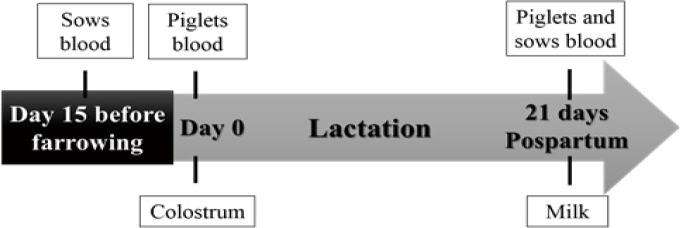
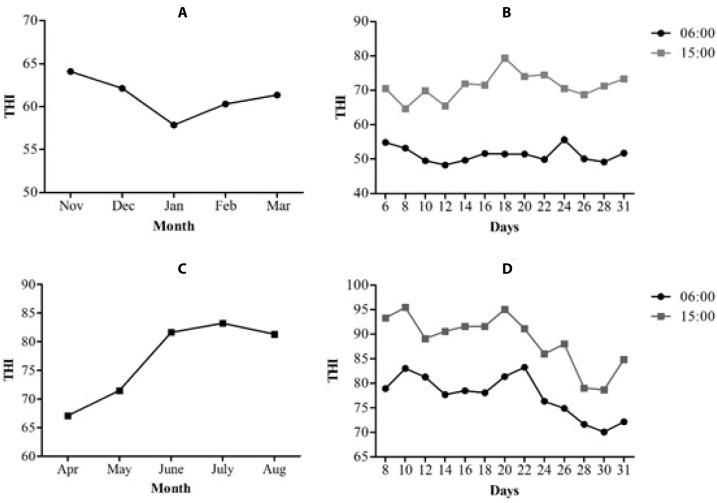
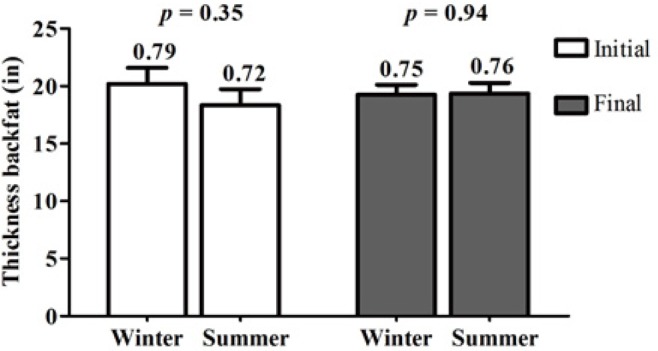
Hot environments can affect feed intake and lactation, and the subsequent unavailability of important micronutrients to the newborn piglet can impair piglet growth, reduce the viability of newborn piglets and limit their subsequent performance. This work addresses the effects of hot environments (summer season) upon the reproductive performance of sows during gestation and lactation as well as on the serum levels of vitamins and the concentration of immunoglobulins in their litters in comparison with the winter season. Fourteen sows were evaluated over 100 ± 2 days of gestation in each season. The temperature and humidity index (THI) was used as an indirect measure of heat stress during gestation. The reproductive performance, milk yield, and body condition of the sows were recorded. The concentrations of vitamin E and vitamin A in piglets and in sow serum, colostrum, milk and feed were determined by HPLC; immunoglobulins were assessed by an ELISA. The THI index indicated that animals were subject to heat stress only in during the summer. Although the effect was not significant, there were a lower number of piglets at birth and at weaning and the milk yield in summer compared with winter. There was no difference (p > 0.05) in the body condition of sows between seasons. Season had an effect (p < 0.05) on the vitamin A concentration of postpartum sow serum (0.29 μg/mL in winter vs 0.21 μg/mL in summer) and on the vitamin E concentration before birth (2.00 μg/mL in winter vs 0.90 μg/mL in summer). Vitamin E in milk was higher (p < 0.05) in winter than in summer (2.23 vs 1.81 μg/mL). Serum levels of vitamins A and E in piglets at birth were lower (p < 0.05) in winter than in summer. The concentrations of immunoglobulins (IgG and IgA) in colostrum and milk were similar between seasons (p > 0.05), but the IgA in piglet serum was higher in winter than in summer (p < 0.05). High temperatures produced heat stress in sows, which affected certain aspects of production that can be translated into economic losses for this sector.
Keywords: Environmental temperature; Immunoglobulins; Reproductive performance; Vitamin A; Vitamin E.
© Copyright 2019 Korean Society of Animal Science and Technology.
Conflict of interest statement
No potential conflict of interest relevant to this article was reported.
Figures
References
LinkOut - more resources
Full Text Sources
Miscellaneous