


Hyperprolactinaemia
- PMID: 31847209
- PMCID: PMC6947286
- DOI: 10.3390/jcm8122203
Hyperprolactinaemia
Abstract
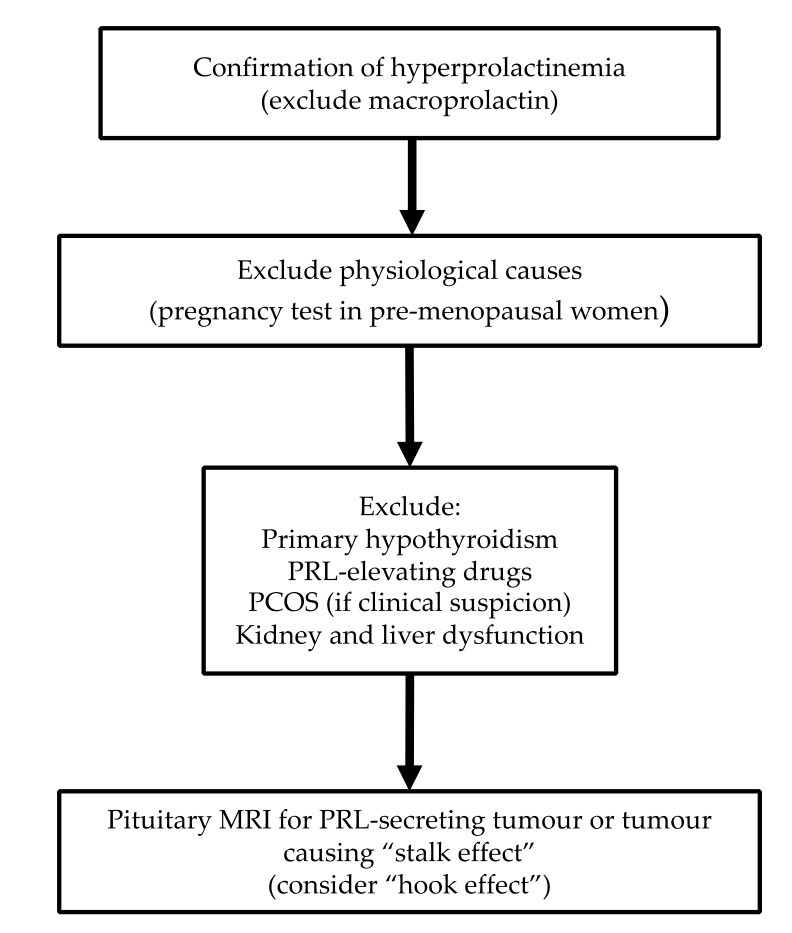
Hyperprolactinaemia is one of the most common problems in clinical endocrinology. It relates with various aetiologies (physiological, pharmacological, pathological), the clarification of which requires careful history taking and clinical assessment. Analytical issues (presence of macroprolactin or of the hook effect) need to be taken into account when interpreting the prolactin values. Medications and sellar/parasellar masses (prolactin secreting or acting through "stalk effect") are the most common causes of pathological hyperprolactinaemia. Hypogonadism and galactorrhoea are well-recognized manifestations of prolactin excess, although its implications on bone health, metabolism and immune system are also expanding. Treatment mainly aims at restoration and maintenance of normal gonadal function/fertility, and prevention of osteoporosis; further specific management strategies depend on the underlying cause. In this review, we provide an update on the diagnostic and management approaches for the patient with hyperprolactinaemia and on the current data looking at the impact of high prolactin on metabolism, cardiovascular and immune systems.
Keywords: antipsychotics; dopamine agonists; hyperprolactinaemia; hypogonadism; prolactin; prolactinoma.
Conflict of interest statement
The authors declare no conflicts of interest.
Figures
References
-
- Riddle O., Bates R.W., Dykshorn S.W. The preparation, identification and assay of prolactin—A hormone of the anterior pituitary. Am. J. Physiol. Leg. Content. 1933;105:191–216. doi: 10.1152/ajplegacy.1933.105.1.191. - DOI
Publication types
LinkOut - more resources
Full Text Sources
