


TIA and minor stroke: a qualitative study of long-term impact and experiences of follow-up care
- PMID: 31847828
- PMCID: PMC6918619
- DOI: 10.1186/s12875-019-1057-x
TIA and minor stroke: a qualitative study of long-term impact and experiences of follow-up care
Abstract
Background: Transient ischaemic attack (TIA) and minor stroke are often considered transient events; however, many patients experience residual problems and reduced quality of life. Current follow-up healthcare focuses on stroke prevention and care for other long-term problems is not routinely provided. We aimed to explore patient and healthcare provider (HCP) experiences of residual problems post-TIA/minor stroke, the impact of TIA/minor stroke on patients' lives, and current follow-up care and sources of support.
Methods: This qualitative study recruited participants from three TIA clinics, seven general practices and one community care trust in the West Midlands, England. Semi-structured interviews were conducted with 12 TIA/minor stroke patients and 24 HCPs from primary, secondary and community care. Data was analysed using framework analysis.
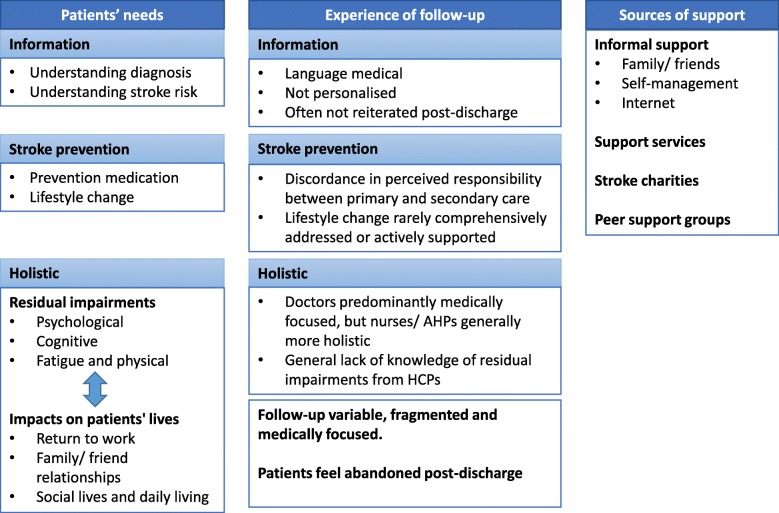
Results: A diverse range of residual problems were reported post-TIA/minor stroke, including psychological, cognitive and physical impairments. Consultants and general practitioners generally lacked awareness of these long-term problems; however, there was better recognition among nurses and allied HCPs. Residual problems significantly affected patients' lives, including return to work, social activities, and relationships with family and friends. Follow-up care was variable and medically focused. While HCPs prioritised medical investigations and stroke prevention medication, patients emphasised the importance of understanding their diagnosis, individualised support regarding stroke risk, and addressing residual problems.
Conclusion: HCPs could better communicate information about TIA/minor stroke diagnosis and secondary stroke prevention using lay language, and improve their identification of and response to important residual impairments affecting patients.
Keywords: Minor stroke; Qualitative; Quality of life; Rehabilitation; Transient ischemic attack.
Conflict of interest statement
GT, CM, RF and LA report no competing interests. MC has received personal fees from PCORI, Astellas, Takeda, Glaukos, and Merck outside the submitted work. JM has received personal fees from Pfizer/BMS outside the submitted work.
References
-
- Scarborough P, Peto V, Bhatnagar P, et al. Stroke statistics. London: British Heart Foundation and Stroke Association; 2009.
-
- Intercollegiate Stroke Working Party . National clinical guideline for stroke. London: Royal College of Physicians; 2016.
Publication types
MeSH terms
Grants and funding
LinkOut - more resources
Full Text Sources
Medical
Miscellaneous
