Unbiased Metagenomic Sequencing for Pediatric Meningitis in Bangladesh Reveals Neuroinvasive Chikungunya Virus Outbreak and Other Unrealized Pathogens
- PMID: 31848287
- PMCID: PMC6918088
- DOI: 10.1128/mBio.02877-19
Unbiased Metagenomic Sequencing for Pediatric Meningitis in Bangladesh Reveals Neuroinvasive Chikungunya Virus Outbreak and Other Unrealized Pathogens
Abstract
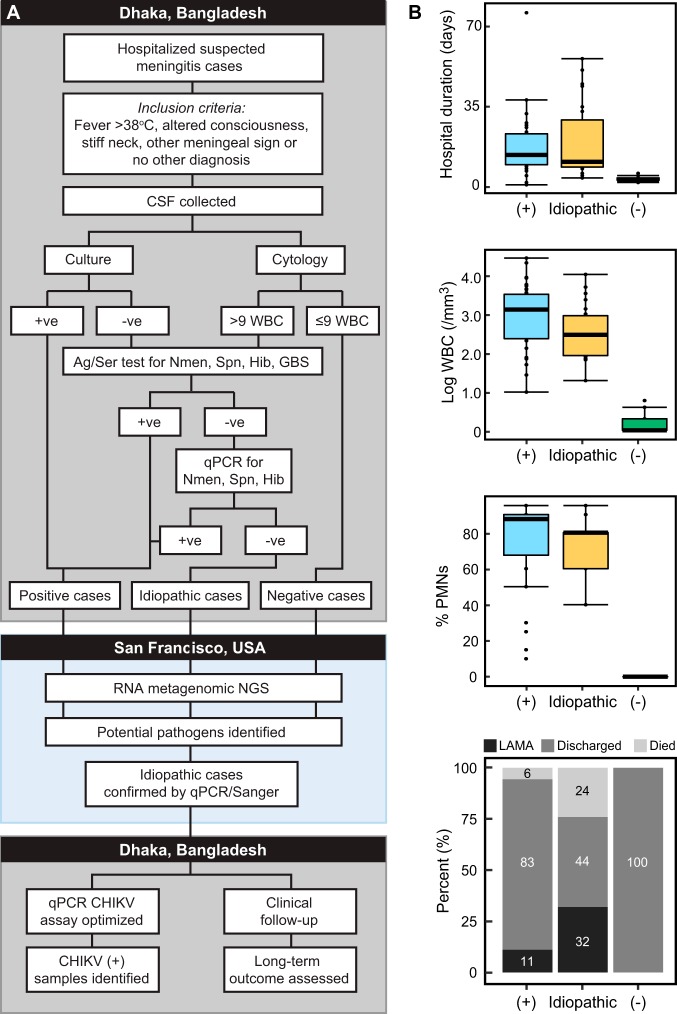
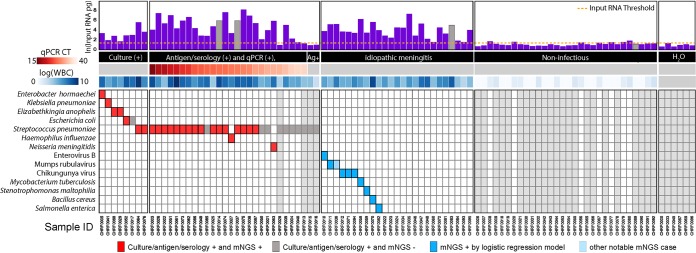
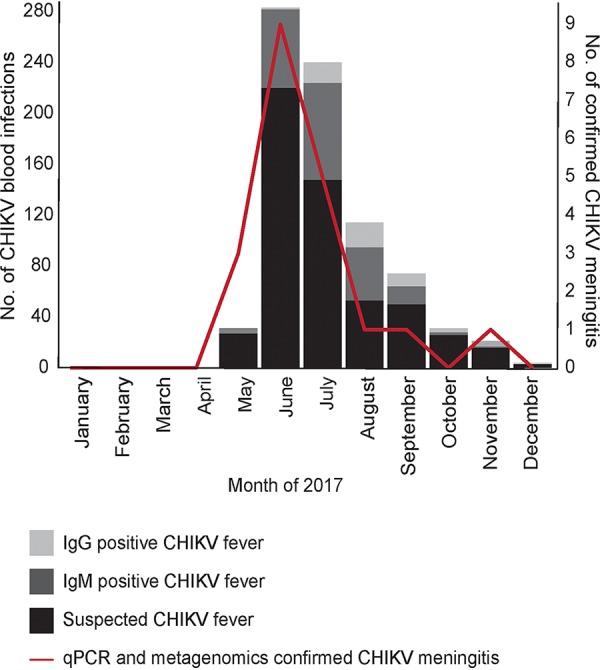
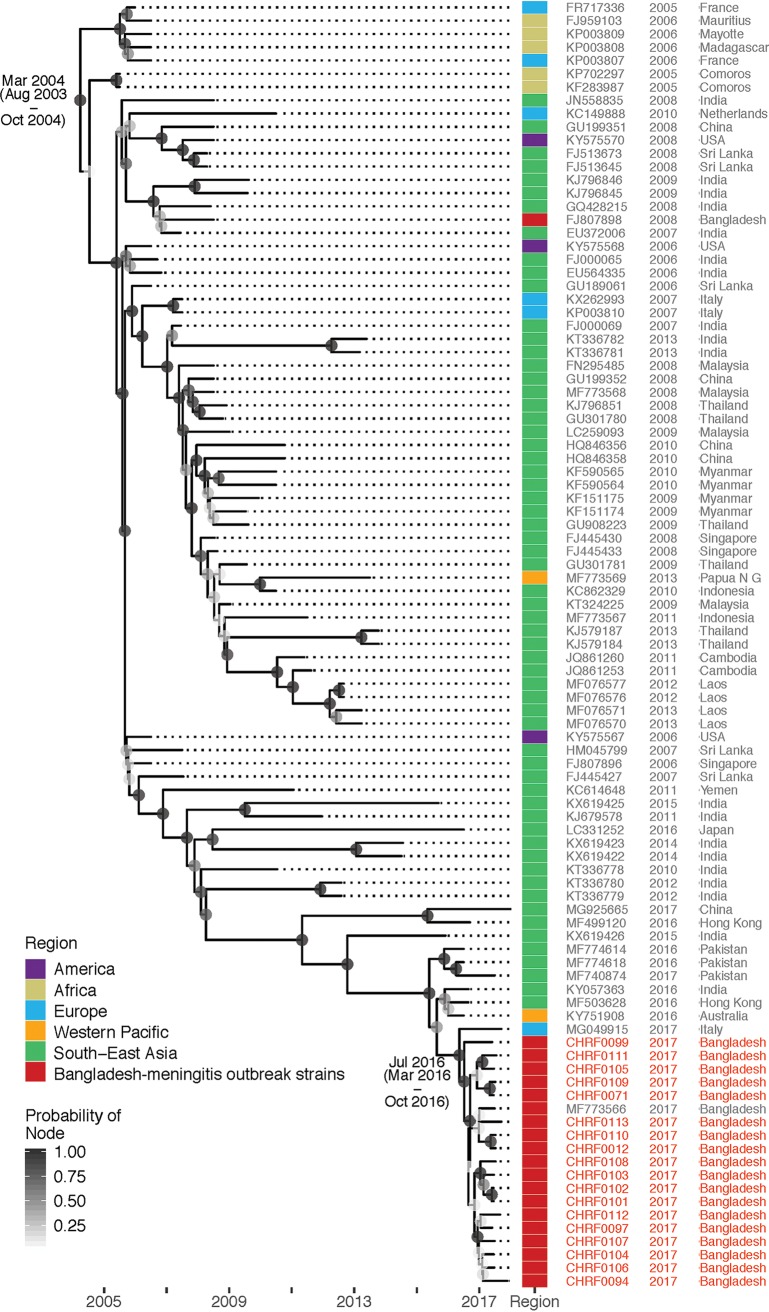
The burden of meningitis in low-and-middle-income countries remains significant, but the infectious causes remain largely unknown, impeding institution of evidence-based treatment and prevention decisions. We conducted a validation and application study of unbiased metagenomic next-generation sequencing (mNGS) to elucidate etiologies of meningitis in Bangladesh. This RNA mNGS study was performed on cerebrospinal fluid (CSF) specimens from patients admitted in the largest pediatric hospital, a World Health Organization sentinel site, with known neurologic infections (n = 36), with idiopathic meningitis (n = 25), and with no infection (n = 30), and six environmental samples, collected between 2012 and 2018. We used the IDseq bioinformatics pipeline and machine learning to identify potentially pathogenic microbes, which we then confirmed orthogonally and followed up through phone/home visits. In samples with known etiology and without infections, there was 83% concordance between mNGS and conventional testing. In idiopathic cases, mNGS identified a potential bacterial or viral etiology in 40%. There were three instances of neuroinvasive Chikungunya virus (CHIKV), whose genomes were >99% identical to each other and to a Bangladeshi strain only previously recognized to cause febrile illness in 2017. CHIKV-specific qPCR of all remaining stored CSF samples from children who presented with idiopathic meningitis in 2017 (n = 472) revealed 17 additional CHIKV meningitis cases, exposing an unrecognized meningitis outbreak. Orthogonal molecular confirmation, case-based clinical data, and patient follow-up substantiated the findings. Case-control CSF mNGS surveys can complement conventional diagnostic methods to identify etiologies of meningitis, conduct surveillance, and predict outbreaks. The improved patient- and population-level data can inform evidence-based policy decisions.IMPORTANCE Globally, there are an estimated 10.6 million cases of meningitis and 288,000 deaths every year, with the vast majority occurring in low- and middle-income countries. In addition, many survivors suffer from long-term neurological sequelae. Most laboratories assay only for common bacterial etiologies using culture and directed PCR, and the majority of meningitis cases lack microbiological diagnoses, impeding institution of evidence-based treatment and prevention strategies. We report here the results of a validation and application study of using unbiased metagenomic sequencing to determine etiologies of idiopathic (of unknown cause) cases. This included CSF from patients with known neurologic infections, with idiopathic meningitis, and without infection admitted in the largest children's hospital of Bangladesh and environmental samples. Using mNGS and machine learning, we identified and confirmed an etiology (viral or bacterial) in 40% of idiopathic cases. We detected three instances of Chikungunya virus (CHIKV) that were >99% identical to each other and to a strain previously recognized to cause systemic illness only in 2017. CHIKV qPCR of all remaining stored 472 CSF samples from children who presented with idiopathic meningitis in 2017 at the same hospital uncovered an unrecognized CHIKV meningitis outbreak. CSF mNGS can complement conventional diagnostic methods to identify etiologies of meningitis, and the improved patient- and population-level data can inform better policy decisions.
Keywords: Bangladesh; Chikungunya virus; cerebrospinal fluid; etiology; idiopathic meningitis; meningitis; metagenomics; virology.
Copyright © 2019 Saha et al.
Figures
References
-
- GBD 2017 Causes of Death Collaborators. 2018. Global, regional, and national age-sex-specific mortality for 282 causes of death in 195 countries and territories, 1980–2017: a systematic analysis for the Global Burden of Disease Study 2017. Lancet 392:1736–1788. doi:10.1016/S0140-6736(18)32203-7. - DOI - PMC - PubMed
-
- GBD 2017 Disease and Injury Incidence and Prevalence Collaborators. 2018. Global, regional, and national incidence, prevalence, and years lived with disability for 354 diseases and injuries for 195 countries and territories, 1990–2017: a systematic analysis for the Global Burden of Disease Study 2017. Lancet 392:1789–1858. doi:10.1016/S0140-6736(18)32279-7. - DOI - PMC - PubMed
Publication types
MeSH terms
Grants and funding
LinkOut - more resources
Full Text Sources
Other Literature Sources
Medical