. 2021 Dec 1;274(6):e564-e573.
doi: 10.1097/SLA.0000000000003706.

The Impact of Socioeconomic Deprivation on Clinical Outcomes for Pancreatic Adenocarcinoma at a High-volume Cancer Center: A Retrospective Cohort Analysis

Affiliations

The Impact of Socioeconomic Deprivation on Clinical Outcomes for Pancreatic Adenocarcinoma at a High-volume Cancer Center: A Retrospective Cohort Analysis

Benjamin D Powers et al. Ann Surg. .

Abstract

Objective: To assess the impact of a granular measure of SED on pancreatic surgical and cancer-related outcomes at a high-volume cancer center that employs a standardized clinic pathway.

Summary of background data: Prior research has shown that low socioeconomic status leads to less treatment and worse outcomes for PDAC. However, these studies employed inconsistent definitions and categorizations of socioeconomic status, aggregated individual socioeconomic data using large geographic areas, and lacked detailed clinicopathologic variables.

Methods: We conducted a retrospective cohort study of 1552 PDAC patients between 2008 and 2015. Patients were stratified using the area deprivation index, a validated dataset that ranks census block groups based on SED. Multivariable models were used in the curative surgery cohort to predict the impact of SED on (1) grade 3/4 Clavien-Dindo complications, (2) initiation of adjuvant therapy, (3) completion of adjuvant therapy, and (4) overall survival.

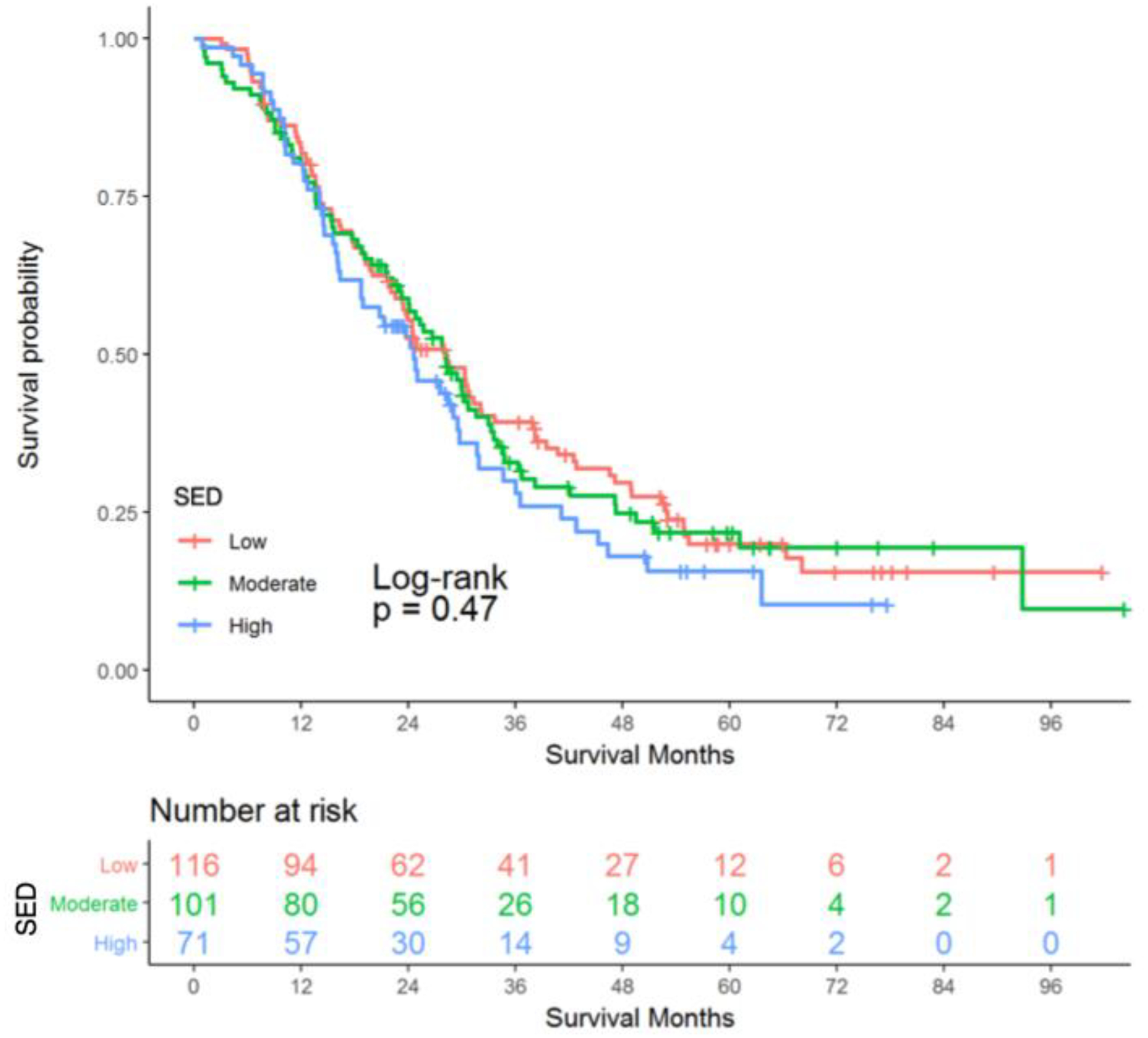
Results: Patients from high SED neighborhoods constituted 29.9% of the cohort. Median overall survival was 28 months. The rate of Clavien-Dindo grade 3/4 complications was 14.2% and completion of adjuvant therapy was 65.6%. There was no evidence that SED impacted surgical evaluation, receipt of curative-intent surgery, postoperative complications, receipt of adjuvant therapy or overall survival.

Conclusions: Although nearly one-quarter of curative-intent surgery patients were from high SED neighborhoods, this factor was not associated with measures of treatment quality or survival. These observations suggest that treatment at a high-volume cancer center employing a standardized clinical pathway may in part address socioeconomic disparities in pancreatic cancer.


Conflict of interest statement

The authors report no conflicts of interest.

Figures
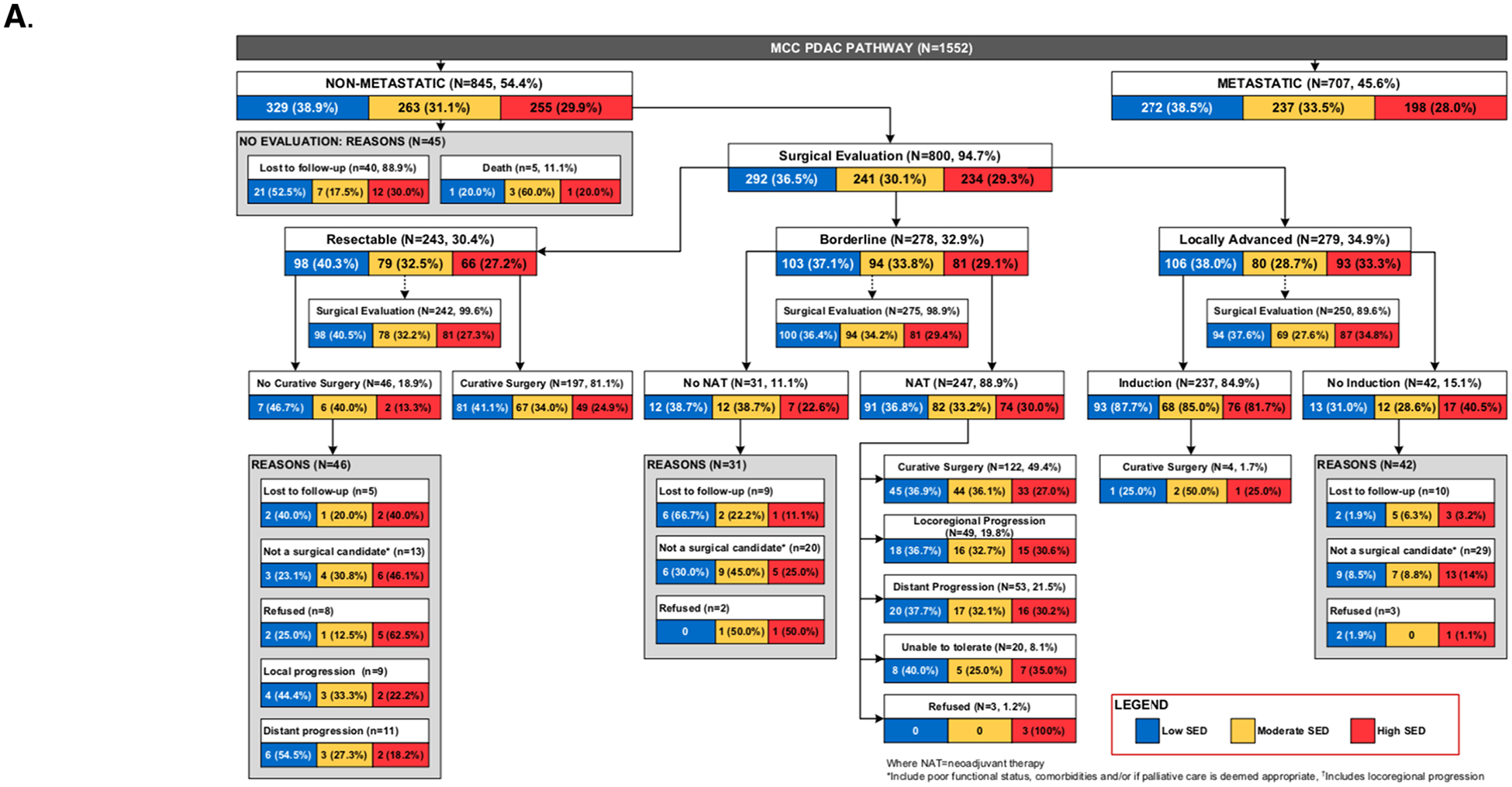
Figure 1.
Figure 1.
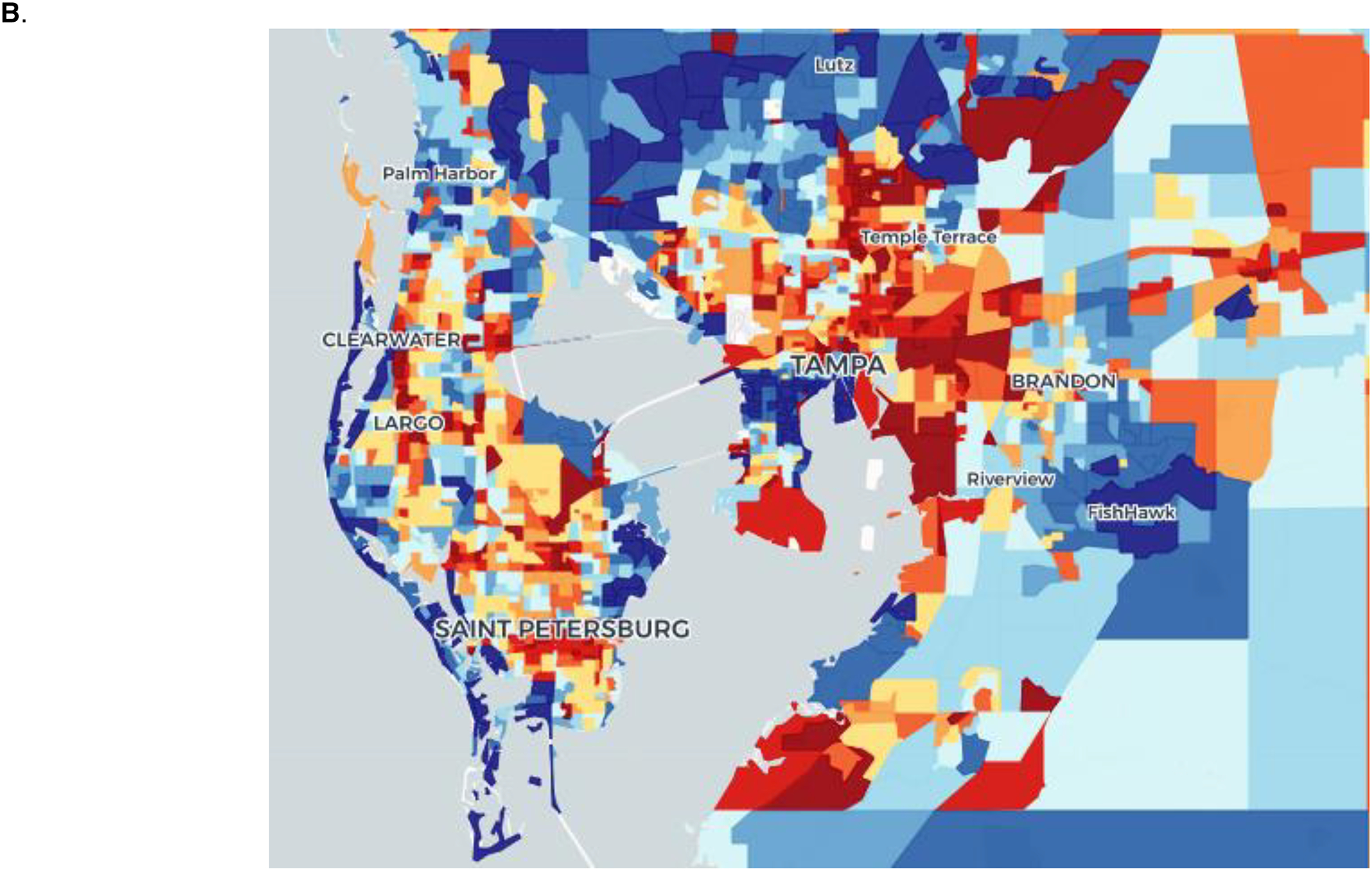
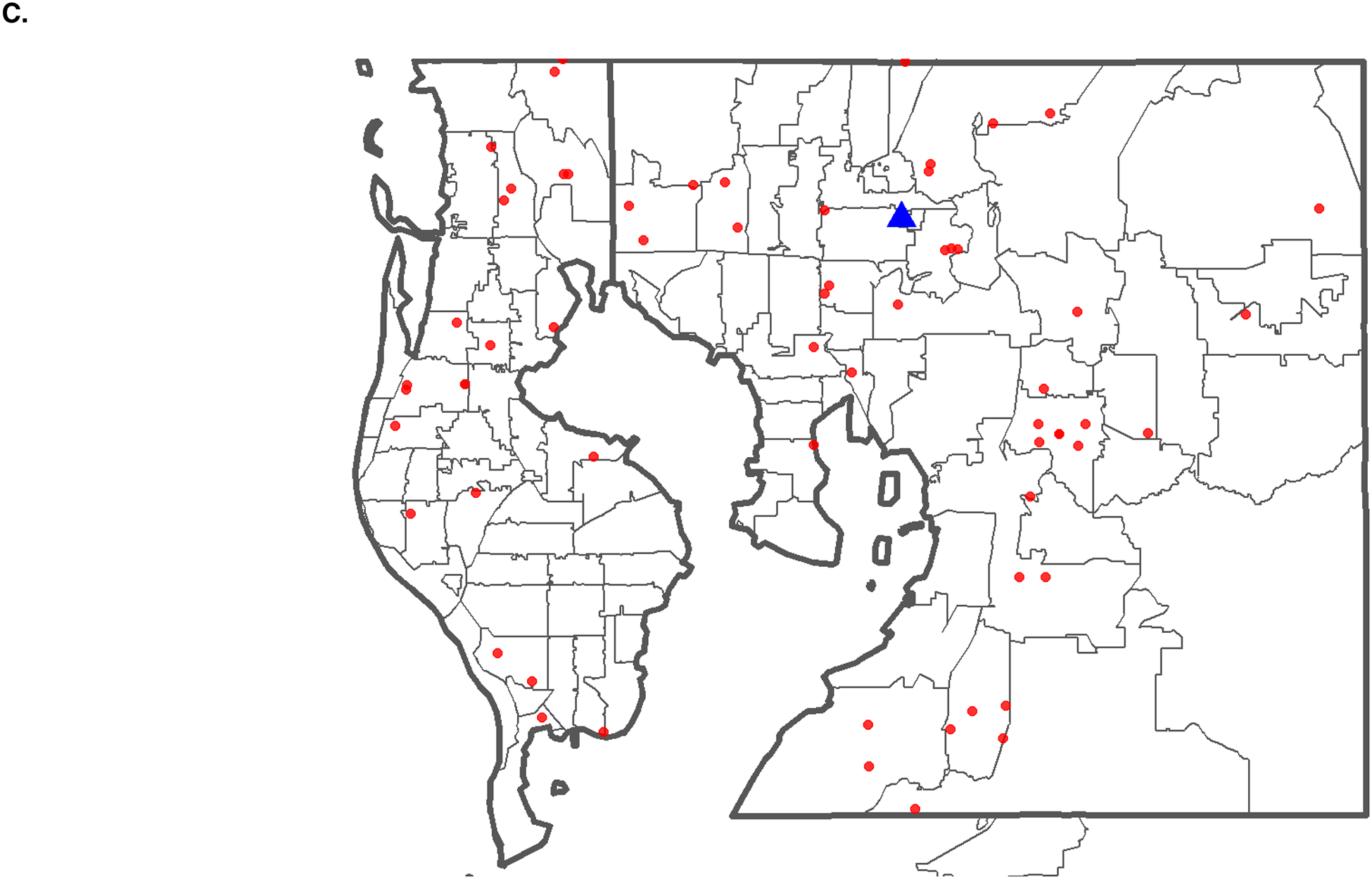
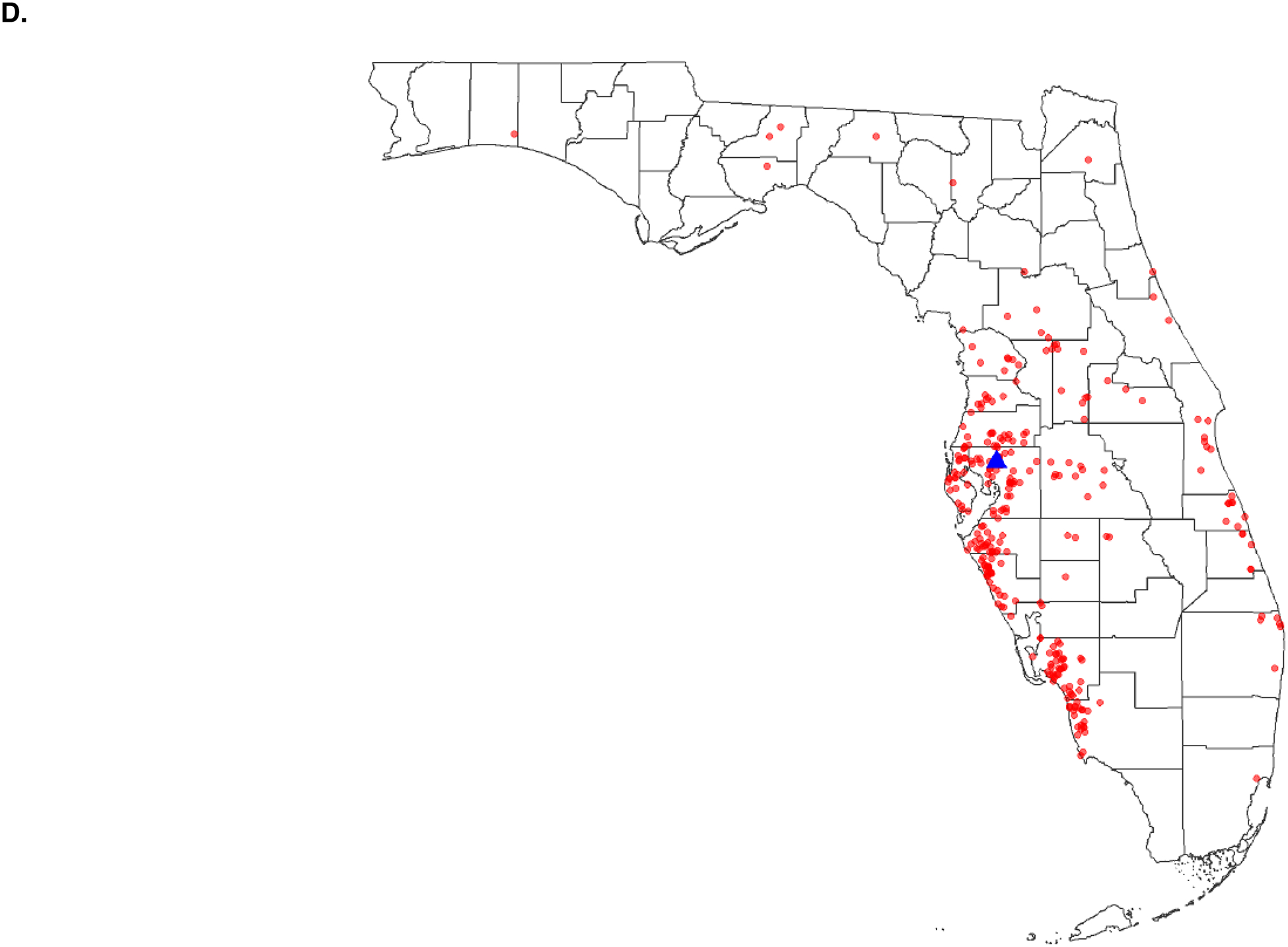
(A) Flowchart of PDAC patients entering the MCC standardized clinical pathway by socioeconomic deprivation (B) Density map of Hillsborough and Pinellas counties, FL showing SED decile (1–10) scores at the census block group level with the least disadvantaged block groups in blue and the most disadvantaged block groups in red. (C) Zip code level map of Hillsborough and Pinellas counties, FL, showing the geographic distribution of patients (red dots) from the treating facility (blue triangle). (D) County-level map of Florida, showing the geographic distribution of patients (red dots) from the treating facility (blue triangle).
Figure 1.
Figure 1.
(A) Flowchart of PDAC patients entering the MCC standardized clinical pathway by socioeconomic deprivation (B) Density map of Hillsborough and Pinellas counties, FL showing SED decile (1–10) scores at the census block group level with the least disadvantaged block groups in blue and the most disadvantaged block groups in red. (C) Zip code level map of Hillsborough and Pinellas counties, FL, showing the geographic distribution of patients (red dots) from the treating facility (blue triangle). (D) County-level map of Florida, showing the geographic distribution of patients (red dots) from the treating facility (blue triangle).
Figure 1.
Figure 1.
(A) Flowchart of PDAC patients entering the MCC standardized clinical pathway by socioeconomic deprivation (B) Density map of Hillsborough and Pinellas counties, FL showing SED decile (1–10) scores at the census block group level with the least disadvantaged block groups in blue and the most disadvantaged block groups in red. (C) Zip code level map of Hillsborough and Pinellas counties, FL, showing the geographic distribution of patients (red dots) from the treating facility (blue triangle). (D) County-level map of Florida, showing the geographic distribution of patients (red dots) from the treating facility (blue triangle).
Figure 1.
Figure 1.
(A) Flowchart of PDAC patients entering the MCC standardized clinical pathway by socioeconomic deprivation (B) Density map of Hillsborough and Pinellas counties, FL showing SED decile (1–10) scores at the census block group level with the least disadvantaged block groups in blue and the most disadvantaged block groups in red. (C) Zip code level map of Hillsborough and Pinellas counties, FL, showing the geographic distribution of patients (red dots) from the treating facility (blue triangle). (D) County-level map of Florida, showing the geographic distribution of patients (red dots) from the treating facility (blue triangle).
Figure 2.
Figure 2.
Kaplan-Meier Curve of the Probability of Overall Survival for Resected Pancreatic Adenocarcinoma Patients

References

    1. Dimou F, Sineshaw H, Parmar AD, et al. Trends in Receipt and Timing of Multimodality Therapy in Early-Stage Pancreatic Cancer. J Gastrointest Surg 2016; 20(1):93–103; discussion 103. - PMC - PubMed
    1. Zell JA, Rhee JM, Ziogas A, et al. Race, socioeconomic status, treatment, and survival time among pancreatic cancer cases in California. Cancer Epidemiol Biomarkers Prev 2007; 16(3):546–52. - PubMed
    1. Moaven O, Richman JS, Reddy S, et al. Healthcare disparities in outcomes of patients with resectable pancreatic cancer. Am J Surg 2018. - PubMed
    1. Reames BN, Birkmeyer NJ, Dimick JB, et al. Socioeconomic disparities in mortality after cancer surgery: failure to rescue. JAMA Surg 2014; 149(5):475–81. - PMC - PubMed
    1. Riall TS, Townsend CM Jr., Kuo YF, et al. Dissecting racial disparities in the treatment of patients with locoregional pancreatic cancer: a 2-step process. Cancer 2010; 116(4):930–9. - PMC - PubMed

Publication types

MeSH terms