The Cytosolic DNA-Sensing cGAS-STING Pathway in Cancer
- PMID: 31852718
- PMCID: PMC7151642
- DOI: 10.1158/2159-8290.CD-19-0761
The Cytosolic DNA-Sensing cGAS-STING Pathway in Cancer
Abstract
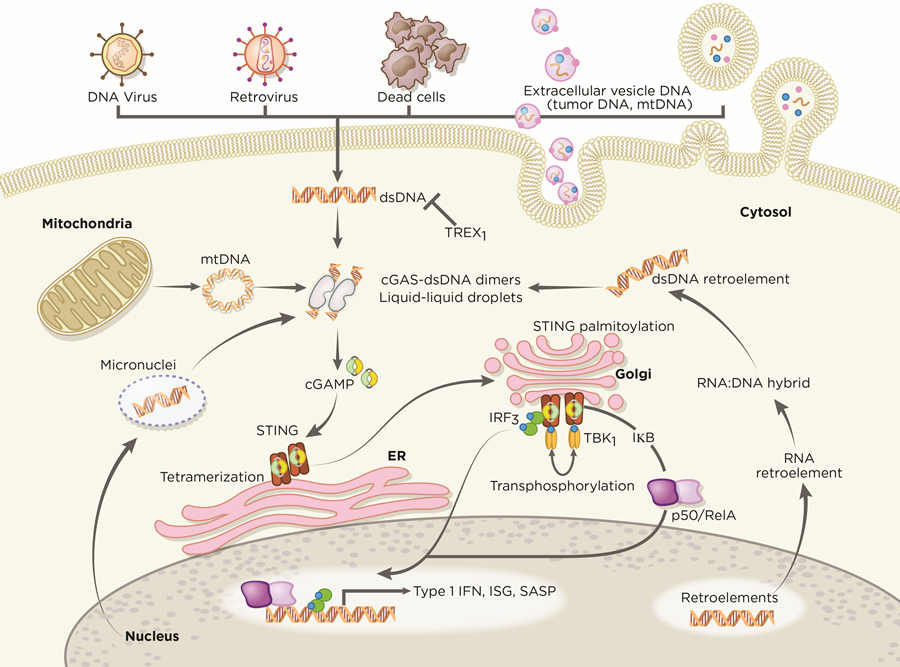
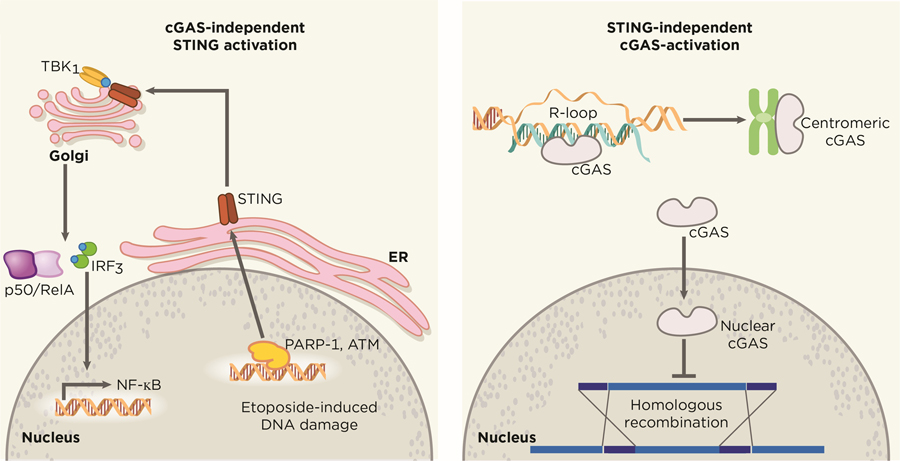
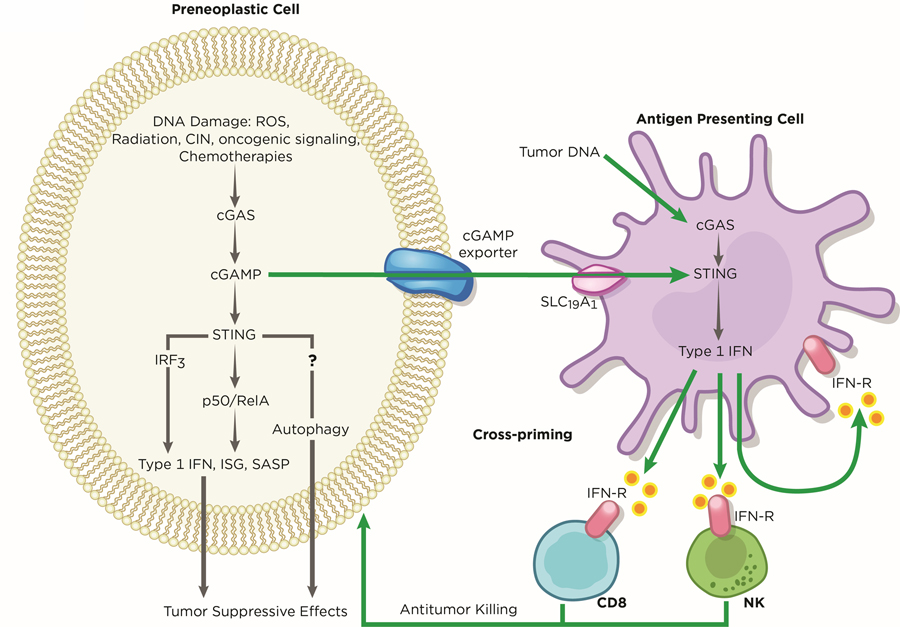
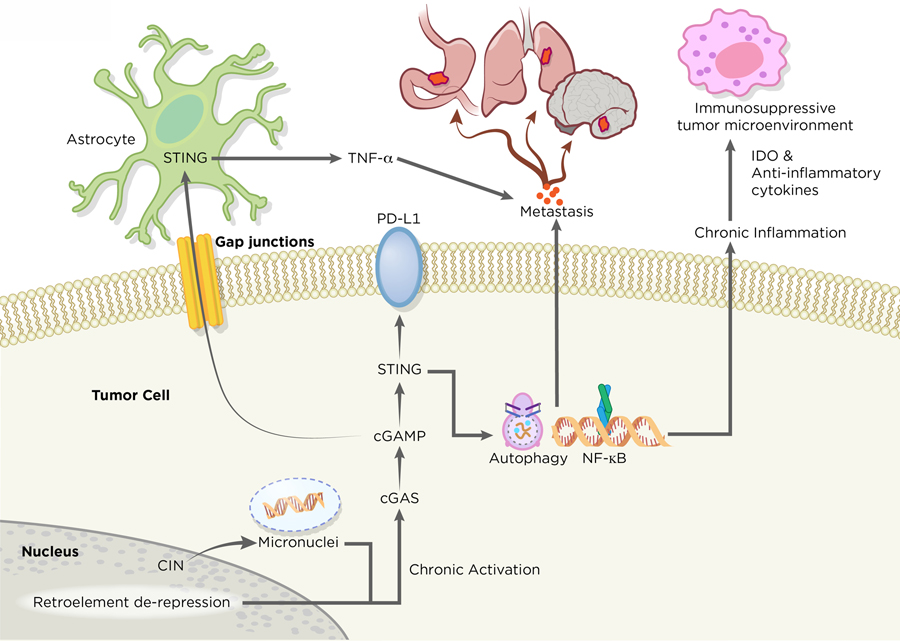
The recognition of DNA as an immune-stimulatory molecule is an evolutionarily conserved mechanism to initiate rapid innate immune responses against microbial pathogens. The cGAS-STING pathway was discovered as an important DNA-sensing machinery in innate immunity and viral defense. Recent advances have now expanded the roles of cGAS-STING to cancer. Highly aggressive, unstable tumors have evolved to co-opt this program to drive tumorigenic behaviors. In this review, we discuss the link between the cGAS-STING DNA-sensing pathway and antitumor immunity as well as cancer progression, genomic instability, the tumor microenvironment, and pharmacologic strategies for cancer therapy. SIGNIFICANCE: The cGAS-STING pathway is an evolutionarily conserved defense mechanism against viral infections. Given its role in activating immune surveillance, it has been assumed that this pathway primarily functions as a tumor suppressor. Yet, mounting evidence now suggests that depending on the context, cGAS-STING signaling can also have tumor and metastasis-promoting functions, and its chronic activation can paradoxically induce an immune-suppressive tumor microenvironment.
©2019 American Association for Cancer Research.
Conflict of interest statement
Disclosure of Potential Conflicts of Interest
SFB holds a patent related to some of the work described targeting CIN and the cGAS-STING pathway in advanced cancer. He owns equity in, receives compensation from, and serves as a consultant and the Scientific Advisory Board and Board of Directors of Volastra Pharmaceuticals Inc. He has also consulted for Sanofi. JK declares no conflicts of interest.
Figures
References
Publication types
MeSH terms
Substances
Grants and funding
LinkOut - more resources
Full Text Sources
Other Literature Sources
Medical
Research Materials