Effects of a Tailored Lighting Intervention on Sleep Quality, Rest-Activity, Mood, and Behavior in Older Adults With Alzheimer Disease and Related Dementias: A Randomized Clinical Trial
- PMID: 31855161
- PMCID: PMC7099185
- DOI: 10.5664/jcsm.8078
Effects of a Tailored Lighting Intervention on Sleep Quality, Rest-Activity, Mood, and Behavior in Older Adults With Alzheimer Disease and Related Dementias: A Randomized Clinical Trial
Abstract
Study objectives: We investigated the effectiveness of a lighting intervention tailored to maximally affect the circadian system as a nonpharmacological therapy for treating problems with sleep, mood, and behavior in persons with Alzheimer disease and related dementias (ADRD).
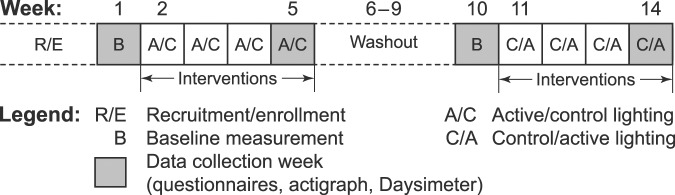
Methods: This 14-week randomized, placebo-controlled, crossover design clinical trial administered an all-day active or control lighting intervention to 46 patients with ADRD in 8 long-term care facilities for two 4-week periods (separated by a 4-week washout). The study employed wrist-worn actigraphy measures and standardized measures of sleep quality, mood, and behavior.
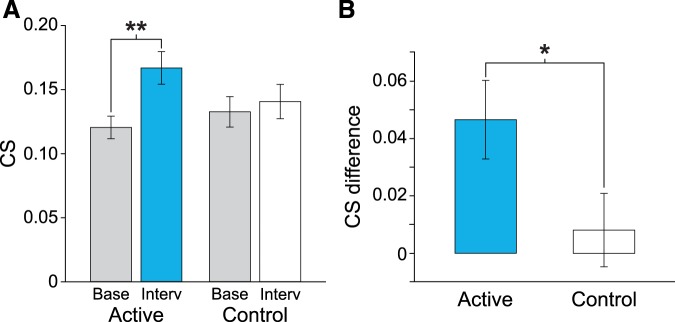
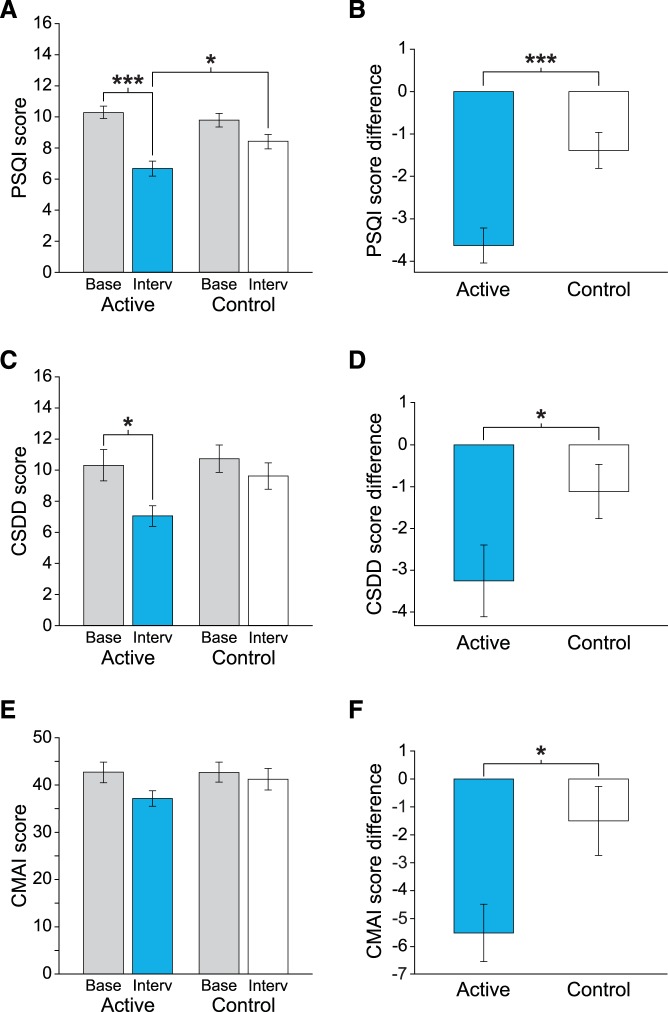
Results: The active intervention significantly improved Pittsburgh Sleep Quality Index scores compared to the active baseline and control intervention (mean ± SEM: 6.67 ± 0.48 after active intervention, 10.30 ± 0.40 at active baseline, 8.41 ± 0.47 after control intervention). The active intervention also resulted in significantly greater active versus control differences in intradaily variability. As for secondary outcomes, the active intervention resulted in significant improvements in Cornell Scale for Depression in Dementia scores (mean ± SEM: 10.30 ± 1.02 at baseline, 7.05 ± 0.67 after active intervention) and significantly greater active versus control differences in Cohen-Mansfield Agitation Inventory scores (mean ± SEM: -5.51 ± 1.03 for the active intervention, -1.50 ± 1.24 for the control intervention).
Conclusions: A lighting intervention tailored to maximally entrain the circadian system can improve sleep, mood, and behavior in patients with dementia living in controlled environments.
Clinical trial registration: Registry: ClinicalTrials.gov, title: Methodology Issues in a Tailored Light Treatment for Persons With Dementia, URL: https://clinicaltrials.gov/ct2/show/NCT01816152, identifier: NCT01816152.
Keywords: Alzheimer’s disease; circadian system; dementia; lighting intervention; mood; rest–activity; sleep.
© 2019 American Academy of Sleep Medicine.
Figures
References
-
- Bliwise DL, Carroll JS, Lee KA, Nekich JC, Dement WC. Sleep and “sundowning” in nursing home patients with dementia. Psychiatry Res. 1993;48(3):277–292. - PubMed
-
- Ancoli-Israel S, Klauber MR, Jones DW, et al. Variations in circadian rhythms of activity, sleep, and light exposure related to dementia in nursing-home patients. Sleep. 1997;20(1):18–23. - PubMed
Publication types
MeSH terms
Associated data
Grants and funding
LinkOut - more resources
Full Text Sources
Other Literature Sources
Medical
Research Materials