


Gender and neglected tropical disease front-line workers: Data from 16 countries
- PMID: 31856174
- PMCID: PMC6922366
- DOI: 10.1371/journal.pone.0224925
Gender and neglected tropical disease front-line workers: Data from 16 countries
Abstract
Background: Delivery of preventive chemotherapy (PC) through mass drug administration (MDA) is used to control or eliminate five of the most common neglected tropical diseases (NTDs). The success of an MDA campaign relies on the ability of drug distributors and their supervisors-the NTD front-line workers-to reach populations at risk of NTDs. In the past, our understanding of the demographics of these workers has been limited, but with increased access to sex-disaggregated data, we begin to explore the implications of gender and sex for the success of NTD front-line workers.
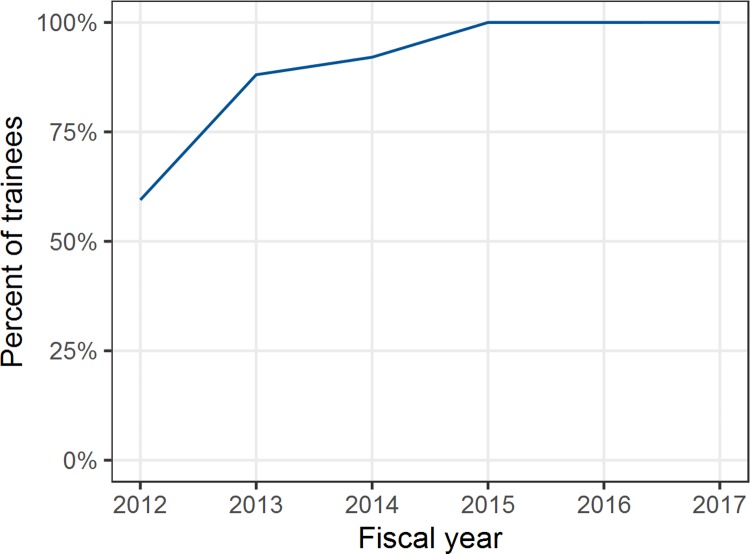
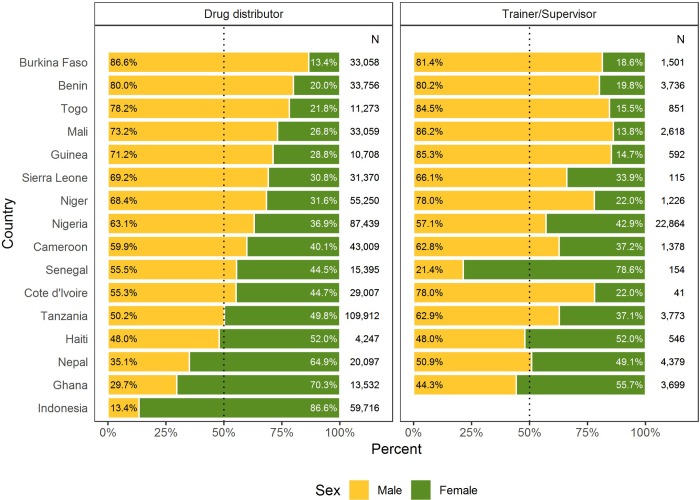
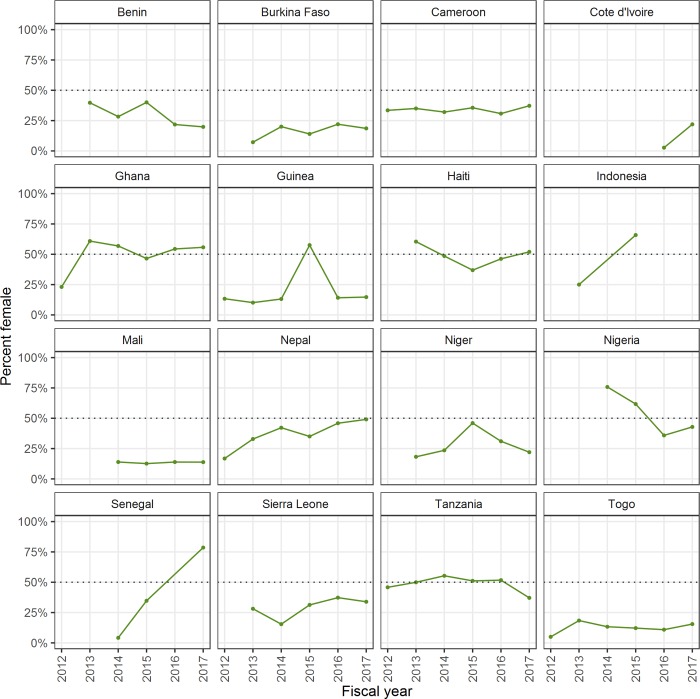
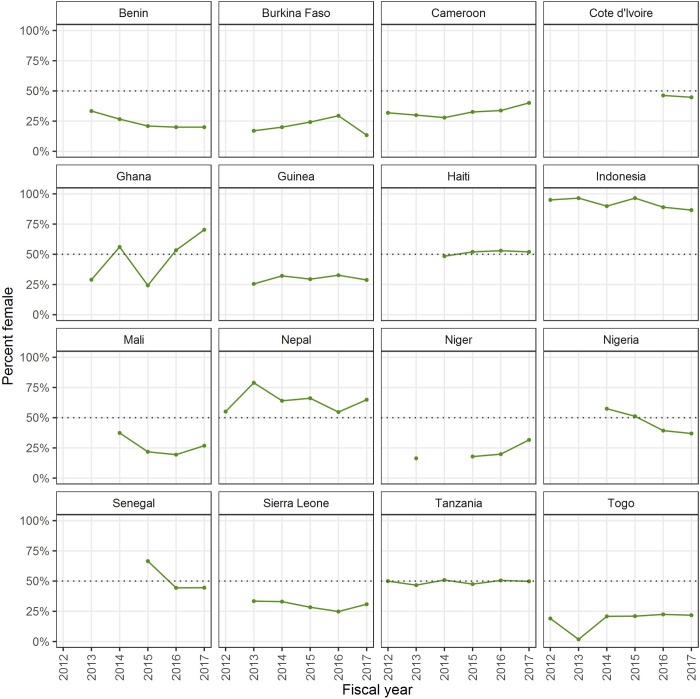
Methodology/principal findings: We reviewed data collected by USAID-supported NTD projects from national NTD programs from fiscal years (FY) 2012-2017 to assess availability of sex-disaggregated data on the workforce. What we found was sex-disaggregated data on 2,984,908 trainees trained with financial support from the project. We then analyzed the percentage of males and females trained by job category, country, and fiscal year. During FY12, 59% of these data were disaggregated by sex, which increased to nearly 100% by FY15 and was sustained through FY17. In FY17, 43% of trainees were female, with just four countries reporting more females than males trained as drug distributors and three countries reporting more females than males trained as trainers/supervisors. Except for two countries, there were no clear trends over time in changes to the percent of females trained.
Conclusions/significance: There has been a rapid increase in availability of sex-disaggregated data, but little increase in recruitment of female workers in countries included in this study. Women continue to be under-represented in the NTD workforce, and while there are often valid reasons for this distribution, we need to test this norm and better understand gender dynamics within NTD programs to increase equity.
Conflict of interest statement
The authors have declared that no competing interests exist.
Figures
References
-
- World Health Organization; Preventive chemotherapy in human helminthiasis. Geneva, Switzerland; 2006.
-
- WHO. Update on the global status of implementation of preventive chemotherapy (PC). [Internet]. 2019. Available from: https://www.who.int/neglected_diseases/preventive_chemotherapy/PC_Update...
-
- Baker M. Who are the NTD drug distributors? An analysis of platforms used for mass drug administration across multiple countries in symposuim 106 Community Providers for Neglected Tropical Disease Control: The “Building Blocks” for Program Success. ASTMH Conference 2016; 2016.
-
- Vouking MZ, Tamo VC, Tadenfok CN. Contribution and performance of female Community-Directed Distributors in the treatment of onchocerciasis with Ivermectin in Sub-Saharan Africa: a systematic review. Pan African Medical Journal [Internet]. 2015 [cited 2019 Feb 24];20. Available from: http://www.panafrican-med-journal.com/content/article/20/188/full/ - PMC - PubMed
-
- World Health Organization. Delivered by women, led by men: A gender and equity analysis of the global health and social workforce. Geneva; 2019. (Human Resources for Health Observer Series No. 24).
Publication types
MeSH terms
LinkOut - more resources
Full Text Sources
Miscellaneous
