


Heart failure with preserved ejection fraction: present status and future directions
- PMID: 31857581
- PMCID: PMC6923411
- DOI: 10.1038/s12276-019-0323-2
Heart failure with preserved ejection fraction: present status and future directions
Abstract
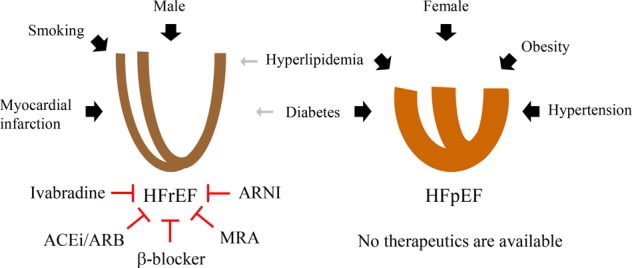
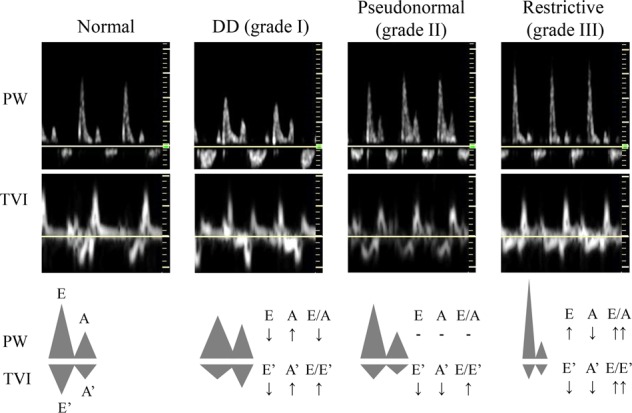
The clinical importance of heart failure with preserved ejection fraction (HFpEF) has recently become apparent. HFpEF refers to heart failure (HF) symptoms with normal or near-normal cardiac function on echocardiography. Common clinical features of HFpEF include diastolic dysfunction, reduced compliance, and ventricular hypokinesia. HFpEF differs from the better-known HF with reduced ejection fraction (HFrEF). Despite having a "preserved ejection fraction," patients with HFpEF have symptoms such as shortness of breath, excessive tiredness, and limited exercise capability. Furthermore, the mortality rate and cumulative survival rate are as severe in HFpEF as they are in HFrEF. While beta-blockers and renin-angiotensin-aldosterone system modulators can improve the survival rate in HFrEF, no known therapeutic agents show similar effectiveness in HFpEF. Researchers have examined molecular events in the development of HFpEF using small and middle-sized animal models. This review discusses HFpEF with regard to etiology and clinical features and introduces the use of mouse and other animal models of human HFpEF.
Conflict of interest statement
The authors clearly declare that they have no conflict of interest.
Figures
References
-
- Yancy CW, et al. 2017 ACC/AHA/HFSA focused update of the 2013 ACCF/AHA guideline for the management of heart failure: a report of the American College of Cardiology/American Heart Association Task Force on Clinical Practice Guidelines and the Heart Failure Society of America. Circulation. 2017;136:e137–e161. doi: 10.1161/CIR.0000000000000509. - DOI - PubMed
-
- Ponikowski P, et al. 2016 ESC Guidelines for the diagnosis and treatment of acute and chronic heart failure: The Task Force for the diagnosis and treatment of acute and chronic heart failure of the European Society of Cardiology (ESC). Developed with the special contribution of the Heart Failure Association (HFA) of the ESC. Eur. J. Heart Fail. 2016;18:891–975. doi: 10.1002/ejhf.592. - DOI - PubMed
Publication types
MeSH terms
Substances
Grants and funding
LinkOut - more resources
Full Text Sources
Other Literature Sources
Medical
Research Materials
Miscellaneous
