


Effect of eradicating hydrogen-forming small intestinal bacterial overgrowth with rifaximin on body weight change
- PMID: 31861004
- PMCID: PMC6940060
- DOI: 10.1097/MD.0000000000018396
Effect of eradicating hydrogen-forming small intestinal bacterial overgrowth with rifaximin on body weight change
Abstract
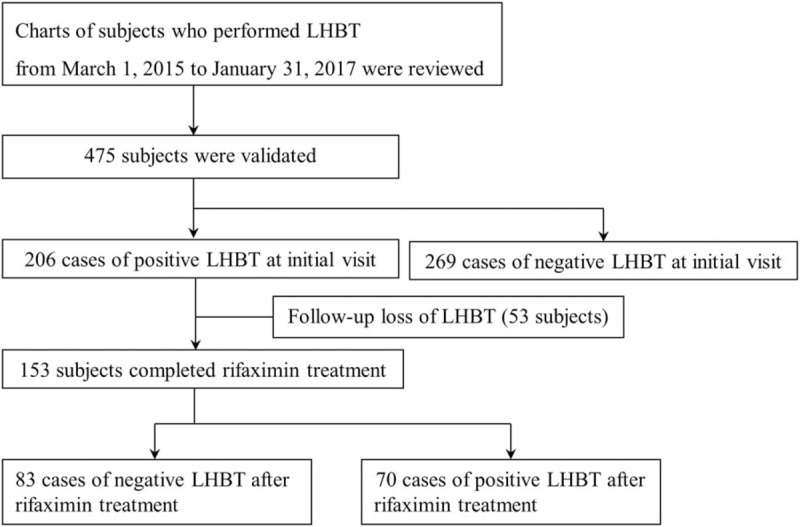
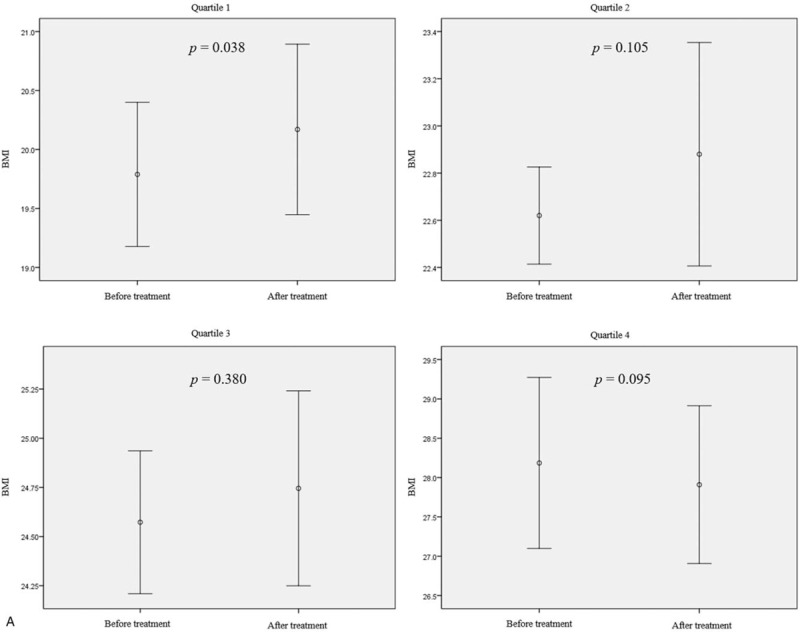
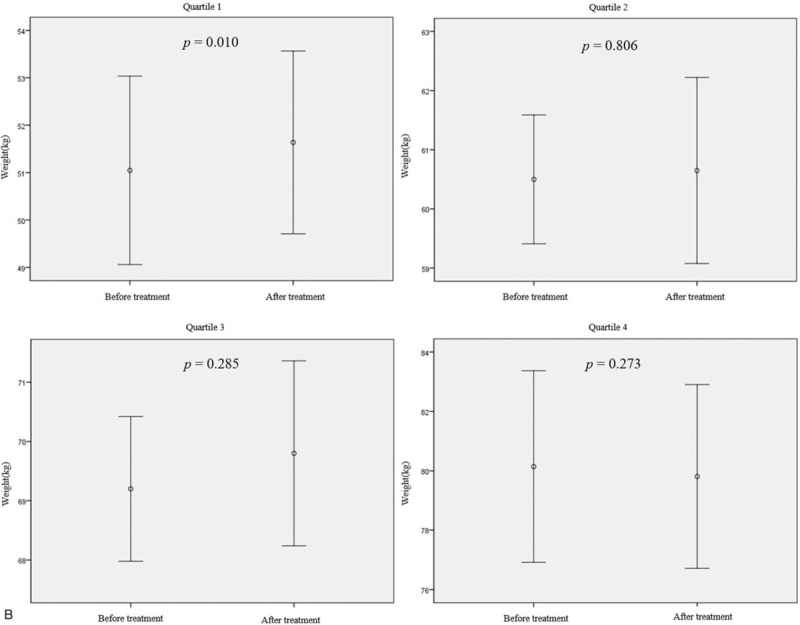
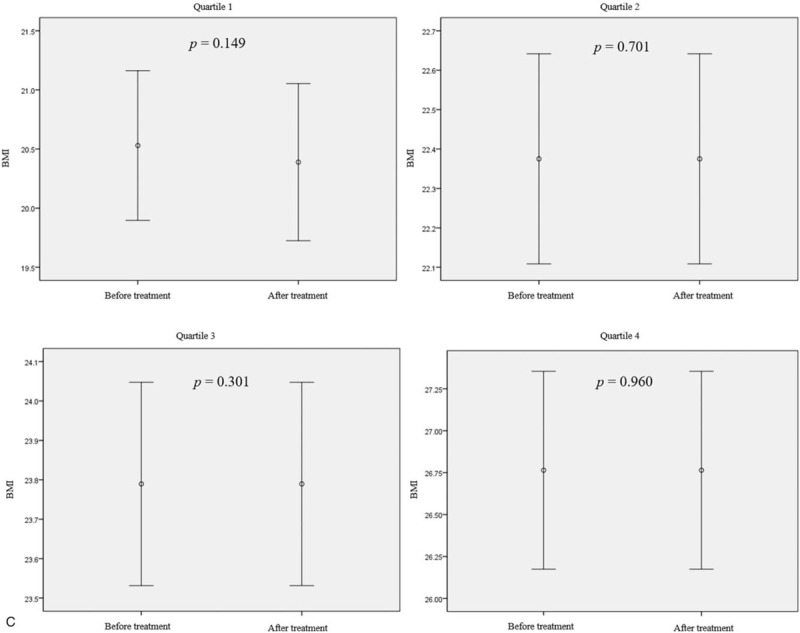
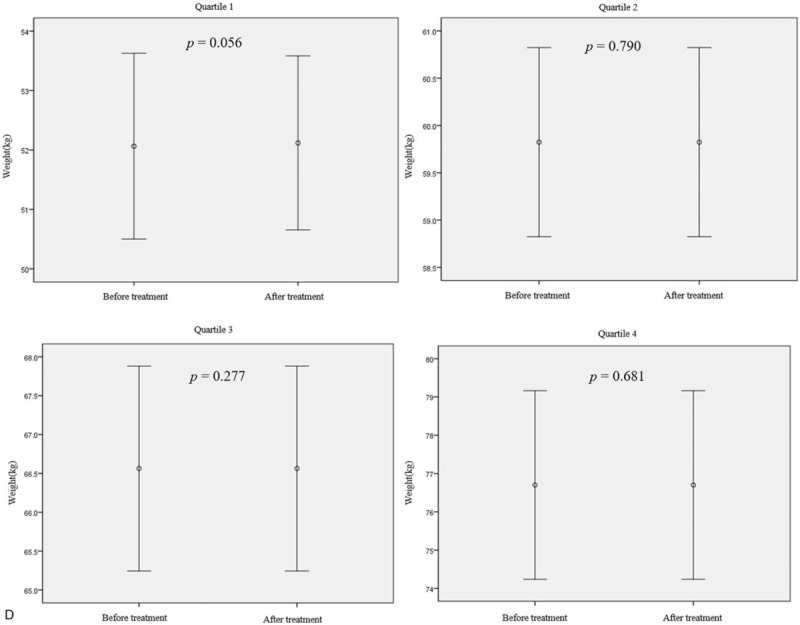
Hydrogen formed by small intestinal bacterial overgrowth in patients with non-constipated irritable bowel syndrome has an inverse relationship with obesity. However, the effect of eradicating small intestinal hydrogen-producing bacterial overgrowth on the body weight of these patients has not yet been reported. The aim of this study was to investigate body weight changes after eradicating small intestinal bacterial overgrowth with rifaximin treatment in patients with non-constipated irritable bowel syndrome.We reviewed the charts of patients with non-constipated irritable bowel syndrome who showed abdominal symptoms with documented lactulose hydrogen breath test results in order to diagnose small intestinal bacterial overgrowth. A total of 153 patients were enrolled in the study and divided into quartiles according to body mass index (BMI) and body weight.In the lowest body weight quartile, the BMI and body weight were significantly increased (0.4 kg/m, P = .038; 0.6 kg, P = .010, respectively) in patients with negative lactulose hydrogen breath tests after rifaximin treatment. However, there was no significant change in body weight in the other quartiles. Despite treatment with rifaximin for 12 weeks, there was no change in BMI or body weight in any group of patients with consistently positive lactulose hydrogen breath tests.Eradication of hydrogen formed by small intestinal bacterial overgrowth does not cause clinically significant changes in body weight.
Conflict of interest statement
The authors have no conflicts of interest to disclose.
Figures
References
-
- Lacy BE, Mearin F, Chang L, et al. Bowel disorders. Gastroenterology 2016;150:1393–407. e1395. - PubMed
-
- Ford AC, Lacy BE, Talley NJ. Irritable bowel syndrome. N Engl J Med 2017;376:2566–78. - PubMed
-
- Parkes GC, Brostoff J, Whelan K, et al. Gastrointestinal microbiota in irritable bowel syndrome: their role in its pathogenesis and treatment. Am J Gastroenterol 2008;103:1557–67. - PubMed
-
- Pimentel M, Chow EJ, Lin HC. Eradication of small intestinal bacterial overgrowth reduces symptoms of irritable bowel syndrome. Am J Gastroenterol 2000;95:3503–6. - PubMed
-
- Chey WD, Kurlander J, Eswaran S. Irritable bowel syndrome: a clinical review. JAMA 2015;313:949–58. - PubMed
Publication types
MeSH terms
Substances
LinkOut - more resources
Full Text Sources
Medical
