


Neopterin is Associated with Disease Severity and Outcome in Patients with Non-Ischaemic Heart Failure
- PMID: 31861167
- PMCID: PMC6947372
- DOI: 10.3390/jcm8122230
Neopterin is Associated with Disease Severity and Outcome in Patients with Non-Ischaemic Heart Failure
Abstract
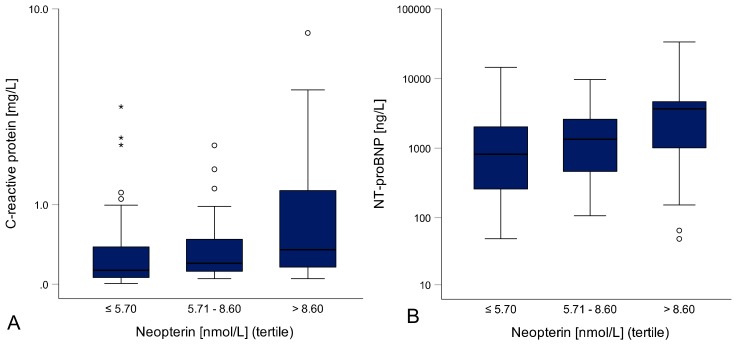
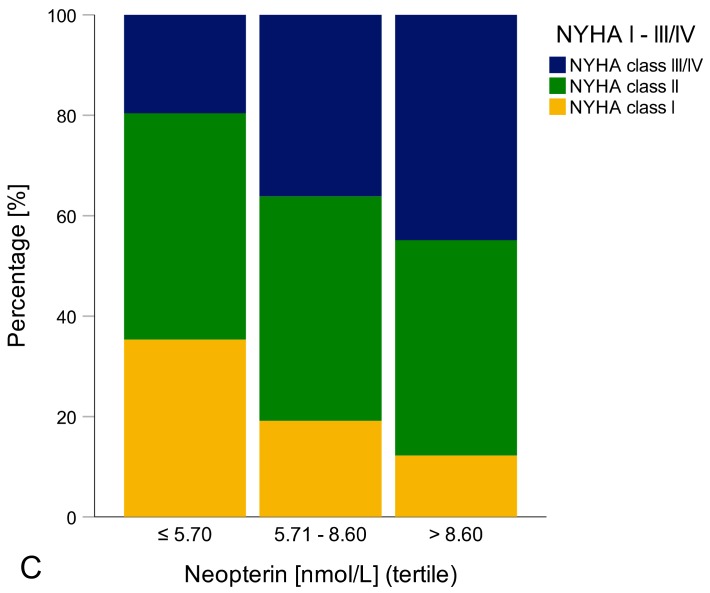
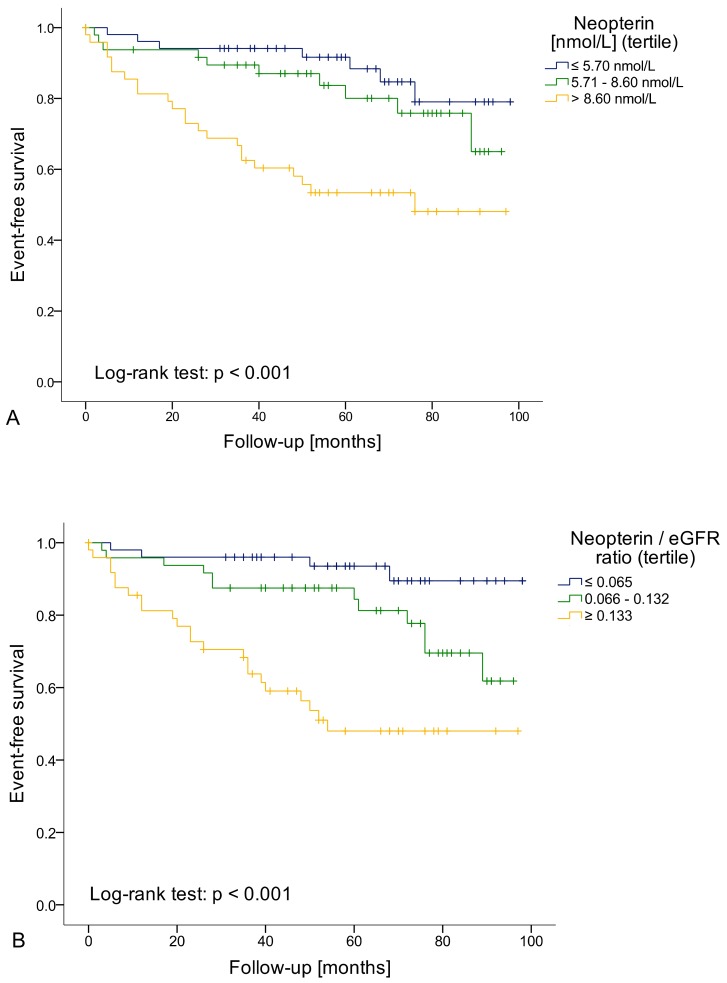
Inflammation and immune activation play an important role in the pathogenesis of cardiac remodelling in patients with heart failure. The aim of this study was to assess whether biomarkers of inflammation and immune activation are linked to disease severity and the prognosis of heart failure patients. In 149 patients (65.8% men, median age 49.7 years) with heart failure from nonischaemic cardiomyopathy, the biomarkers neopterin and C-reactive protein were tested at the time of diagnosis. Patients were followed-up for a median of 58 months. During follow-up, nineteen patients died, five had a heart transplantation, two needed a ventricular assistance device, and twenty-one patients had to be hospitalised because of heart failure decompensation. Neopterin concentrations correlated with N-terminal prohormone of brain natriuretic peptide (NT-proBNP) concentrations (rs = 0.399, p < 0.001) and rose with higher New York Heart Association (NYHA) class (I: 5.60 nmol/L, II: 6.90 nmol/L, III/IV: 7.80 nmol/L, p = 0.033). Higher neopterin levels were predictive for an adverse outcome (death or hospitalisation due to HF decompensation), independently of age and sex and of established predictors in heart failure such as NYHA class, NT-proBNP, estimated glomerular filtration rate (eGFR), and left ventricular ejection fraction (LV-EF) (HR 2.770; 95% CI 1.419-5.407; p = 0.003). Patients with a neopterin/eGFR ratio ≥ 0.133 (as a combined marker for immune activation and kidney function) had a more than eightfold increased risk of reaching an endpoint compared to patients with a neopterin/eGFR ratio ≤0.065 (HR 8.380; 95% CI 2.889-24.308; p < 0.001). Neopterin is associated with disease severity and is an independent predictor of prognosis in patients with heart failure.
Keywords: Neopterin; adverse outcome; heart failure; inflammation.
Conflict of interest statement
The authors declare no conflict of interest.
Figures
References
-
- Vasan R.S., Sullivan L.M., Roubenoff R., Dinarello C.A., Harris T., Benjamin E.J., Sawyer D.B., Levy D., Wilson P.W., D’Agostino R.B., et al. Inflammatory markers and risk of heart failure in elderly subjects without prior myocardial infarction: The Framingham Heart Study. Circulation. 2003;107:1486–1491. doi: 10.1161/01.CIR.0000057810.48709.F6. - DOI - PubMed
LinkOut - more resources
Full Text Sources
Research Materials
Miscellaneous
