


The Impact of Mind-body Exercises on Motor Function, Depressive Symptoms, and Quality of Life in Parkinson's Disease: A Systematic Review and Meta-analysis
- PMID: 31861456
- PMCID: PMC6981975
- DOI: 10.3390/ijerph17010031
The Impact of Mind-body Exercises on Motor Function, Depressive Symptoms, and Quality of Life in Parkinson's Disease: A Systematic Review and Meta-analysis
Abstract
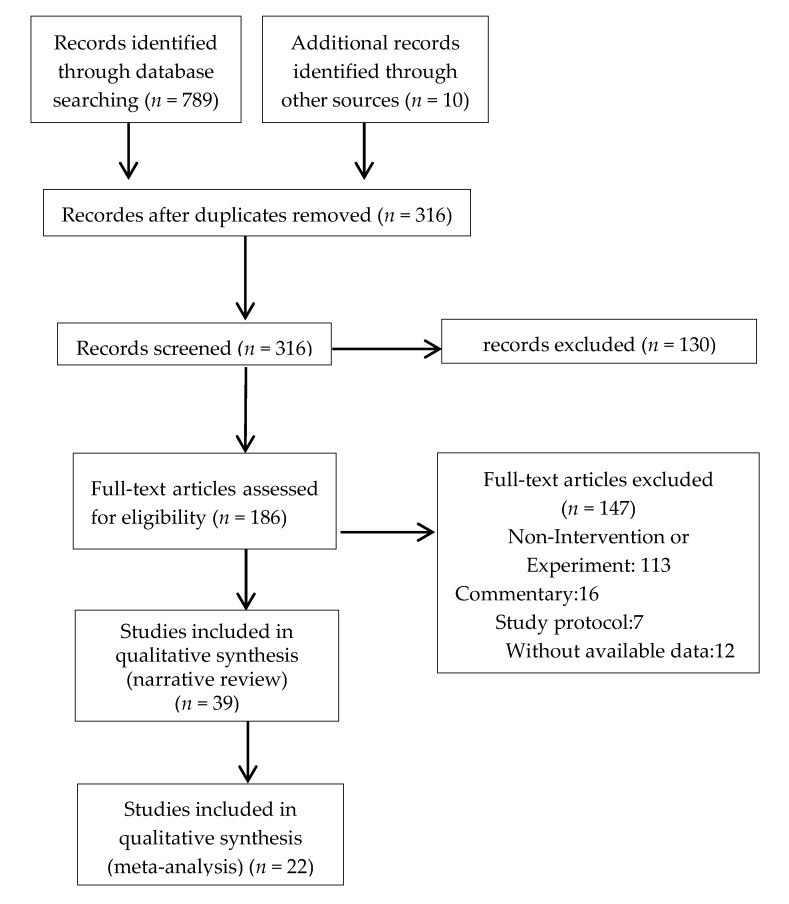
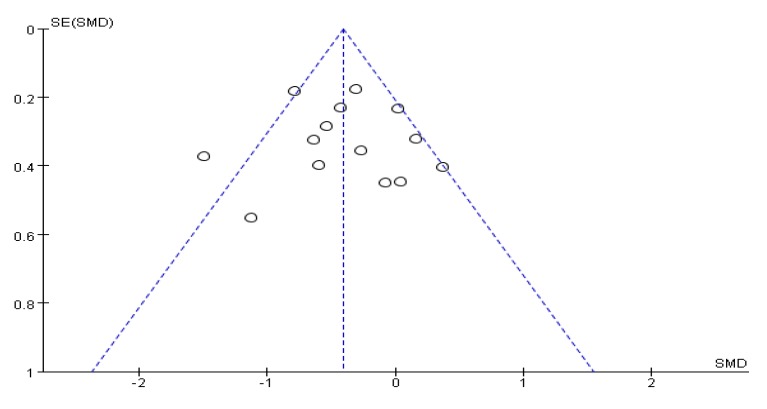
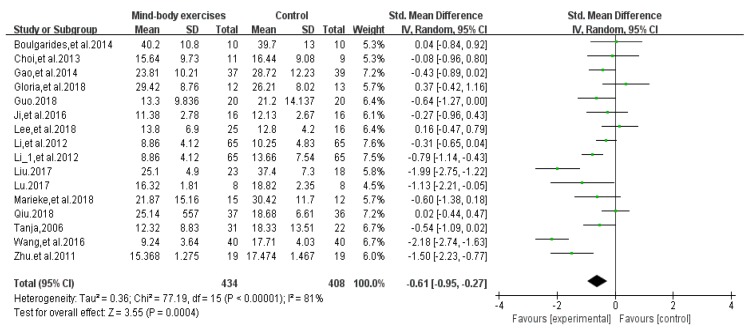
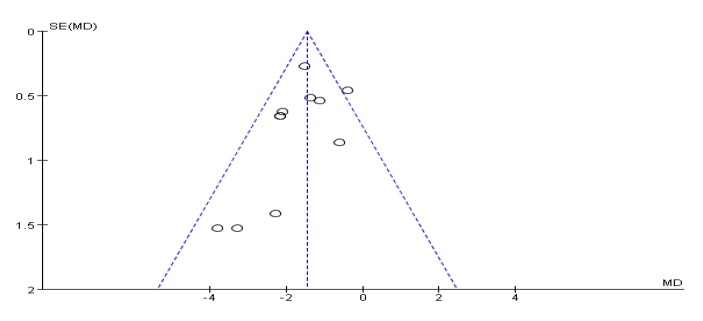
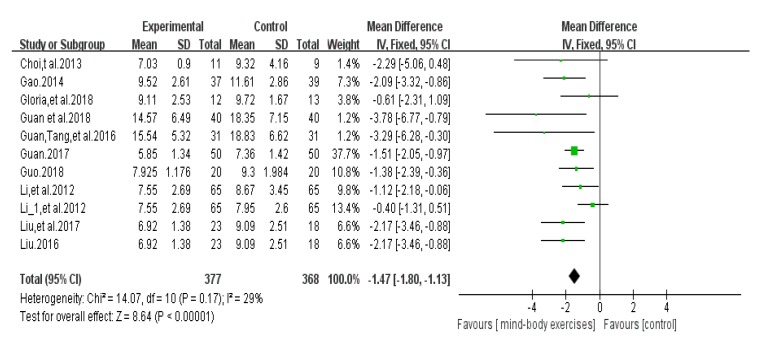
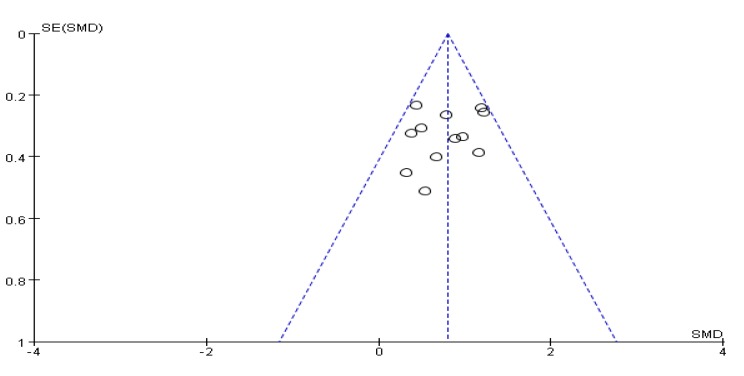
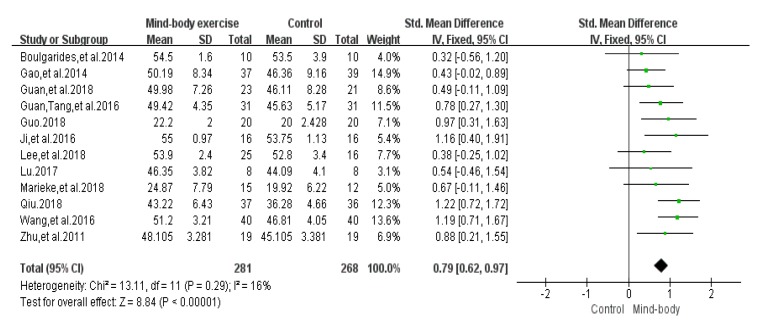
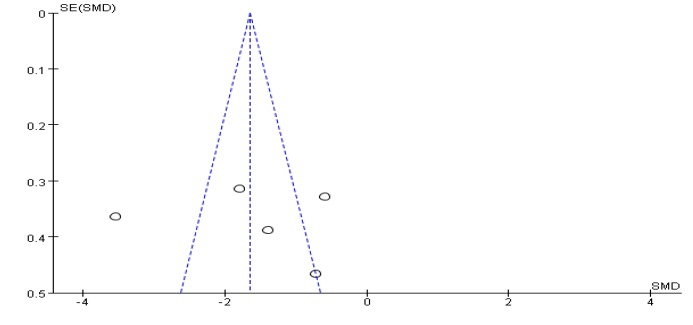
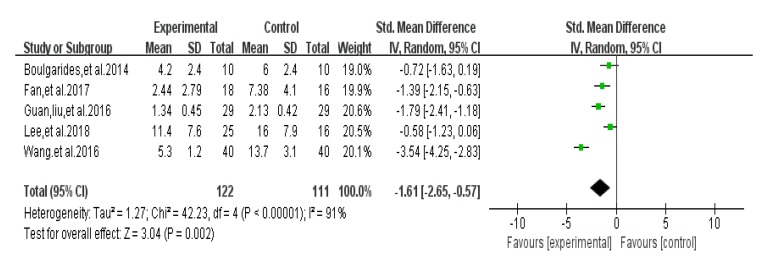
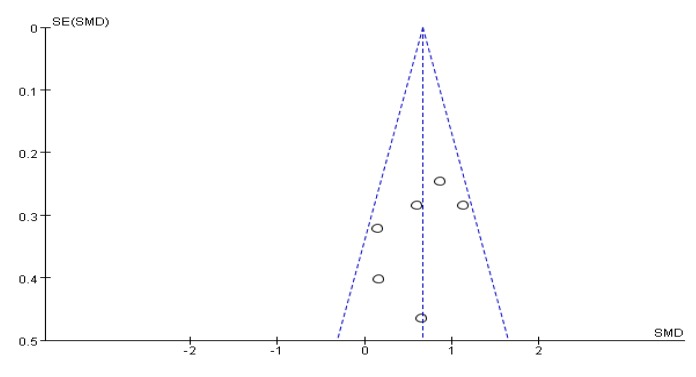
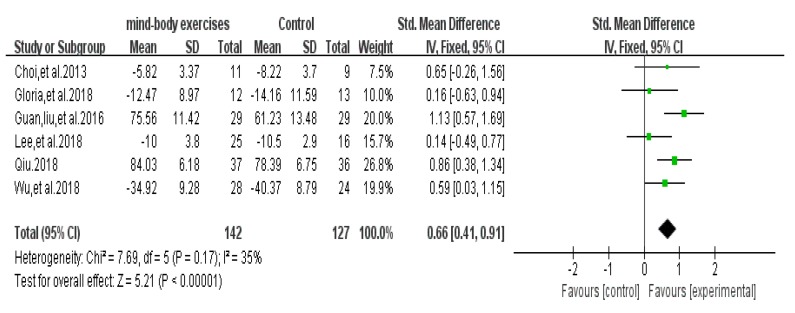
Purpose: To systematically evaluate the effects of mind-body exercises (Tai Chi, Yoga, and Health Qigong) on motor function (UPDRS, Timed-Up-and-Go, Balance), depressive symptoms, and quality of life (QoL) of Parkinson's patients (PD). Methods: Through computer system search and manual retrieval, PubMed, Web of Science, The Cochrane Library, CNKI, Wanfang Database, and CQVIP were used. Articles were retrieved up to the published date of June 30, 2019. Following the Cochrane Collaboration System Evaluation Manual (version 5.1.0), two researchers independently evaluated the quality and bias risk of each article, including 22 evaluated articles. The Pedro quality score of 6 points or more was found for 86% (19/22) of these studies, of which 21 were randomized controlled trials with a total of 1199 subjects; and the trial intervention time ranged from 4 to 24 weeks. Interventions in the control group included no-intervention controls, placebo, waiting-lists, routine care, and non-sports controls. Meta-analysis was performed on the literature using RevMan 5.3 statistical software, and heterogeneity analysis was performed using Stata 14.0 software. Results: (1) Mind-body exercises significantly improved motor function in PD patients, including UPDRS (SMD = -0.61, p < 0.001), TUG (SMD = -1.47, p < 0.001) and balance function (SMD = 0.79, p < 0.001). (2) Mind-body exercises also had significant effects on depression (SMD = -1.61, p = 0.002) and QoL (SMD = 0.66, p < 0.001). (3) Among the indicators, UPDRS (I2 = 81%) and depression (I2 = 91%) had higher heterogeneity; according to the results of the separate combined effect sizes of TUG(I2 = 29%), Balance(I2 = 16%) and QoL(I2 = 35%), it shows that the heterogeneity is small; (4) After meta-regression analysis of the age limit and other possible confounding factors, further subgroup analysis showed that the reason for the heterogeneity of UPDRS motor function may be related to the sex of PD patients and severity of the disease; the outcome of depression was heterogeneous. The reason for this may be the use of specific drugs in the experiment and the duration of intervention in the trial. Conclusion: (1) Mind-body exercises were found to have significant improvements in motor function, depressive symptoms, and quality of life in patients with Parkinson's disease, and can be used as an effective method for clinical exercise intervention in PD patients. (2) Future clinical intervention programs for PD patients need to fully consider specific factors such as gender, severity of disease, specific drug use, and intervention cycle to effectively control heterogeneity factors, so that the clinical exercise intervention program for PD patients is objective, scientific, and effective.
Keywords: Health Qigong; Parkinson disease; Tai Chi; Yoga; meta-analysis; quality of life.
Conflict of interest statement
The authors declare that there is no conflict of interest regarding the publication of this paper.
Figures
References
Publication types
MeSH terms
LinkOut - more resources
Full Text Sources
Medical
