. 2019 Dec 19;25(1):15.
doi: 10.3390/molecules25010015.

Protopine Protects Mice against LPS-Induced Acute Kidney Injury by Inhibiting Apoptosis and Inflammation via the TLR4 Signaling Pathway

Affiliations

Protopine Protects Mice against LPS-Induced Acute Kidney Injury by Inhibiting Apoptosis and Inflammation via the TLR4 Signaling Pathway

Beibei Zhang et al. Molecules. .

Abstract

Corydalis humosa Migo is a traditional Chinese medicine that clears away damp heat, relieves sore. Protopine (PRO) is an alkaloid component isolated from C. humosa Migo. However, the role of protopine in acute kidney injury (AKI) has not yet been reported. This study aims to investigate the effect and mechanism of protopine isolated from C. humosa Migo on lipopolysaccharide (LPS)-induced AKI in mice. Inflammation accumulation was assessed by small animal living imaging. The blood urea nitrogen (BUN), and serum creatinine (Scr) were measured to assess the effects of protopine on renal function in LPS-induced AKI. The levels of tumor necrosis factor (TNF), interleukin-2 (IL-2), interferon-γ (IFN-γ), and (interleukin-10) IL-10 in serum were detected by cytometric bead array. Flow cytometry was used to detect the levels of reactive oxygen species (ROS) in primary kidney cells. The proportions of granulocytes, neutrophils, and macrophages in peripheral blood were examined to evaluate the effect of protopine on immune cells in mice with AKI. Toll-like receptor (TLR4) and apoptotic signaling pathway were detected by Western blot analysis. The results showed that protopine markedly improved the renal function, relieve inflammation, reversed inflammatory cytokines, transformed apoptosis markers, and regulated the TLR4 signaling pathway in mice with AKI induced by LPS. The protopine isolated from C. humosa Migo protected mice against LPS-induced AKI by inhibiting apoptosis and inflammation via the TLR4 signaling pathway, thus providing a molecular basis for a novel medical treatment of AKI.

Keywords: TLR4 signaling pathway; acute kidney injury; apoptosis; inflammation; protopine.


Conflict of interest statement

The authors declare no conflict of interest.

Figures
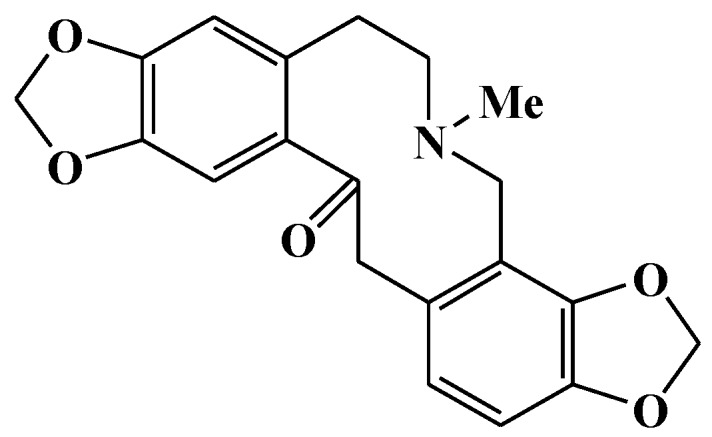
Figure 1
Figure 1
Structure of compound LDD-16.
Figure 2
Figure 2
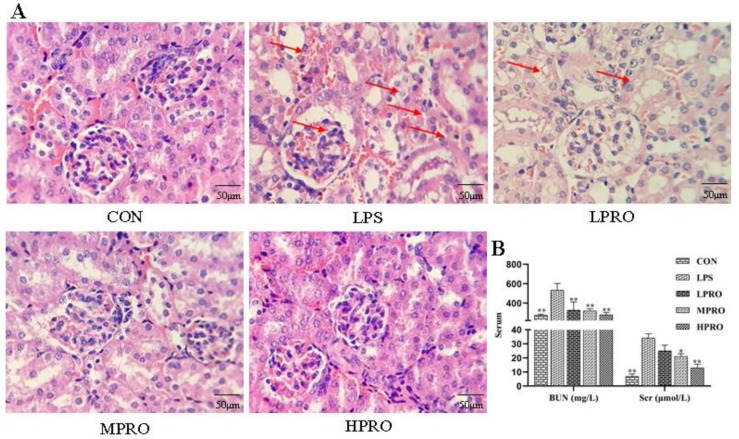
Effects of protopine on the renal function in mice with LPS-induced acute kidney injury (AKI). (A) Representative histopathological images for the H&E staining of formalin-fixed kidney tissues from each group (400× magnification); scale bar 50 μm. (B) Effects of protopine on Scr and BUN in mice with LPS-induced AKI (n = 8 mice per group). * p < 0.05, ** p < 0.01 compared with the LPS group. (LPRO: low-dose protopine; MPRO: medium-dose protopine; HPRO: high-dose protopine; LPS: lipopolysaccharide; AKI: acute kidney injury; Scr: serum creatinine; BUN: blood urea nitrogen; H&E: hematoxylin and eosin).
Figure 3
Figure 3
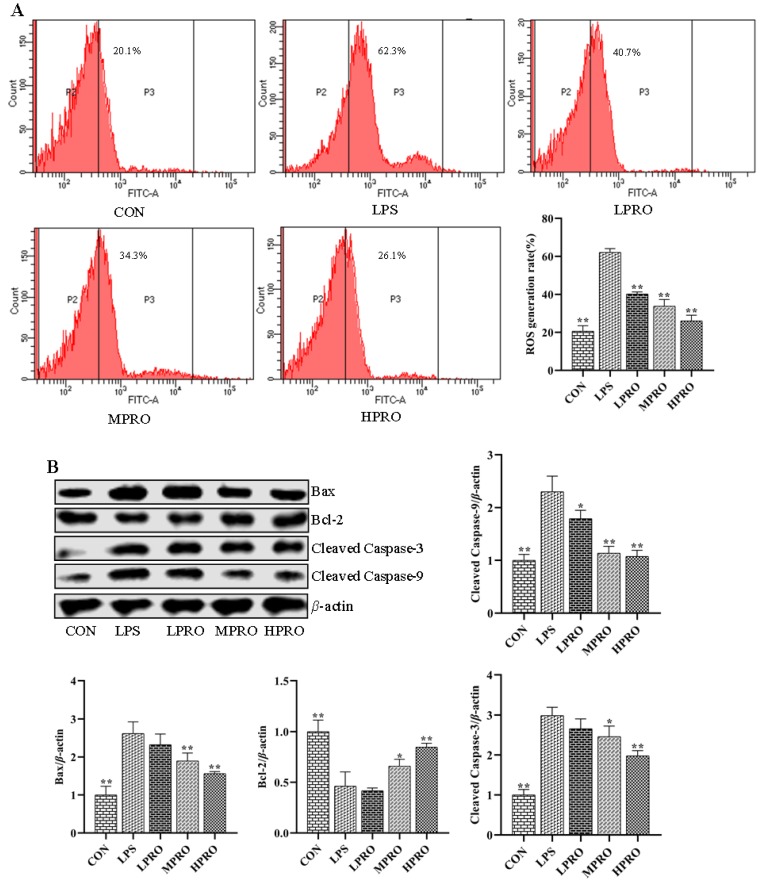
Effects of protopine on cell apoptosis in mice with LPS-induced AKI (n = 8 mice per group). (A) Effects of protopine on oxidative stress in mice with LPS-induced AKI. (B) Effects of protopine on apoptosis marker proteins in mice with LPS-induced AKI. * p < 0.05, ** p < 0.01 compared with the LPS group. (LPRO: low-dose protopine; MPRO: medium-dose protopine; HPRO: high-dose protopine; LPS: lipopolysaccharide; AKI: acute kidney injury; ROS: reactive oxygen species; FCM: flow cytometry; Bax: associated X protein; Bcl-2: B-cell lymphoma 2).
Figure 4
Figure 4
Effects of protopine on inflammatory response in mice with LPS-induced AKI (n = 8 mice per group). (A) Effects of protopine on inflammation accumulation in mice with LPS-induced AKI detected by small animal imaging. (BE) Effects of protopine on inflammatory cytokines in mice with LPS-induced AKI. (F,G) Effects of protopine on TLR4 signaling pathway in mice with LPS-induced AKI. * p < 0.05, ** p < 0.01 compared with the LPS group. (CBA: cytometric bead array; LPRO: low-dose protopine; MPRO: medium-dose protopine; HPRO: high-dose protopine; LPS: lipopolysaccharide; AKI: acute kidney injury; IL-2: interleukin-2; IFN-γ: interferon-γ; IL-10: interleukin-10; TLR4: toll-like receptor 4; NLRP3: nod receptor heat protein domain associated protein 3; IL-1β: interleukin-1β; IL1R1: interleukin-1 receptor 1; GSDMD: gasdermin; MyD88: myeloiddifferentiationfactor88).
Figure 5
Figure 5
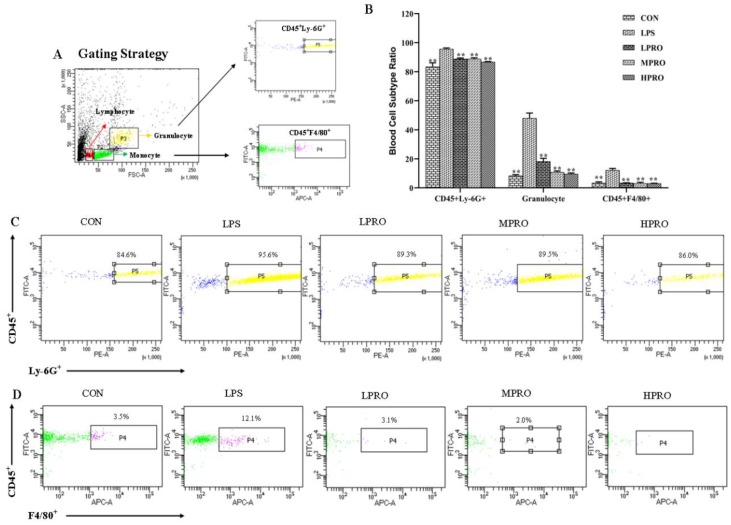
Effects of protopine on the blood cell subtype in mice with LPS-induced AKI (n = 8 mice per group). (A) Gating Strategy. (B) Effects of protopine on the blood cell subtype ratio in mice with LPS-induced AKI. (C,D) Effects of protopine on the ratio of CD45+Ly-6G+ and CD45+F4/80+ in mice with LPS-induced AKI. * p < 0.05, ** p < 0.01 compared with the LPS group. (LPRO: low-dose protopine; MPRO: medium-dose protopine; HPRO: high-dose protopine; LPS: lipopolysaccharide; AKI: acute kidney injury).

References

    1. Quoilin C., Mouithys-Mickalad A., Lecart S., Fontaine-Aupart M.-P., Hoebeke M. Evidence of oxidative stress and mitochondrial respiratory chain dysfunction in an in vitro model of sepsis-induced kidney injury. Biochim. Et Biophys. Acta (BBA) - Bioenerg. 2014;1837:1790–1800. doi: 10.1016/j.bbabio.2014.07.005. - DOI - PubMed
    1. Bilgili B., Haliloglu M., Cinel I. Sepsis and Acute Kidney Injury. Turk. J. Anesth. Reanim. 2014;42:294–301. doi: 10.5152/TJAR.2014.83436. - DOI - PMC - PubMed
    1. Robert S.W., Wang W. Acute renal failure and sepsis. N. Engl. J. Med. 2004;351:159–169. - PubMed
    1. Zarjou A., Agarwal A. Sepsis and acute kidney injury. J. Am. Soc. Nephrol. 2011;22:999–1006. doi: 10.1681/ASN.2010050484. - DOI - PubMed
    1. Choudhary G.S., Al-Harbi S., Almasan A. Caspase-3 activation is a critical determinant of genotoxic stress-induced apoptosis. Methods Mol. Biol. 2015;1219:1–9. - PubMed

MeSH terms

LinkOut - more resources