


Physical Workload Tracking Using Human Activity Recognition with Wearable Devices
- PMID: 31861639
- PMCID: PMC6982756
- DOI: 10.3390/s20010039
Physical Workload Tracking Using Human Activity Recognition with Wearable Devices
Abstract
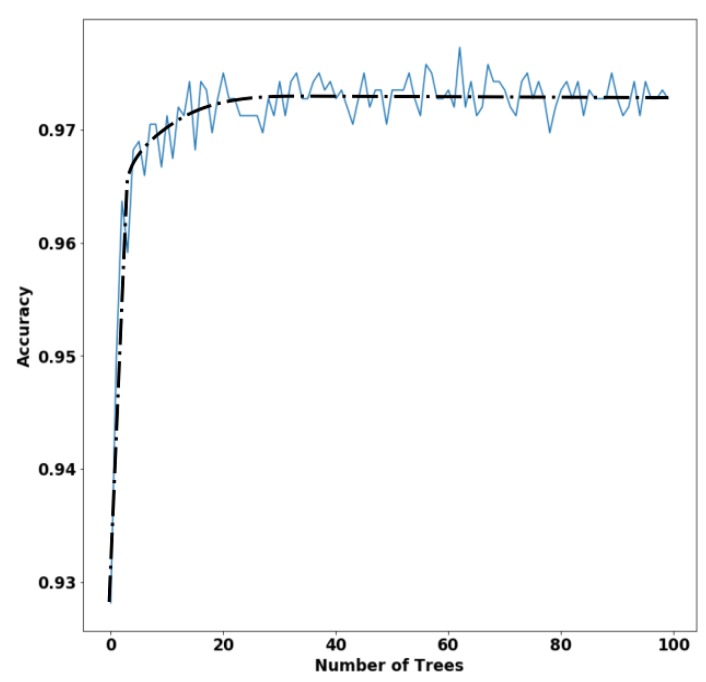
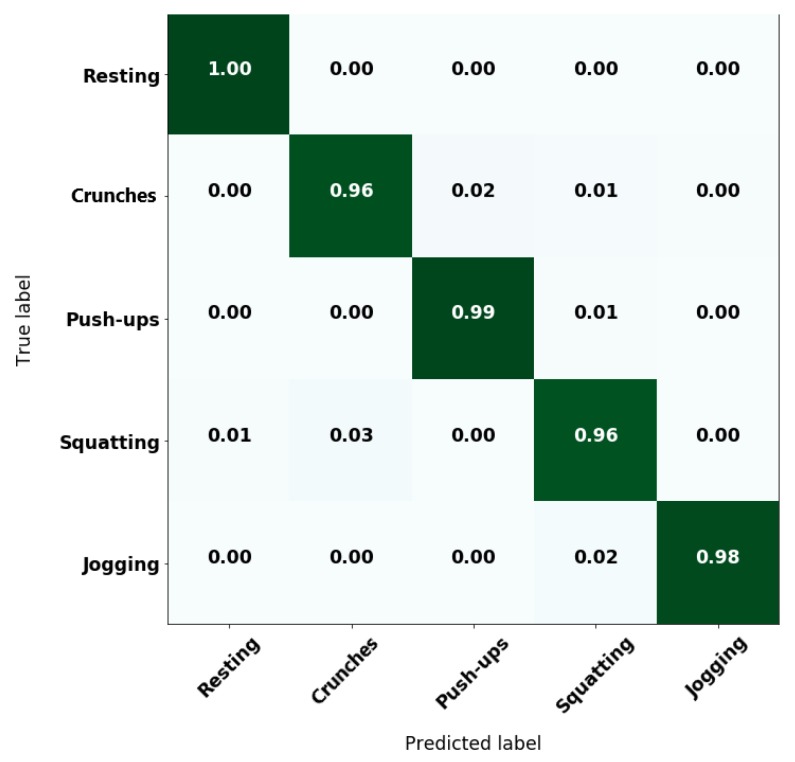
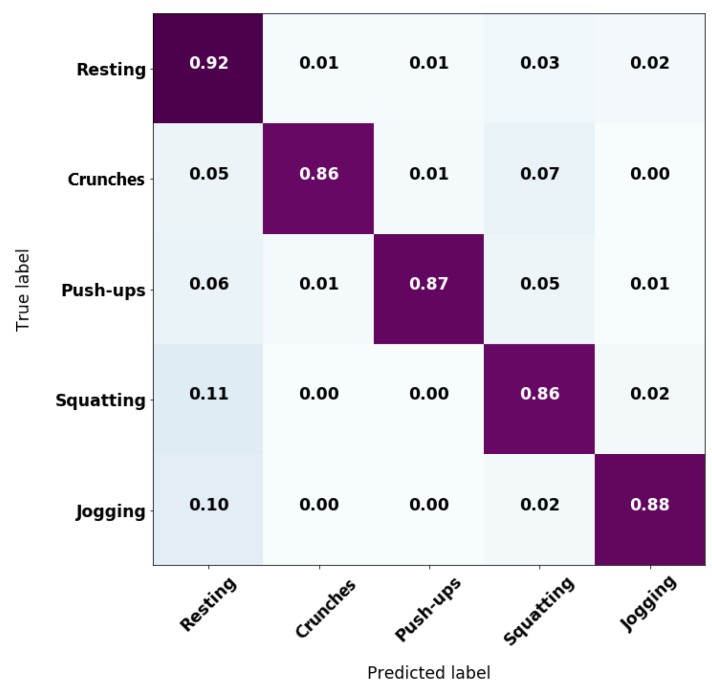
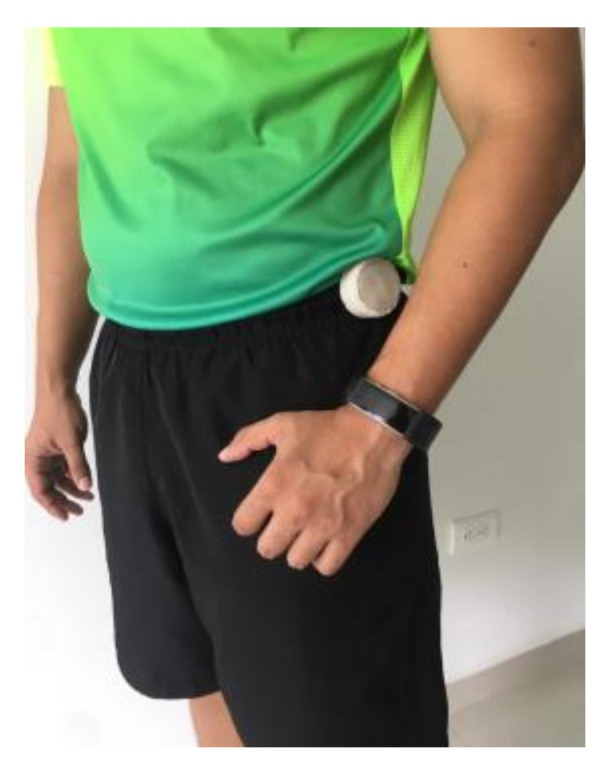
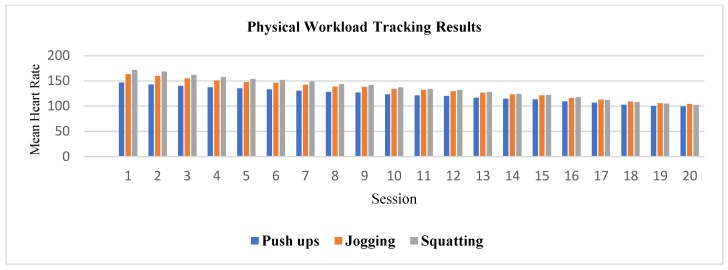
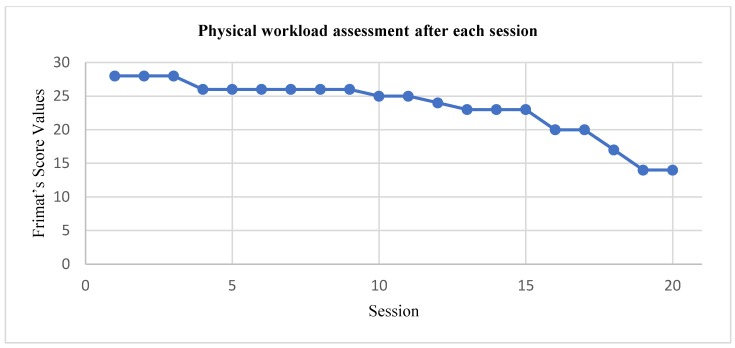
In this work, authors address workload computation combining human activity recognition and heart rate measurements to establish a scalable framework for health at work and fitness-related applications. The proposed architecture consists of two wearable sensors: one for motion, and another for heart rate. The system employs machine learning algorithms to determine the activity performed by a user, and takes a concept from ergonomics, the Frimat's score, to compute the corresponding physical workload from measured heart rate values providing in addition a qualitative description of the workload. A random forest activity classifier is trained and validated with data from nine subjects, achieving an accuracy of 97.5%. Then, tests with 20 subjects show the reliability of the activity classifier, which keeps an accuracy up to 92% during real-time testing. Additionally, a single-subject twenty-day physical workload tracking case study evinces the system capabilities to detect body adaptation to a custom exercise routine. The proposed system enables remote and multi-user workload monitoring, which facilitates the job for experts in ergonomics and workplace health.
Keywords: human activity recognition; machine learning for real-time applications; physical workload; wearable systems for healthcare.
Conflict of interest statement
The authors declare no conflict of interest. The funders had no role in the design of the study; in the collection, analyses, or interpretation of data; in the writing of the manuscript, or in the decision to publish the results.
Figures
References
-
- World Health Organization . Work Organisation and Stress. World Health Organization; Geneva, Switzerland: 2003. pp. 1–27. (Protecting Workers Health Series).
-
- Taelman J., Vandeput S., Spaepen A., Van Huffel S. Influence of mental stress on Heart Rate and Heart Rate Variability; Proceedings of the 4th European conference of the international federation for medical and biological engineering (IFMBE); Antwerp, Belgium. 23–27 November 2008; pp. 1366–1369.
-
- De la Iglesia A., Gómez J., Sáenz R., Ruiz C. Carga de trabajo físico y costo cardiaco: La freuencia cardiaca de referencia. Rev. Salud y Trab. 1994;106:16–21.
MeSH terms
Grants and funding
LinkOut - more resources
Full Text Sources
Other Literature Sources
