


Epigenetic Regulation in Etiology of Type 1 Diabetes Mellitus
- PMID: 31861649
- PMCID: PMC6981658
- DOI: 10.3390/ijms21010036
Epigenetic Regulation in Etiology of Type 1 Diabetes Mellitus
Abstract
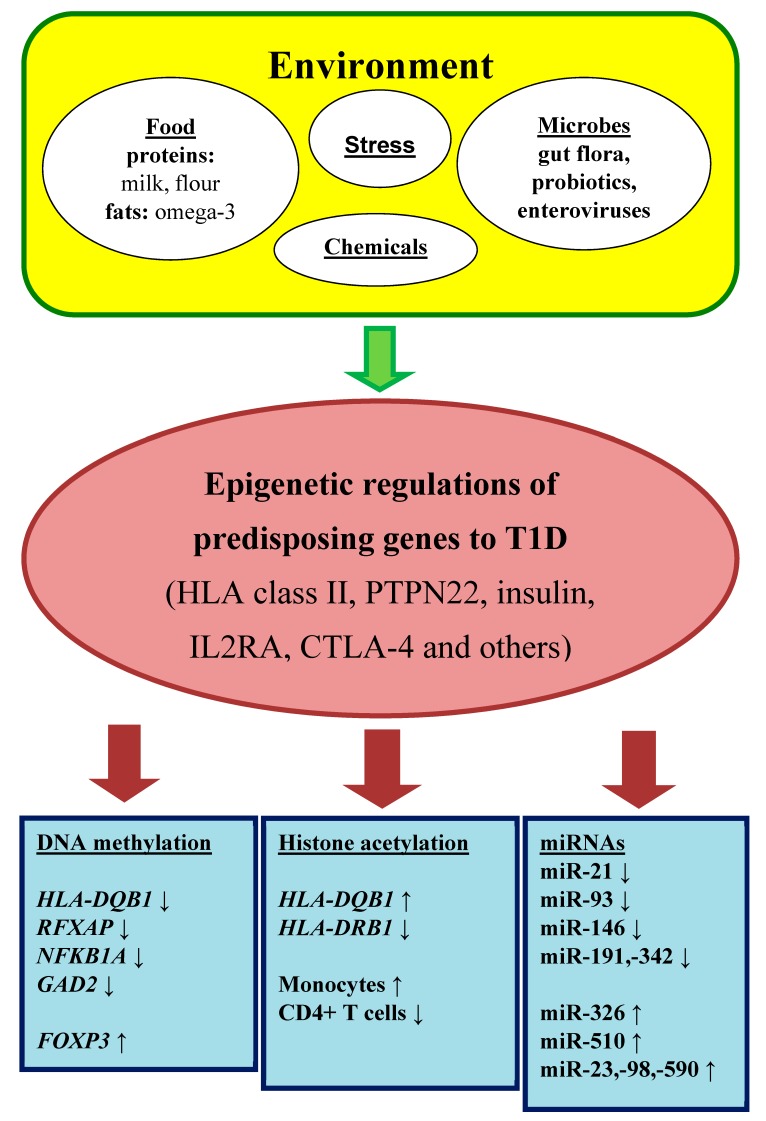
Type 1 diabetes mellitus (T1DM) is caused by an autoimmune destruction of the pancreatic β-cells, a process in which autoreactive T cells play a pivotal role, and it is characterized by islet autoantibodies. Consequent hyperglycemia is requiring lifelong insulin replacement therapy. T1DM is caused by the interaction of multiple environmental and genetic factors. The integrations of environments and genes occur via epigenetic regulations of the genome, which allow adaptation of organism to changing life conditions by alternation of gene expression. T1DM has increased several-fold over the past half century. Such a short time indicates involvement of environment factors and excludes genetic changes. This review summarizes the most current knowledge of epigenetic changes in that process leading to autoimmune diabetes mellitus.
Keywords: HLA class II; epigenetic modifications; insulin; type 1 diabetes.
Conflict of interest statement
The authors declare no conflict of interest.
Figures

References
-
- Abbas A.K., Lichtman A.H., Pillai S. Cellular and Molecular Immunology. 7th ed. Elsevier Saunders; Philadelphia, PA, USA: 2012.
Publication types
MeSH terms
Grants and funding
LinkOut - more resources
Full Text Sources
Medical
Research Materials
Miscellaneous
