


Pharmacy-based management for depression in adults
- PMID: 31868236
- PMCID: PMC6927244
- DOI: 10.1002/14651858.CD013299.pub2
Pharmacy-based management for depression in adults
Abstract
Background: It is common for peoples not to take antidepressant medication as prescribed, with around 50% of people likely to prematurely discontinue taking their medication after six months. Community pharmacists may be well placed to have a role in antidepressant management because of their unique pharmacotherapeutic knowledge and ease of access for people. Pharmacists are in an ideal position to offer proactive interventions to people with depression or depressive symptoms. However, the effectiveness and acceptability of existing pharmacist-based interventions is not yet well understood. The degree to which a pharmacy-based management approach might be beneficial, acceptable to people, and effective as part of the overall management for those with depression is, to date, unclear. A systematic review of randomised controlled trials (RCTs) will help answer these questions and add important knowledge to the currently sparse evidence base.
Objectives: To examine the effects of pharmacy-based management interventions compared with active control (e.g. patient information materials or any other active intervention delivered by someone other than the pharmacist or the pharmacy team), waiting list, or treatment as usual (e.g. standard pharmacist advice or antidepressant education, signposting to support available in primary care services, brief medication counselling, and/or (self-)monitoring of medication adherence offered by a healthcare professional outside the pharmacy team) at improving depression outcomes in adults.
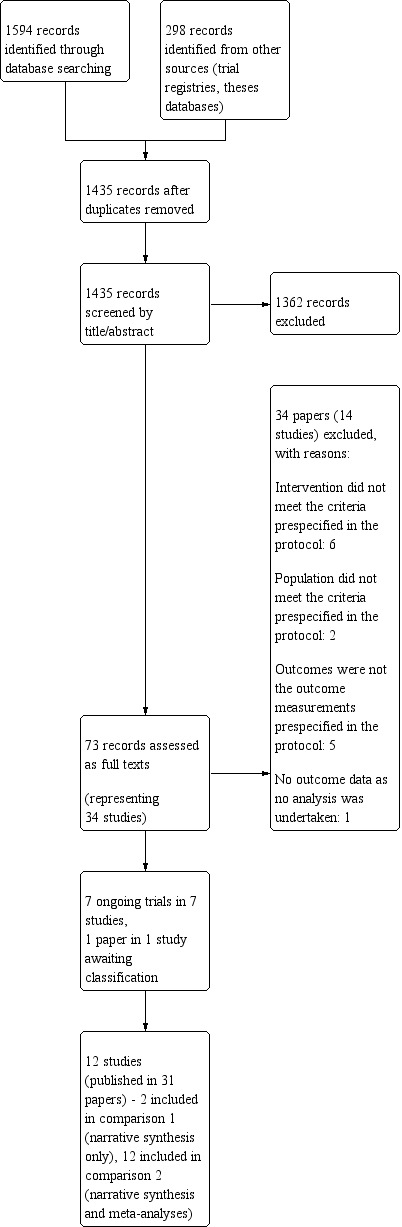
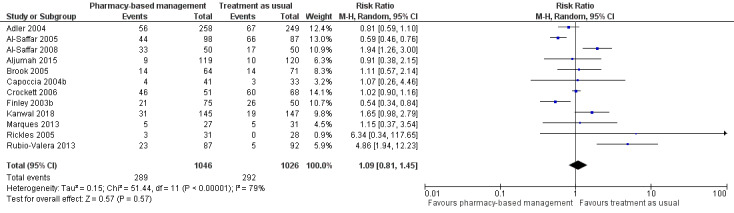
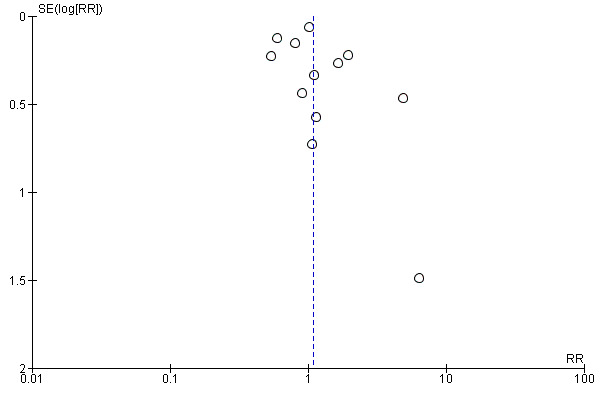
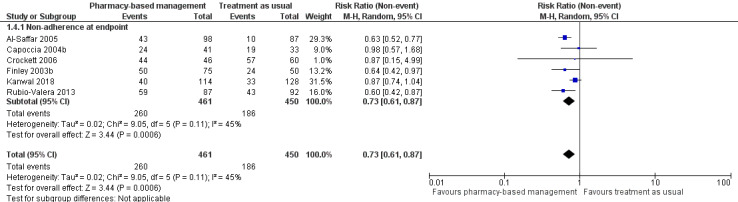
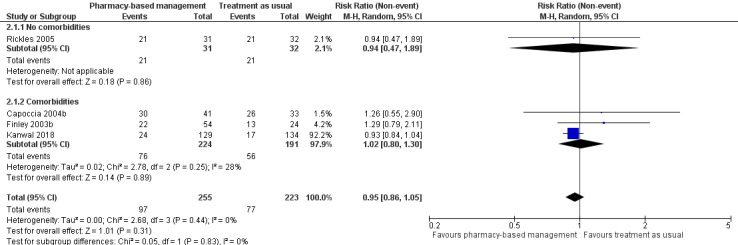
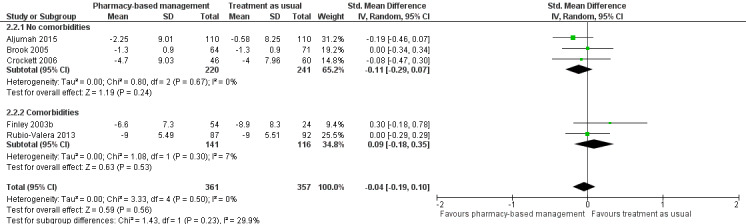
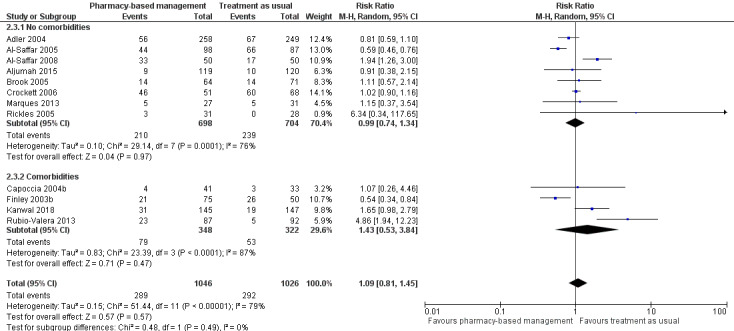
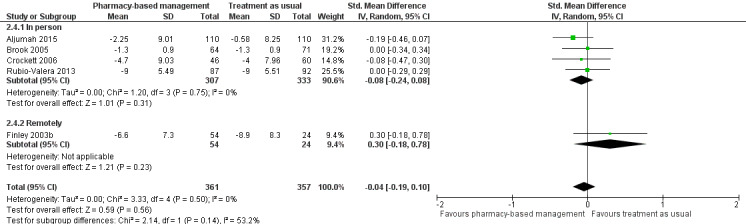
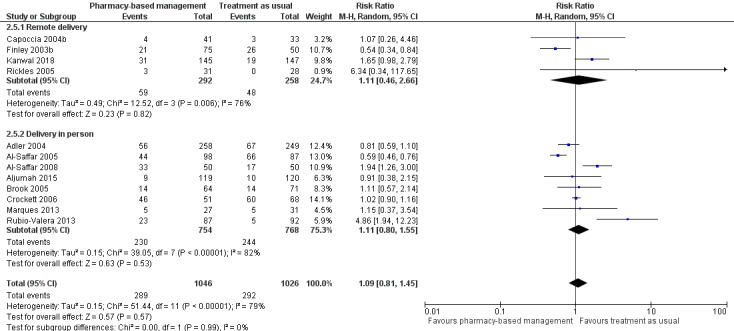
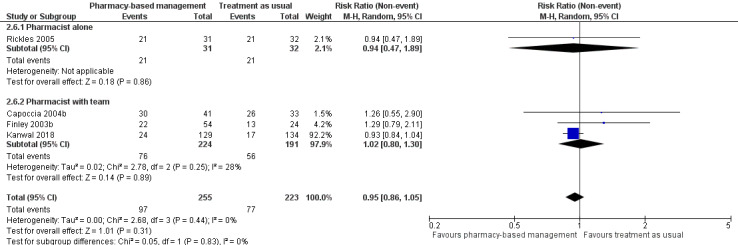
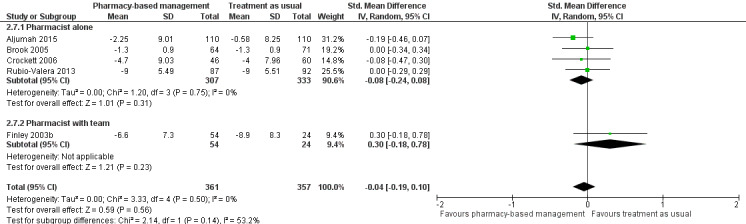
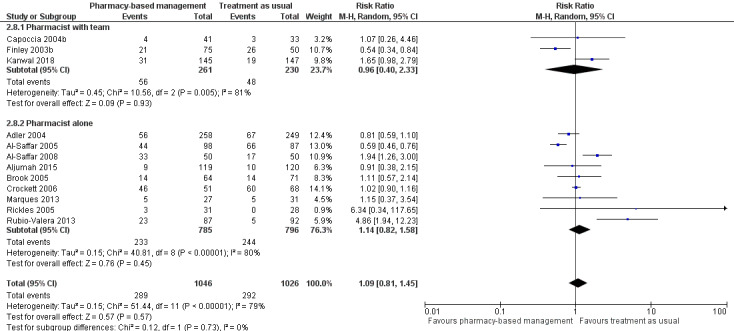
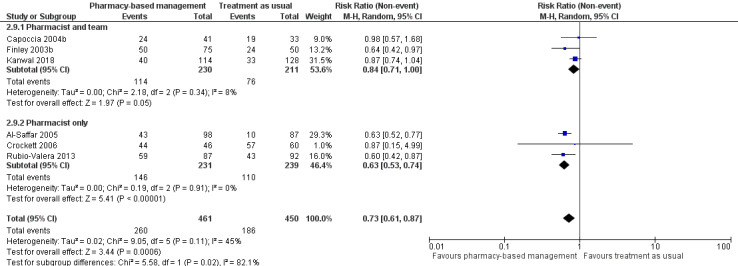
Search methods: We searched the Cochrane Common Mental Disorders Controlled Trials Register (CCMD-CTR) to June 2016; the Cochrane Library (Issue 11, 2018); and Ovid MEDLINE, Embase, and PsycINFO to December 2018. We searched theses and dissertation databases and international trial registers for unpublished/ongoing trials. We applied no restrictions on date, language, or publication status to the searches. SELECTION CRITERIA: We included all RCTs and cluster-RCTs where a pharmacy-based intervention was compared with treatment as usual, waiting list, or an alternative intervention in the management of depression in adults over 16 years of age. Eligible studies had to report at least one of the following outcomes at any time point: depression symptom change, acceptability of the intervention, diagnosis of depression, non-adherence to medication, frequency of primary care appointments, quality of life, social functioning, or adverse events. DATA COLLECTION AND ANALYSIS: Two authors independently, and in duplicate, conducted all stages of study selection, data extraction, and quality assessment (including GRADE). We discussed disagreements within the team until we reached consensus. Where data did not allow meta-analyses, we synthesised results narratively. MAIN RESULTS: Twelve studies (2215 participants) met the inclusion criteria and compared pharmacy-based management with treatment as usual. Two studies (291 participants) also included an active control (both used patient information leaflets providing information about the prescribed antidepressant). Neither of these studies reported depression symptom change. A narrative synthesis of results on acceptability of the intervention was inconclusive, with one study reporting better acceptability of pharmacy-based management and the other better acceptability of the active control. One study reported that participants in the pharmacy-based management group had better medication adherence than the control participants. One study reported adverse events with no difference between groups. The studies reported no other outcomes. Meta-analyses comparing pharmacy-based management with treatment as usual showed no evidence of a difference in the effect of the intervention on depression symptom change (dichotomous data; improvement in symptoms yes/no: risk ratio (RR), 0.95, 95% confidence interval (CI) 0.86 to 1.05; 4 RCTs, 475 participants; moderate-quality evidence; continuous data: standard mean difference (SMD) -0.04, 95% CI -0.19 to 0.10; 5 RCTs, 718 participants; high-certainty evidence), or acceptability of the intervention (RR 1.09, 95% CI 0.81 to 1.45; 12 RCTs, 2072 participants; moderate-certainty evidence). The risk of non-adherence was reduced in participants receiving pharmacy-based management (RR 0.73, 95% CI 0.61 to 0.87; 6 RCTs, 911 participants; high-certainty evidence). We were unable to meta-analyse data on diagnosis of depression, frequency of primary care appointments, quality of life, or social functioning.
Authors' conclusions: We found no evidence of a difference between pharmacy-based management for depression in adults compared with treatment as usual in facilitating depression symptom change. Based on numbers of participants leaving the trials early, there may be no difference in acceptability between pharmacy-based management and controls. However, there was uncertainty due to the low-certainty evidence.
Copyright © 2019 The Cochrane Collaboration. Published by John Wiley & Sons, Ltd.
Conflict of interest statement
JB: none.
NW: none.
NM: none.
AT: none.
LW: none.
RS: none.
SJS: none.
RC: leads and has responsibility for Cochrane Common Mental Disorders, which has supported parts of the review process and is largely funded by a grant from the National Institute of Health and Research (NIHR) in the UK.
DM: none.
SG: none.
DE: Chief Investigator of the Community Pharmacy Mood Intervention Feasibility and Pilot Study funded by the National Institute for Health Research. This study is relevant to the subject matter of the review; however, the review author has no associated financial or commercial conflicts of interest.
Figures


Update of
References
References to studies included in this review
Adler 2004 {published data only (unpublished sought but not used)}
-
- Adler DA, Bungay KM, Wilson IB, Pei Y, Supran S, Peckham E, et al. The impact of a pharmacist intervention on 6‐month outcomes in depressed primary care patients. General Hospital Psychiatry 2004;26(3):199‐209. - PubMed
-
- Bungay KM, Adler DA, Rogers WH, McCoy C, Kaszuba M, Supran S, et al. Description of a clinical pharmacist intervention administered to primary care patients with depression. General Hospital Psychiatry 2004;26(3):210‐8. - PubMed
Aljumah 2015 {published data only}
-
- Aljumah K, Hassali M. CP‐015 Impact of pharmacist intervention using shared decision making on adherence and measurable depressed patient outcomes. European Journal of Hospital Pharmacy 2015; Vol. 22:A6‐7.
-
- Aljumah K, Nwaf A, Amed A, Alhoutan A, Aldhiab M. CP‐021 the impact of a decision aid on depressed patient's involvement in shared decision making: a pilot randomised controlled double blind study. European Journal of Hospital Pharmacy 2016; Vol. 23:A9‐10.
Al‐Saffar 2005 {published data only}
-
- Al‐Saffar N, Deshmukh AA, Carter P, Adib SM. Effect of information leaflets and counselling on antidepressant adherence: open randomised controlled trial in a psychiatric hospital in Kuwait. International Journal of Pharmacy Practice 2005;13(2):123‐31.
Al‐Saffar 2008 {published data only}
Brook 2005 {published data only}
-
- Brook O, Hout H, Haan M, Nieuwenhuyse H. Pharmacist coaching of antidepressant users, effects on adherence, depressive symptoms and drug attitude; a randomized controlled trial. European Neuropsychopharmacology 2002;12(Suppl 3):S201.
-
- Brook O, Hout H, Haan M, Nieuwenhuyse H, Goodwin G. Medication coaching by community pharmacists of antidepressant users: a randomized controlled trial. XII World Congress of Psychiatry; 2002 Aug 24‐29; Yokohama (Japan). 2002.
-
- Brook O, Hout H, Nieuwenhuyse H, Heerdink E. Impact of coaching by community pharmacists on drug attitude of depressive primary care patients and acceptability to patients; a randomized controlled trial. European Neuropsychopharmacology 2003;13(1):1‐9. - PubMed
Capoccia 2004b {published data only}
-
- Capoccia KL, Boudreau DM, Blough DK, Ellsworth AJ, Clark DR, Stevens NG, et al. Randomized trial of pharmacist interventions to improve depression care and outcomes in primary care. American Journal of Health‐system Pharmacy 2004;61(4):364‐72. - PubMed
Crockett 2006 {published data only}
Finley 2003b {published data only}
-
- Finley PR, Rens HR, Gess S, Louie, C. Case management of depression by clinical pharmacists in a primary care setting. Formulary 1999; Vol. 34, issue 10:864‐70.
Kanwal 2018 {published data only}
Marques 2013 {published data only}
Rickles 2005 {published data only}
-
- Rickles NM. A randomized, controlled study evaluating the impact of an antidepressant monitoring program on consumer outcomes. Dissertation Abstracts International: Section B: the Sciences and Engineering 2003; Vol. 64, issue 5‐B:2145.
-
- Rickles NM, Svarstad BL, Statz‐Paynter JL, Taylor LV, Kobak KA. Improving patient feedback about and outcomes with antidepressant treatment: a study in eight community pharmacies. Journal of the American Pharmacists Association 2006;46(1):25‐32. - PubMed
-
- Rickles NM, Svarstad BL, Statz‐Paynter JL, Taylor LV, Kobak KA. Pharmacist telemonitoring of antidepressant use: effects on pharmacist–patient collaboration. Journal of the American Pharmacists Association 2005;45(3):344‐53. - PubMed
Rubio‐Valera 2013 {published data only}
-
- Rubio‐Valera M, Bosmans J, Fernández A, Peñarrubia‐María M, March M, Travé P, et al. Cost‐effectiveness of a community pharmacist intervention in patients with depression: a randomized controlled trial (PRODEFAR Study). PLoS One 2013;8(8):e70588. Erratum in: PLoS One 2016;11(1):e0147459. [DOI: 10.1371/journal.pone.0070588] - DOI - PMC - PubMed
-
- Rubio‐Valera M, March Pujol M, Fernández A, Peñarrubia‐María MT, Travé P, López Del Hoyo Y, et al. Evaluation of a pharmacist intervention on patients initiating pharmacological treatment for depression: a randomized controlled superiority trial. European Neuropsychopharmacology 2013;23(9):1057‐66. Erratum in: European Neuropsychopharmacology 2016;26(6):1085. - PubMed
-
- Rubio‐Valera M, Peñarrubia‐María MT, Fernández‐Vergel R, Carvajal Tejadillo AC, Fernández Sánchez A, Aznar‐Lou I, et al. Impact of pharmaceutical intervention in preventing relapses in depression in primary care. Atencion Primaria 2016;48(5):308‐15. [DOI: 10.1016/j.aprim.2015.05.009] - DOI - PMC - PubMed
References to studies excluded from this review
Akinbosoye 2016 {published data only}
-
- Taitel M, Jiang JZ, Rudkin K. Impact of pharmacist‐call intervention program on new‐to‐therapy patients' medication adherence. Value in health 2014;17(3):A138‐9.
Bertsche 2015 {published data only}
-
- Bertsche T, Lindner S, Damm M, Frontini R, Exner C, Himmerich H. An interdisciplinary concept to optimize patient safety – a pilot study [Ein interdisziplinäres Konzept zur Optimierung der Patientensicherheit – Eine Pilotstudie]. Psychiatrische Praxis 2015;42(4):216‐20. - PubMed
Fortney 2007 {published data only}
-
- Fortney JC, Pyne JM, Edlund MJ, Robinson DE, Mittal D, Henderson KL. Design and implementation of the Telemedicine‐Enhanced Antidepressant Management Study. General Hospital Psychiatry 2006;28:18‐26. - PubMed
-
- Fortney JC, Pyne JM, Edlund MJ, Stecker T, Mittal D, Robinson DE, et al. Reasons for antidepressant nonadherence among veterans treated in primary care clinics. Journal of Clinical Psychiatry 2011;72(6):827‐34. - PubMed
Fortney 2013 {published data only}
-
- Fortney JC, Pyne JM, Mouden SB, Mittal D, Hudson TJ, Schroeder GW, et al. Practice‐based versus telemedicine‐based collaborative care for depression in rural federally qualified health centers: a pragmatic randomized comparative effectiveness trial. American Journal of Psychiatry 2013;170(4):414‐25. [DOI: 10.1176/appi.ajp.2012.12050696] - DOI - PMC - PubMed
-
- NCT00439452. Telemedicine‐based collaborative care to reduce rural disparities. clinicaltrials.gov/show/nct00439452 (first received 23 February 2007).
-
- Pyne JM, Fortney JC, Tripathi SP, Maciejewski ML, Edlund MJ, Williams DK. Cost‐effectiveness analysis of a rural telemedicine collaborative care intervention for depression. Archives of General Psychiatry 2010;67(8):812‐21. - PubMed
Kawaguchi 2018 {published data only}
-
- Kawaguchi F, Watanabe J, Tsuneki T, Kikkawa A. The significance of pharmacist intervention focused on improvement of adverse events and cancer pain. Gan to Kagaku Ryoho. Cancer & Chemotherapy 2018;45(3):443‐7. - PubMed
Kooij 2016 {published data only}
-
- Kooij MJ, Heerdink ER, Dijk L, van, Geffen EC, van, Belitser SV, Bouvy ML. Effects of telephone counselling intervention by pharmacists (TelCIPI on medication adherence; results of a cluster randomized trial [Telefonische startbegeleiding door apothekers verbetert de therapietrouw; een cluster‐gerandomiseerd onderzoek]. Pharmaceutisch Weekblad 2017;152(37):19‐26.
-
- Kooy MJ, Heerdink ER, Geffen EC, Geers HC, Bouvy ML. Effects telephone counselling intervention by pharmacist on beliefs about medicines for patients starting treatment: Results of an interim analysis of a cluster randomized controlled trial. International Journal of Clinical Pharmacy 2013;35(5 Suppl 2):896‐7.
-
- Kooy MJ, Geffen EC, Heerdink ER, Dijk L, Bouvy ML. Effects of a TELephone Counselling Intervention by Pharmacist (TelCIP) on medication adherence, patient beliefs and satisfaction with information for patients starting treatment: study protocol for a cluster randomized controlled trial. BMC Health Services Research 2014;14:219. - PMC - PubMed
-
- Kooy MJ, Geffen EC, Heerdink ER, Dijk L, Bouvy ML. Patients' general satisfaction with telephone counseling by pharmacists and effects on satisfaction with information and beliefs about medicines: results from a cluster randomized trial. Patient Education and Counseling 2015;98:797‐804. - PubMed
Liekens 2014 {published data only}
-
- Liekens S, Boedry O, Hendrickx E, Vandael E, Broecke I, Roter D, et al. Analysis of interactions between pharmacists and patients starting antidepressant therapy. International Journal of Clinical Pharmacy 2013;35(5 Suppl 2):879.
-
- Liekens S, Smits T, Laekeman G, Foulon V. Depression training for pharmacists significantly improves patients' satisfaction, concerns and feelings about side effects regarding antidepressant therapy. International Journal of Clinical Pharmacy 2015;37(2):424.
-
- Liekens S, Vandael E, Roter D, Larson S, Smits T, Laekeman G. Impact of training on pharmacists' counseling of patients starting antidepressant therapy. Patient Education and Counseling 2014;94(1):110‐5. - PubMed
-
- NCT02187380. Studying the impact of medication counselling by community pharmacists in patients starting a treatment with antidepressants. clinicaltrials.gov/show/nct02187380 (first received 11 July 2014).
Lin 2018 {published data only}
-
- Lin HW, Lin CH, Chang CK, Chou CY, Yu IW, Lin CC, et al. Economic outcomes of pharmacist‐physician medication therapy management for polypharmacy elderly: a prospective, randomized, controlled trial. Journal of the Formosan Medical Association 2018;117:235‐43. - PubMed
-
- Lin HW, Lin CH, Chang CK, Yu W, Lin CC, Li TC, et al. Economic, clinical and humanistic outcomes of a collaborative pharmacist‐physician medication therapy management service for polypharmacy elderly. Value in Health 2012;15(4):A24.
Matzke 2018 {published data only}
-
- Matzke GR, Moczygemba LR, Williams KJ, Czar MJ, Lee WT. Impact of a pharmacist‐physician collaborative care model on patient outcomes and health services utilization. American Journal of Health‐system Pharmacy 2018;75(14):1039‐47. - PubMed
Moride 2013 {published and unpublished data}
-
- Moride Y, Du Fort GG, Rossignol M, Collet JP, Lelorier J, Lachaine J, et al. A patient‐centered follow‐up program for improving persistence to antidepressant treatment and impact on clinical and patient reported outcomes. Final Report version 1.2 2013.
-
- Moride Y, Du Fort GG, Tournier M, Alary ME, Rossignol M, Ducruet T, et al. Effectiveness of the persistence telephone assessment and communication program for patients with treated depression: pragmatic randomized controlled trial. Pharmacoepidemiology and Drug Safety 2013;22:113‐4. [DOI: 10.1002/pds.3512] - DOI
NCT00356655 {published data only}
-
- NCT00356655. The ACHIEVA study of enhanced pharmacist care on antidepressant use and response. clinicaltrials.gov/show/nct00356655 (first received 26 July 2006).
Pyne 2011 {published data only}
-
- Curran GM, Pyne J, Fortney JC, Gifford A, Asch SM, Rimland D, et al. Development and implementation of collaborative care for depression in HIV clinics. AIDS Care 2011;23(12):1626‐36. - PubMed
-
- NCT00304915. HIV Translating Initiatives for Depression Into Effective Solutions (HI‐TIDES). clinicaltrials.gov/ct2/show/NCT00304915 (first received 17 September 2014).
-
- Painter JT, Fortney JC, Gifford AL, Rimland D, Monson T, Rodriguez‐Barradas MC, et al. Cost‐effectiveness of collaborative care for depression in human immunodeficiency virus clinics. Journal of Acquired Immune Deficiency Syndromes 2015;70(4):377‐85. [DOI: 10.1097/QAI.0000000000000732] - DOI - PMC - PubMed
Shaw 2000 {published data only}
-
- Shaw H, Mackie CA, Sharkie I. Evaluation of effect of pharmacy discharge planning on medication problems experienced by discharged acute admission mental health patients. International Journal of Pharmacy Practice 2000;8(2):144‐53.
Zermansky 2001 {published data only}
-
- Zermansky AG, Petty DR, Raynor DK, Lowe CJ, Freemantle N, Vail A. Clinical medication review by a pharmacist of patients on repeat prescriptions in general practice: a randomised controlled trial. Health Technology Assessment 2002;6:20. - PubMed
References to studies awaiting assessment
Harris 2005 {unpublished data only}
-
- Harris DJ. Pharmaceutical Care and Adherence Support by Community Pharmacists for Older People with Mental Health Problems in the Community: a Randomised Controlled Trial [unpublished PhD]. Nottingham (UK): The University of Nottingham, 2005.
References to ongoing studies
ACTRN12618001105235 {unpublished data only}
-
- ACTRN12618001105235. Enhanced intervention to improve medication adherence in a community pharmacy setting. www.anzctr.org.au/ACTRN12618001105235.aspx (first received 3 July 2018).
ChiCTR‐TRC‐08000726 {published data only}
-
- ChiCTR‐TRC‐08000726. Impact of an interdisciplinary approach on symptom management of newly diagnosed depressive patients. www.chictr.org.cn/showproj.aspx?proj=8809 (first received 14 October 2008).
ISRCTN11290592 {published data only}
-
- ISRCTN11290592. Community pharmacies mood intervention study (CHEMIST). www.isrctn.com/ISRCTN11290592 (first received 8 March 2017).
NCT01188135 {published data only}
-
- NCT01188135. Antidepressant adherence via AD_IVR (AD_IVR). clinicaltrials.gov/ct2/show/NCT01188135 (first received 23 August 2010).
NCT02027259 {published data only}
-
- NCT02027259. Behavioral activation therapy for both depression and diabetes vs. diabetes alone delivered via group visits. clinicaltrials.gov/show/nct02027259 (first received 12 November 2013).
NCT03591224 {published data only}
-
- NCT03591224. Pharmacogenomic testing to optimize antidepressant drug therapy. clinicaltrials.gov/ct2/show/NCT03591224 (first received 25 June 2018).
Phung 2013 {published data only}
-
- Phung J. Reducing hospital readmissions: a pilot study of pharmacists' role on an American Indian reservation. Journal of the American Pharmacists Association 2013;53(2):e41.
Additional references
APA 2000
-
- American Psychiatric Association. Diagnostic and Statistical Manual of Mental Disorders (DSM‐IV‐TR). 4th Edition. Washington (DC): American Psychiatric Association, 2000.
APA 2013
-
- American Psychiatric Association. Diagnostic and Statistical Manual of Mental Disorders (DSM‐V). 5th Edition. Washington (DC): American Psychiatric Association, 2013.
Archer 2012
Beck 1996
-
- Beck AT, Steer RA, Ball R, Ranieri WF. Comparison of Beck Depression Inventories‐IA and ‐II in psychiatric outpatients. Journal of Personality Assessment 1996;67(3):588‐97. - PubMed
Bell 2005
Bower 2006
-
- Bower P, Gilbody S, Richards D, Fletcher J, Sutton A. Collaborative care for depression in primary care: making sense of a complex intervention: systematic review and meta‐regression. British Journal of Psychiatry 2006;189(6):484‐93. - PubMed
Capoccia 2004a
-
- Capoccia KL, Boudreau DM, Blough DK, Ellsworth AJ, Clark DR, Stevens NG, et al. Randomized trial of pharmacist interventions to improve depression care and outcomes in primary care. American Journal of Health‐System Pharmacy 2004;61(4):364‐72. - PubMed
Chisholm 2016
-
- Chisholm D, Sweeny K, Sheehan P, Rasmussen B, Smit F, Cuijpers P, et al. Scaling‐up treatment of depression and anxiety: a global return on investment analysis. Lancet 2016;3(5):415‐24. - PubMed
Chong 2011
-
- Chong WW, Aslani P, Chen TF. Effectiveness of interventions to improve antidepressant medication adherence: a systematic review. International Journal of Clinical Practice 2011;65(9):954‐75. - PubMed
Cipriani 2018
-
- Cipriani A, Furukawa TA, Salanti G, Chaimani A, Atkinson LZ, Ogawa Y, et al. Comparative efficacy and acceptability of 21 antidepressant drugs for the acute treatment of adults with major depressive disorder: a systematic review and network meta‐analysis. Lancet 2018;391(10128):1357‐66. - PMC - PubMed
Covidence 2018 [Computer program]
-
- Veritas Health Innovation. Covidence. Version accessed 1 October 2018. Melbourne, Australia: Veritas Health Innovation.
de Barra 2018
Deeks 2011
-
- Deeks JJ, Higgins JP, Altman DG. Chapter 9: Analysing data and undertaking meta‐analyses. In: Higgins JP, Green S, editor(s). Cochrane Handbook for Systematic Reviews of Interventions Version 5.1.0 (updated March 2011). The Cochrane Collaboration, 2011. Available from handbook.cochrane.org.
Eades 2011
Ekers 2014a
Ferrari 2013a
Ferrari 2013b
-
- Ferrari AJ, Somerville AJ, Baxter AJ, Norman R, Patten SB, Vos T, et al. Global variation in the prevalence and incidence of major depressive disorder: a systematic review of the epidemiological literature. Psychological Medicine 2013;43(3):471‐81. - PubMed
Finley 2003a
-
- Finley PR, Crismon ML, Rush AJ. Evaluating the impact of pharmacists in mental health: a systematic review. Pharmacotherapy 2003;23(12):1634‐44. - PubMed
Gilbody 2003
-
- Gilbody S, Whitty P, Grimshaw J, Thomas R. Educational and organizational interventions to improve the management of depression in primary care: a systematic review. JAMA 2003;289(23):3145‐51. - PubMed
Gilbody 2017
-
- Gilbody S, Lewis H, Adamson J, Atherton K, Bailey D, Birstwistle J, et al. Effect of collaborative care vs. usual care on depressive symptoms in older adults with subthreshold depression: the CASPER randomised controlled trial. JAMA 2017;317:728‐37. - PubMed
GRADEpro GDT [Computer program]
-
- McMaster University (developed by Evidence Prime). GRADEpro GDT. Hamilton (ON): McMaster University (developed by Evidence Prime), 2015.
Gunn 2006
Hanlon 2004
-
- Hanlon JT, Lindblad CI, Gray SL. Can clinical pharmacy services have a positive impact on drug‐related problems and health outcomes in community‐based older adults?. American Journal of Geriatric Pharmacotherapy 2004;2(1):3‐13. - PubMed
Higgins 2011a
-
- Higgins JP, Altman DG, Sterne JC. Chapter 8: Assessing risk of bias in included studies. In: Higgins JP, Green S, editor(s). Cochrane Handbook for Systematic Reviews of Interventions Version 5.1.0 (updated March 2011). The Cochrane Collaboration, 2011. Available from handbook.cochrane.org.
Higgins 2011b
-
- Higgins JP, Deeks JJ, Altman DG. Chapter 16: Special topics in statistics. In: Higgins JP, Green S, editor(s). Cochrane Handbook for Systematic Reviews of Interventions Version 5.1.0 (updated March 2011). The Cochrane Collaboration, 2011. Available from handbook.cochrane.org.
Higgins 2019a
-
- Higgins JP, Eldridge S, Li T. Chapter 23: Including variants on randomized trials. In: Higgins JP, Thomas J, Chandler J, Cumpston M, Li T, Page MJ, et al, editor(s). Cochrane Handbook for Systematic Reviews of Interventions version 6.0 (updated July 2019). The Cochrane Collaboration, 2019. Available from www.training.cochrane.org/handbook.
Higgins 2019b
-
- Higgins JP, Li T, Deeks JJ. Chapter 6: Choosing effect measures and computing estimates of effect. In: Higgins JP, Thomas J, Chandler J, Cumpston M, Li T, Page MJ, et al, editor(s). Cochrane Handbook for Systematic Reviews of Interventions version 6.0 (updated July 2019). The Cochrane Collaboration, 2019. Available from www.training.cochrane.org/handbook.
Holland 2008
Kroenke 2001
Latif 2018
-
- Latif A, Waring J, Watmough D, Boyd MJ, Elliott RA. 'I expected just to walk in, get my tablets and then walk out': on framing new community pharmacy services in the English healthcare system. Sociology of Health & Illness 2018;40(6):1019‐36. - PubMed
Lindsey 2016
-
- Lindsey L, Husband A, Steed L, Walton R, Todd A. Helpful advice and hidden expertise: pharmacy users' experiences of community pharmacy accessibility. Journal of Public Health 2016;39(3):609‐15. - PubMed
Marquez 2016
NICE 2018
-
- National Institute for Health and Care Excellence. Antidepressant treatment in adults. pathways.nice.org.uk/pathways/depression (accessed prior to 8 March 2019).
Nkansah 2010
Noyes 2011
-
- Noyes J, Popay J, Pearson A, Hannes K, Booth A. Chapter 20: Qualitative research and Cochrane Reviews. In: Higgins JP, Green S, editor(s). Cochrane Handbook for Systematic Reviews of Interventions Version 5.1.0 (updated March 2011). The Cochrane Collaboration, 2011. Available from handbook.cochrane.org.
Otte 2016
-
- Otte C, Gold SM, Penninx BW, Pariante CM, Etkin A, Fava M, et al. Major depressive disorder. Nature Reviews Disease Primers 2016;2:16065. - PubMed
Petticrew 2011
-
- Petticrew M. When are complex interventions 'complex'? When are simple interventions 'simple'?. European Journal of Public Health 2011;21(4):397‐9. - PubMed
Readdean 2018
-
- Readdean KC, Heuer AJ, Parrott JS. Effect of pharmacist intervention on improving antidepressant medication adherence and depression symptomology: a systematic review and meta‐analysis. Research in Social and Administrative Pharmacy 2018;14:321‐31. - PubMed
Review Manager 2014 [Computer program]
-
- Nordic Cochrane Centre, The Cochrane Collaboration. Review Manager 5 (RevMan 5). Version 5.3. Copenhagen: Nordic Cochrane Centre, The Cochrane Collaboration, 2014.
RevMan Web 2019 [Computer program]
-
- The Cochrane Collaboration. Review Manager Web (RevMan Web). The Cochrane Collaboration, 2019.
Rodgers 2016
Royal 2006
Royal Pharmaceutical Society 2018
-
- Royal Pharmaceutical Society. No health without mental health: how can pharmacy support people with mental health problems?. www.rpharms.com/Portals/0/Documents/RPS%20mental%20health%20roundtable%2... (accessed prior to 8 March 2019).
Rubio‐Valera 2014
Smith 2013
-
- Smith J, Picton C, Dayan M. Now or never: shaping pharmacy for the future. The Report of the Commission on future models of care delivered through pharmacy November 2013. www.rpharms.com/Portals/0/RPS%20document%20library/Open%20access/Publica... (accessed prior to 17 December 2019).
Sterne 2011
-
- Sterne JA, Egger M, Moher D. Chapter 10: Addressing reporting biases. In: Higgins JP, Green S, editor(s). Cochrane Handbook for Systematic Reviews of Interventions Version 5.1.0 (updated March 2011). The Cochrane Collaboration, 2011. Available from handbook.cochrane.org.
Taylor 2015
-
- Taylor D, Paton C, Kapur S. The Maudsley Prescribing Guidelines in Psychiatry. 12th Edition. Chichester (UK): John Wiley & Sons, Inc, 2015.
Thomson 2019
-
- Thomson K, Hillier‐Brown F, Walton N, Bilaje M, Bambra C, Todd A. The effects of community pharmacy‐delivered public health interventions on population health and health inequalities: a review of reviews. Preventive Medicine 2019;124:98‐109. - PubMed
Thornicroft 2017
Todd 2014
Von Korff 2001
Vos 2015
-
- Vos T, Barber RM, Bell B, Bertozzi‐Villa A, Biryukov S, Bolliger I, et al. Global, regional, and national incidence, prevalence, and years lived with disability for 301 acute and chronic diseases and injuries in 188 countries, 1990‐2013: a systematic analysis for the Global Burden of Disease Study 2013. Lancet 2015;386(9995):743‐800. - PMC - PubMed
Whiteford 2013
-
- Whiteford HA, Degenhardt L, Rehm J, Baxter AJ, Ferrari AJ, Erskine HE, et al. Global burden of disease attributable to mental and substance use disorders: findings from the Global Burden of Disease Study 2010. Lancet 2013;382(9904):1575‐86. - PubMed
WHO 1992
-
- World Health Organization. The ICD‐10 Classification of Mental and Behavioural Disorders: Clinical Descriptions and Diagnostic Guidelines. Geneva: World Health Organization, 1992.
WHO 2018
-
- World Health Organization. Depression. www.who.int/news‐room/fact‐sheets/detail/depression (accessed prior to 8 March 2019).
Yaghoubi 2017
-
- Yaghoubi M, Mansell K, Vatanparastc H, Steeves M, Zeng W, Farag M. Effects of pharmacy‐based interventions on the control and management of diabetes in adults: a systematic review and meta‐analysis. Canadian Journal of Diabetes 2017;41(6):628‐41. - PubMed
References to other published versions of this review
Ekers 2014b
-
- Ekers D, Todd A, McMillan D, Webster L, Steele R, Husband A, et al. Clinical effectiveness of pharmacist management of depression in adults. PROSPERO 2014; Vol. CRD42014013517, issue www.crd.york.ac.uk/PROSPERO/display_record.php?ID=CRD42014013517.
Publication types
MeSH terms
Substances
LinkOut - more resources
Full Text Sources
Medical
Miscellaneous
