


Differential responses to infant faces in relation to maternal substance use: An exploratory study
- PMID: 31874448
- PMCID: PMC7060928
- DOI: 10.1016/j.drugalcdep.2019.107805
Differential responses to infant faces in relation to maternal substance use: An exploratory study
Abstract
Background: Maternal substance use and addiction has been associated with negative consequences for parenting and may increase addiction vulnerability in the developing child. Neuroimaging research suggests that substance use may decrease the reward of caring for infants and heighten stress reactivity to affective infant cues.
Methods: Thirty-two substance-using mothers and twenty-two non-substance-using mothers were presented with emotional face and cry stimuli generated from their own and a demographically matched unknown infant during fMRI scanning. Between-group differences in neural activity during task performance were assessed using whole-brain, mixed-effects models corrected for multiple comparisons (voxel-level p < 0.001, pFWE<0.05).
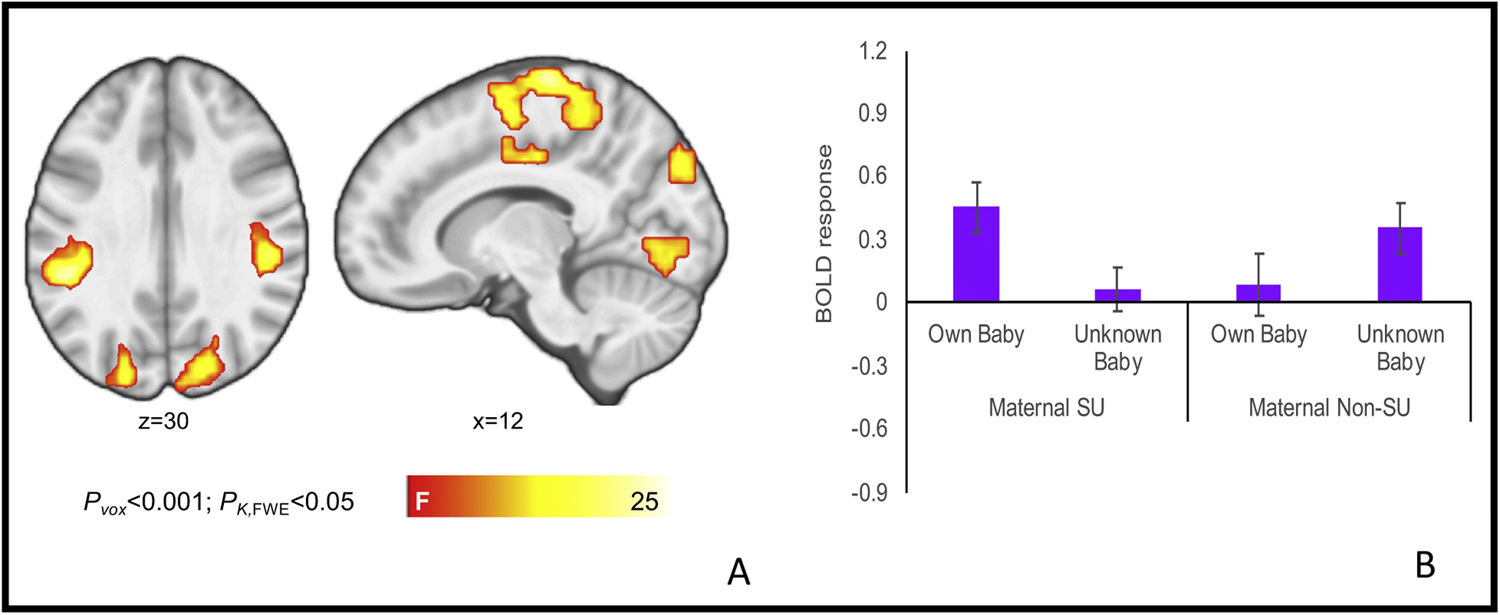
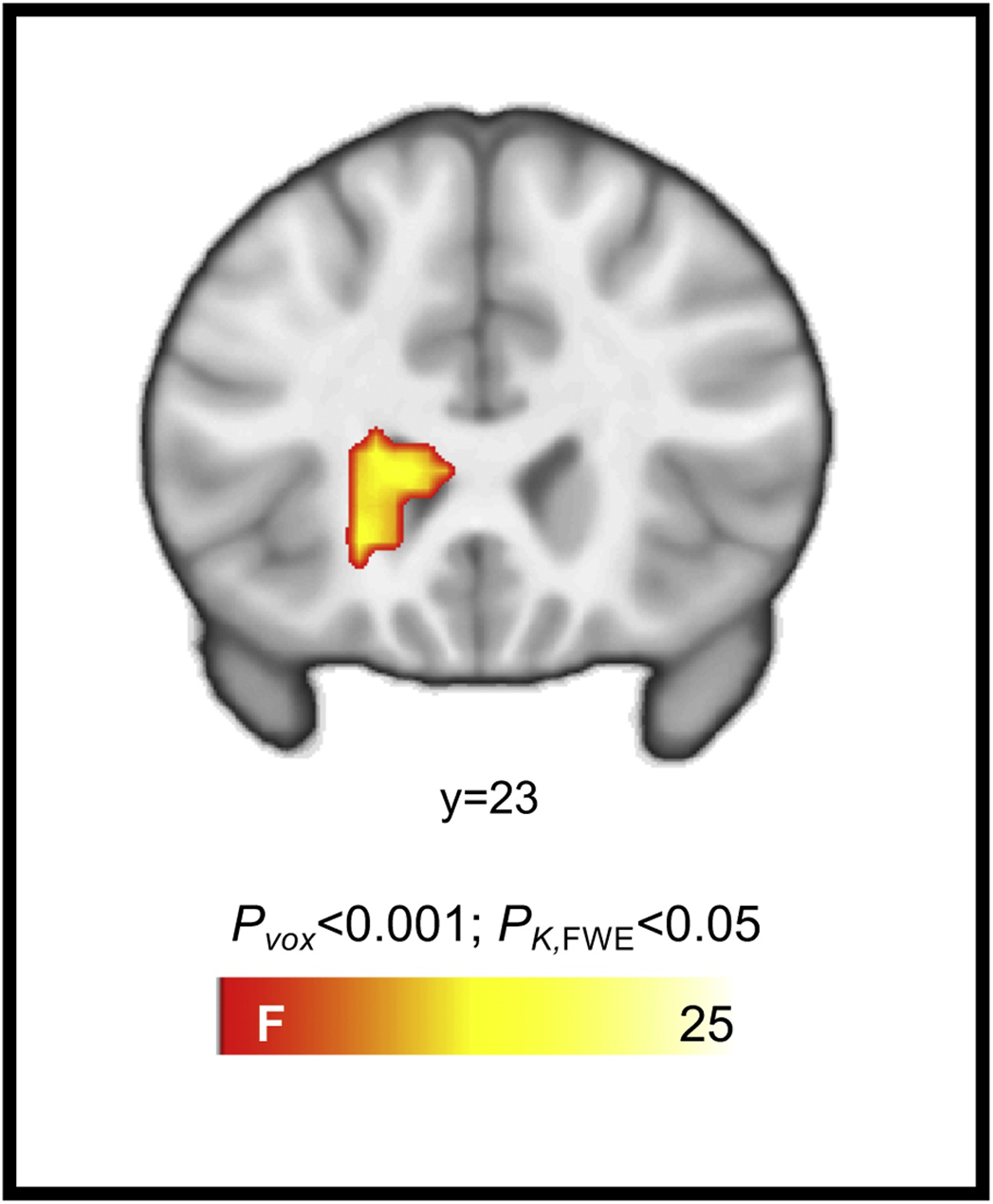
Results: Relative to non-substance-using mothers, substance-using mothers exhibited greater activation when viewing their own infant's face as compared to an unknown infant's face across multiple brain regions, including superior medial frontal, inferior parietal, and middle temporal regions. Substance-using mothers also had a decreased response to sad infant faces in the ventral striatum relative to the non-substance-using mothers. Neural responses to own vs. unknown infant cries did not significantly differ between substance-using and non-substance-using mothers.
Conclusions: Findings suggest overlapping cortical and subcortical brain regions implicated in responding to infant faces, with activation differences related to infant familiarity, emotional expression, and maternal substance use. While prior work has focused on attenuated neural responses to infant cues, greater attention is needed toward understanding the increased reactivity to affective infant cues observed in substance-using mothers.
Keywords: Addiction; Caregiving; Infant cries; Infant faces; Maternal substance use; fMRI.
Copyright © 2019 Elsevier B.V. All rights reserved.
Conflict of interest statement
Conflict of Interest
The authors declare no conflicts of interest with respect to the content of this manuscript. Dr. Potenza has: consulted for and advised Game Day Data, the Addiction Policy Forum, Rivermend Health, Opiant/Lightlake Therapeutics and Jazz Pharmaceuticals; received research support from the Mohegan Sun Casino and the National Center for Responsible Gaming; and consulted for legal and gambling entities on issues related to impulse-control disorders and addictions. The other authors report no disclosures.
Figures
References
-
- Ashburner J, Barnes G, Chen C, Daunizeau J, Flandin G, Friston K, Kiebel S, Kilner J, Litvak V, Moran R, 2014. SPM12 manual Wellcome Trust Centre for Neuroimaging, London, UK.
-
- Feldman R, 2015. The adaptive human parental brain: implications for children’s social development. TINS, 38, 387–399. - PubMed
