


Development and evaluation of an intervention based on the provision of patient feedback to improve patient safety in Spanish primary healthcare centres: study protocol
- PMID: 31874872
- PMCID: PMC7008422
- DOI: 10.1136/bmjopen-2019-031367
Development and evaluation of an intervention based on the provision of patient feedback to improve patient safety in Spanish primary healthcare centres: study protocol
Abstract
Introduction: Despite the enormous potential for adverse events in primary healthcare (PHC), the knowledge about how to improve patient safety in this context is still sparse. We describe the methods for the development and evaluation of an intervention targeted at PHC professionals to improve patient safety in Spanish PHC centres.
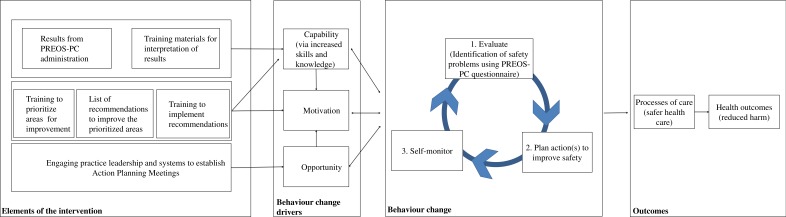
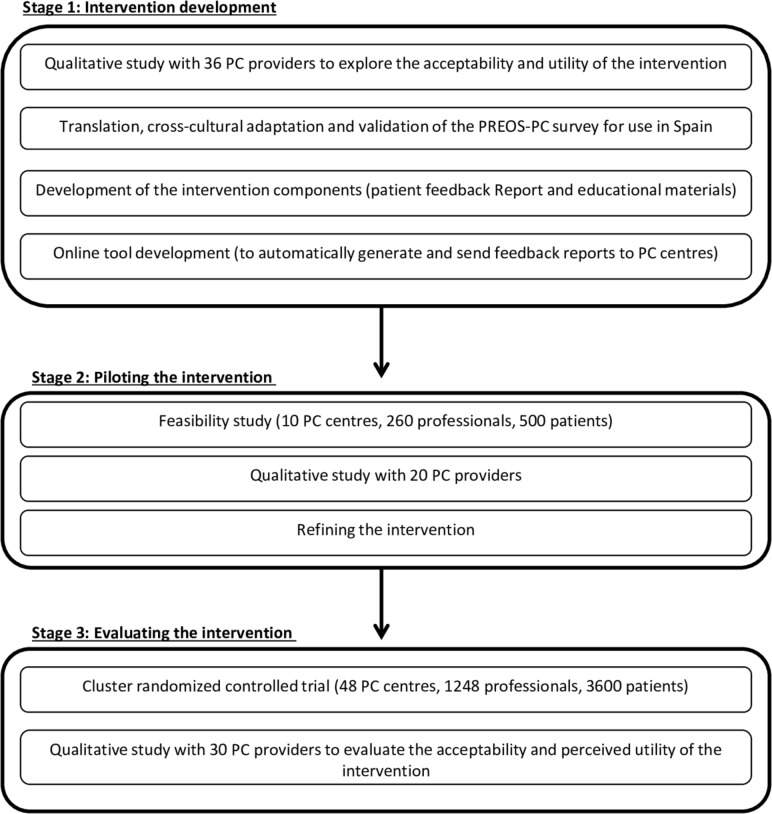
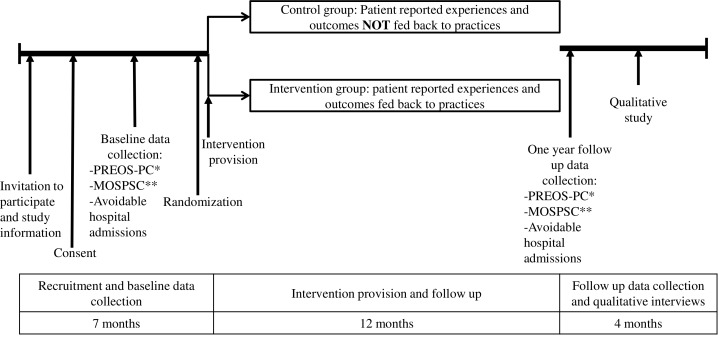
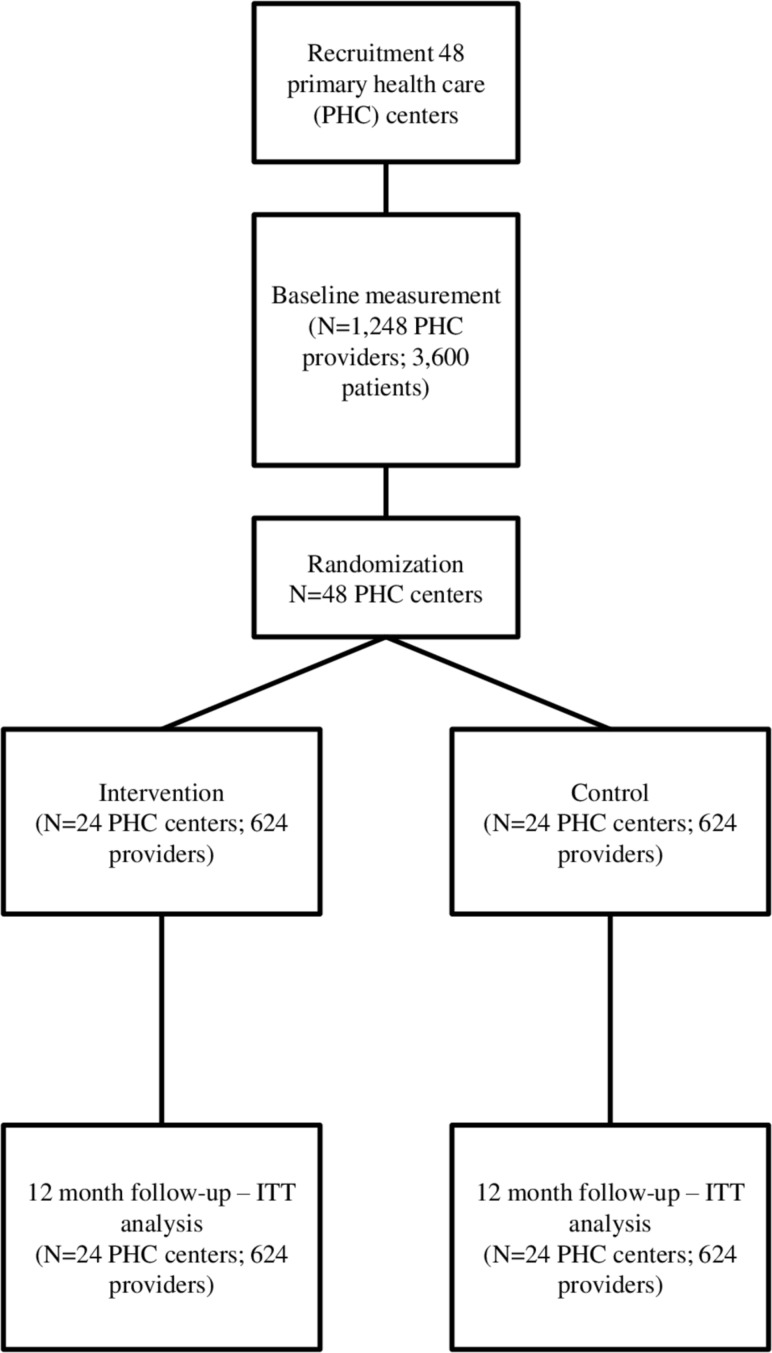
Methods and analysis: The intervention will consist in using the patient reported experiences and outcomes of safety in primary care (PREOS-PC) survey to gather patient-reported experiences and outcomes concerning the safety of the healthcare patients receive in their PHC centres, and feed that information back to the PHC professionals to help them identify opportunities for safer healthcare provision. The study will involve three stages. Stage 1 (developing the intervention) will involve: (i) qualitative study with 40 PHC providers to optimise the acceptability and perceived utility of the proposed intervention; (ii) Spanish translation, cross-cultural adaptation and validation of the PREOS-PC survey; (iii) developing the intervention components; and (iv) developing an online tool to electronically administrate PREOS-PC and automatically generate feedback reports to PHC centres. Stage 2 (piloting the intervention) will involve a 3-month feasibility (one group pre-post) study in 10 PHC centres (500 patients, 260 providers). Stage 3 (evaluating the intervention) will involve: (i) a 12-month, two-arm, two-level cluster randomised controlled trial (1248 PHC professionals within 48 PHC centres; with randomisation at the centre level in a 1:1 ratio) to evaluate the impact of the intervention on patient safety culture (primary outcome), patient-reported safety experiences and outcomes (using the PREOS-PC survey), and avoidable hospitalisations; (ii) qualitative study with 20 PHC providers to evaluate the acceptability and perceived utility of the intervention and identify implementation barriers.
Ethics and dissemination: The study was approved by the Ethics Committee of the Balearic Islands (CEI IB: 3686/18) with the 1964 Helsinki Declaration and its later amendments. The results will be disseminated in peer-reviewed publications and national and international conferences.
Trial registration number: NCT03837912; pre-results.
Keywords: health services; medical errors; patient safety; primary health care; quality in health care.
© Author(s) (or their employer(s)) 2019. Re-use permitted under CC BY-NC. No commercial re-use. See rights and permissions. Published by BMJ.
Conflict of interest statement
Competing interests: IR-C and JMV co-developed the PREOS-PC questionnaire, which is now being licensed by Oxford Innovation Ltd.
Figures
References
-
- Vincent CA. Patient safety. 2nd edn Oxford, England: Wiley Blackwell, 2010.
-
- Kohn LT, Corrigan JM, Donalson MS. To err is human: building a safer health system. Washington, DC: National Academy Press, 2000. - PubMed
