


Effects of Nutritional Education Interventions on Metabolic Risk in Children and Adolescents: A Systematic Review of Controlled Trials
- PMID: 31877685
- PMCID: PMC7019568
- DOI: 10.3390/nu12010031
Effects of Nutritional Education Interventions on Metabolic Risk in Children and Adolescents: A Systematic Review of Controlled Trials
Abstract
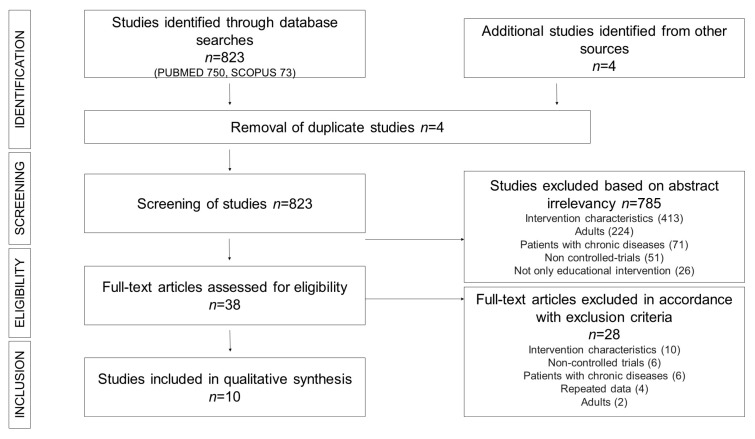
Childhood obesity is a global public health issue and is linked to metabolic syndrome, which increases the risk of comorbidities such as type 2 diabetes, cardiovascular diseases and cancer. Social, economic and cultural factors influence changes in nutrition and lifestyle characterized by poorer diets and reduced physical activity. This systematic review summarizes the evidence for nutritional education interventions to improve metabolic risks in children and adolescents. Systematic searches of the databases Medline (via PubMed) and Scopus were conducted following PRISMA guidelines. The risk of bias for each study was assessed following the methodology of the Cochrane Collaboration. Ten case-controlled and randomized controlled studies testing nutritional educational interventions targeting children and adolescents from the general population were eligible for inclusion. The sample size was 3915 and the age range was 7-20 years. The duration of intervention ranged from 12 weeks to 20 years. All the studies that provided data on abdominal obesity reported differences in favour of the intervention. However, data on the effects on the remaining components of metabolic syndrome remain inconclusive. These results support the role of nutritional education interventions as a strategy to reduce central adiposity and its possible unhealthy consequences in children and adolescents.
Keywords: adolescents; children; dyslipidemia; hyperglycemia; hypertension; insulin resistance; metabolic risk; metabolic syndrome; nutritional intervention; obesity.
Conflict of interest statement
The authors declare no conflict of interest.
Figures
References
-
- Ng M., Fleming T., Robinson M., Thomson B., Graetz N., Margono C., Mullany E.C., Biryukov S., Abbafati C., Abera S.F., et al. Global, regional, and national prevalence of overweight and obesity in children and adults during 1980–2013: A systematic analysis for the Global Burden of Disease Study 2013. Lancet. 2014;384:766–781. doi: 10.1016/S0140-6736(14)60460-8. - DOI - PMC - PubMed
-
- NCD Risk Factor Collaboration (NCD-RisC) Worldwide trends in body-mass index, underweight, overweight, and obesity from 1975 to 2016: A pooled analysis of 2416 population-based measurement studies in 128·9 million children, adolescents, and adults. Lancet. 2017;390:2627–2642. doi: 10.1016/S0140-6736(17)32129-3. - DOI - PMC - PubMed
