


Effects of Blood Pressure on Cognitive Performance: A Systematic Review
- PMID: 31877865
- PMCID: PMC7019226
- DOI: 10.3390/jcm9010034
Effects of Blood Pressure on Cognitive Performance: A Systematic Review
Abstract
Background: High blood pressure has been associated with an increased risk of developing cognitive impairment. However, this relationship is unclear. This study aims to systematically review the effects of blood pressure on executive functioning, language, memory, attention and processing speed.
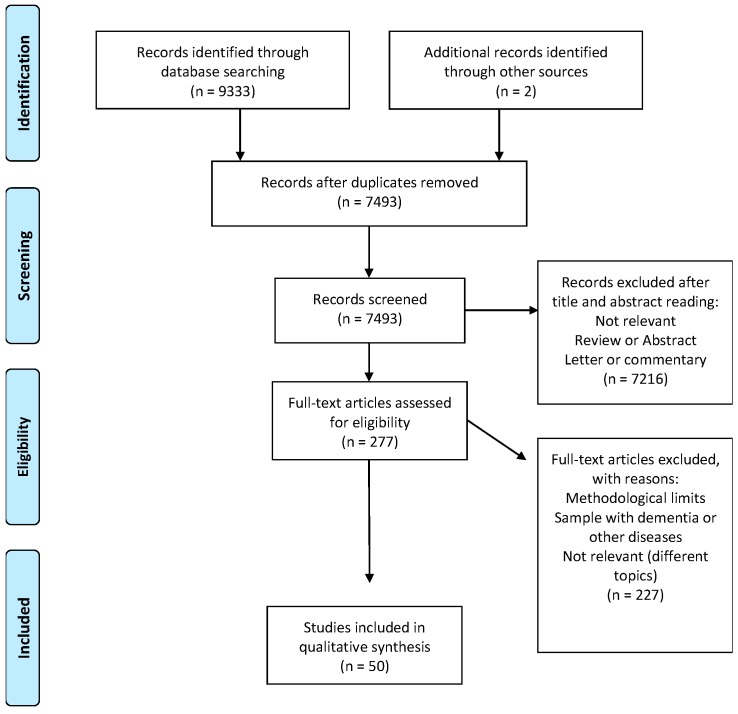
Methods: The review process was conducted according to the PRISMA-Statement, using the PubMed, PsycINFO, PsycARTICLES and MEDLINE databases. Restrictions were made by selecting studies, which included one or more cognitive measures and reported blood pressure recordings. Studies that included participants with medical conditions or people diagnosed with dementia, psychiatric disorders, stroke and head trauma were excluded. The review allows selecting fifty studies that included 107,405 participants. The results were reported considering different cognitive domains separately: global cognitive functioning, attention, processing speed, executive functions, memory and visuospatial abilities.
Results: Higher blood pressure appears to influence cognitive performance in different domains in the absence of dementia and severe cardiovascular diseases, such as strokes. This relationship seems to be independent of demographic factors (gender and education), medical co-morbidity (diabetes), and psychiatric disorders (depression). Furthermore, it presents different patterns considering ageing. In the elderly, a sort of "cardiovascular paradox" is highlighted, which allows considering higher blood pressure as a protective factor for cognitive functioning.
Conclusions: The results underline that higher blood pressure is associated with a higher risk of cognitive decline in people without dementia or stroke. These findings highlight the need to introduce early management of blood pressure, even in the absence of clinical hypertension, to prevent the risk of a decline of cognitive functioning typically associated with ageing.
Keywords: attention; blood pressure; cognitive functions; cognitive impairment; executive functions; language; memory; processing speed; visuospatial abilities.
Conflict of interest statement
The authors declare that the research was conducted in the absence of any commercial or financial relationships that could be construed as a potential conflict of interest.
Figures
References
LinkOut - more resources
Full Text Sources
