


Cystic fibrosis carriers are at increased risk for a wide range of cystic fibrosis-related conditions
- PMID: 31882447
- PMCID: PMC6983448
- DOI: 10.1073/pnas.1914912117
Cystic fibrosis carriers are at increased risk for a wide range of cystic fibrosis-related conditions
Abstract
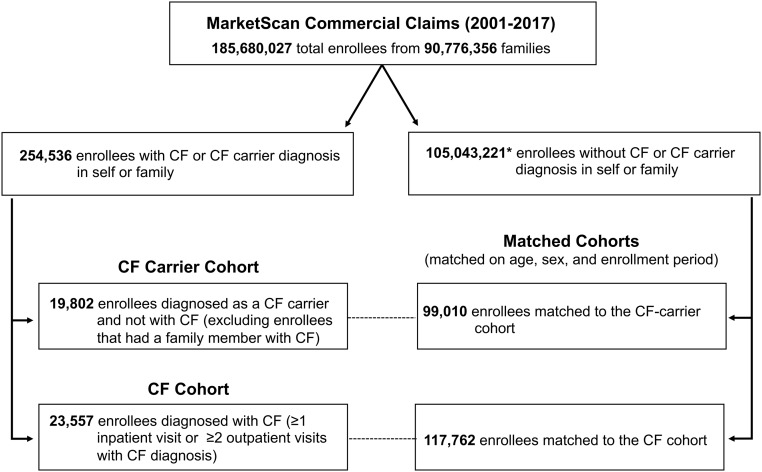
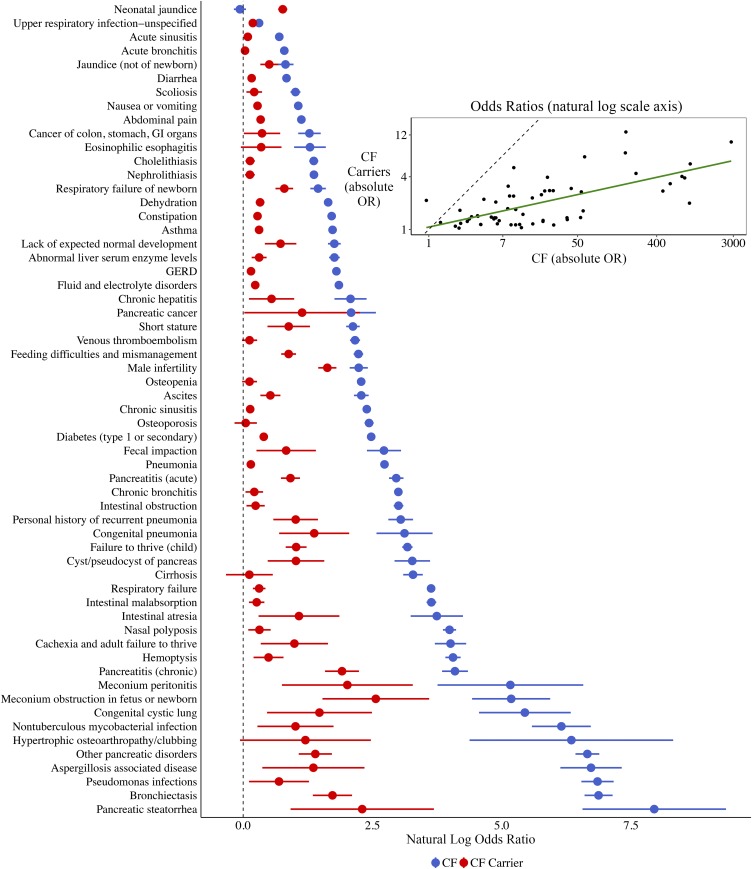
Autosomal recessive diseases, such as cystic fibrosis (CF), require inheritance of 2 mutated genes. However, some studies indicate that CF carriers are at increased risk for some conditions associated with CF. These investigations focused on single conditions and included small numbers of subjects. Our goal was to determine whether CF carriers are at increased risk for a range of CF-related conditions. Using the Truven Health MarketScan Commercial Claims database (2001-2017), we performed a population-based retrospective matched-cohort study. We identified 19,802 CF carriers and matched each carrier with 5 controls. The prevalence of 59 CF-related diagnostic conditions was evaluated in each cohort. Odds ratios for each condition were computed for CF carriers relative to controls. All 59 CF-related conditions were more prevalent among carriers compared with controls, with significantly increased risk (P < 0.05) for 57 conditions. Risk was increased for some conditions previously linked to CF carriers (e.g., pancreatitis, male infertility, bronchiectasis), as well as some conditions not previously reported (e.g., diabetes, constipation, cholelithiasis, short stature, failure to thrive). We compared our results with 23,557 subjects with CF, who were also matched with controls; as the relative odds of a given condition increased among subjects with CF, so did the corresponding relative odds for carriers (P < 0.001). Although individual-level risk remained low for most conditions, because there are more than 10 million carriers in the US, population-level morbidity attributable to the CF carrier state is likely substantial. Genetic testing may inform prevention, diagnosis, and treatment for a broad range of CF carrier-related conditions.
Keywords: CF carrier; CFTR; carrier; cystic fibrosis; heterozygote.
Copyright © 2020 the Author(s). Published by PNAS.
Conflict of interest statement
The authors declare no competing interest.
Figures

Comment in
-
Cystic fibrosis heterozygosity: Carrier state or haploinsufficiency?Proc Natl Acad Sci U S A. 2020 Feb 11;117(6):2740-2742. doi: 10.1073/pnas.1921730117. Epub 2020 Jan 28. Proc Natl Acad Sci U S A. 2020. PMID: 31992636 Free PMC article. No abstract available.
References
-
- Elborn J. S., Cystic fibrosis. Lancet 388, 2519–2531 (2016). - PubMed
-
- Ferril G. R., et al. , Comparison of radiographic and clinical characteristics of low-risk and high-risk cystic fibrosis genotypes. Int. Forum Allergy Rhinol. 4, 915–920 (2014). - PubMed
-
- McKone E. F., Goss C. H., Aitken M. L., CFTR genotype as a predictor of prognosis in cystic fibrosis. Chest 130, 1441–1447 (2006). - PubMed
Publication types
MeSH terms
Grants and funding
LinkOut - more resources
Full Text Sources
Medical
