


End-of-Life Spending and Healthcare Utilization Among Older Adults with Chronic Obstructive Pulmonary Disease
- PMID: 31883772
- PMCID: PMC7319886
- DOI: 10.1016/j.amjmed.2019.11.024
End-of-Life Spending and Healthcare Utilization Among Older Adults with Chronic Obstructive Pulmonary Disease
Abstract
Background: End-of-life spending and healthcare utilization among older adults with COPD have not been previously described.
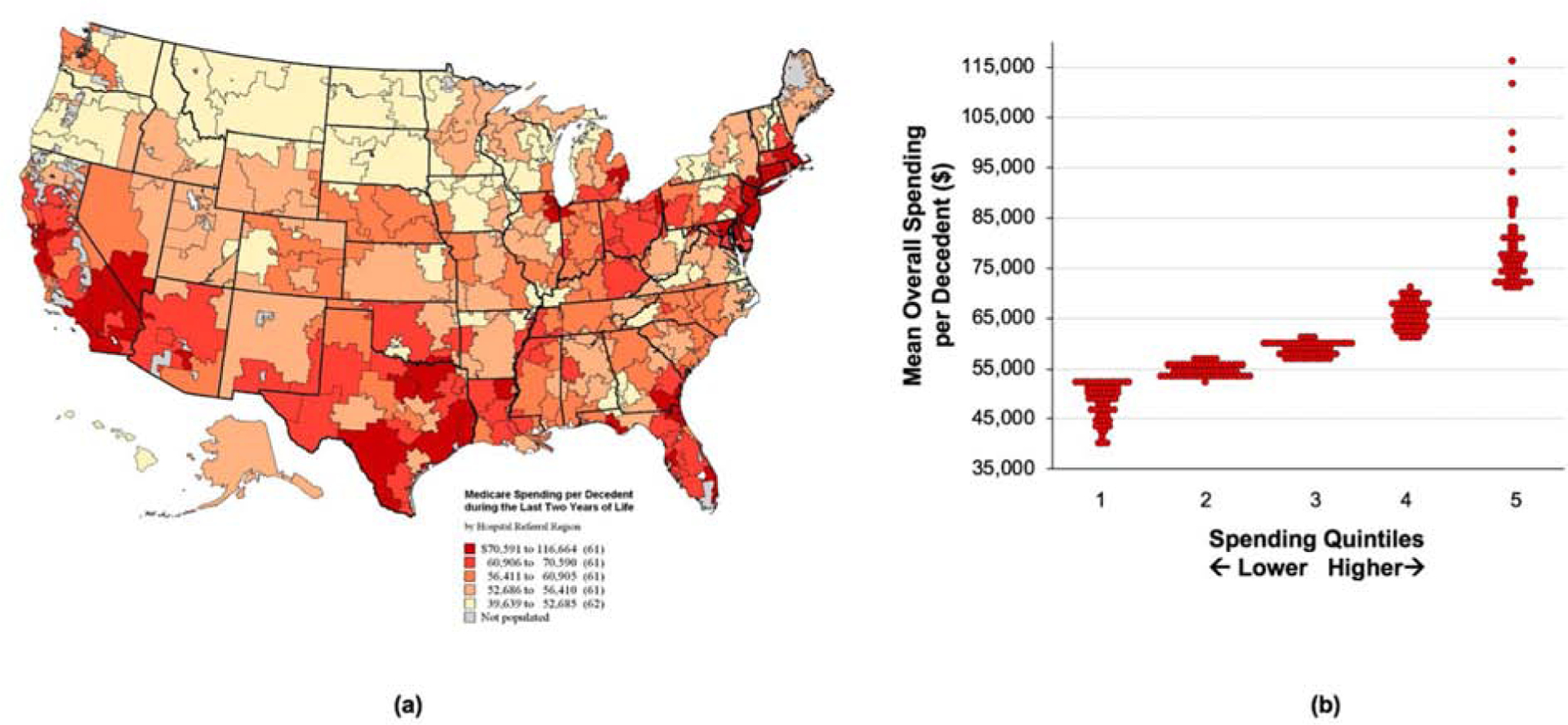
Methods: We examined data on Medicare beneficiaries aged 65 years or older with chronic obstructive pulmonary disease (COPD) who died during the period of 2013-2014. End-of-life measures were retrospectively reviewed for 2 years prior to death. Hospital referral regions (HRRs) were categorized into quintiles of age-sex-race-adjusted overall spending during the last 2 years of life. Geographic quintile variation in spending and healthcare utilization was examined across the continuum.
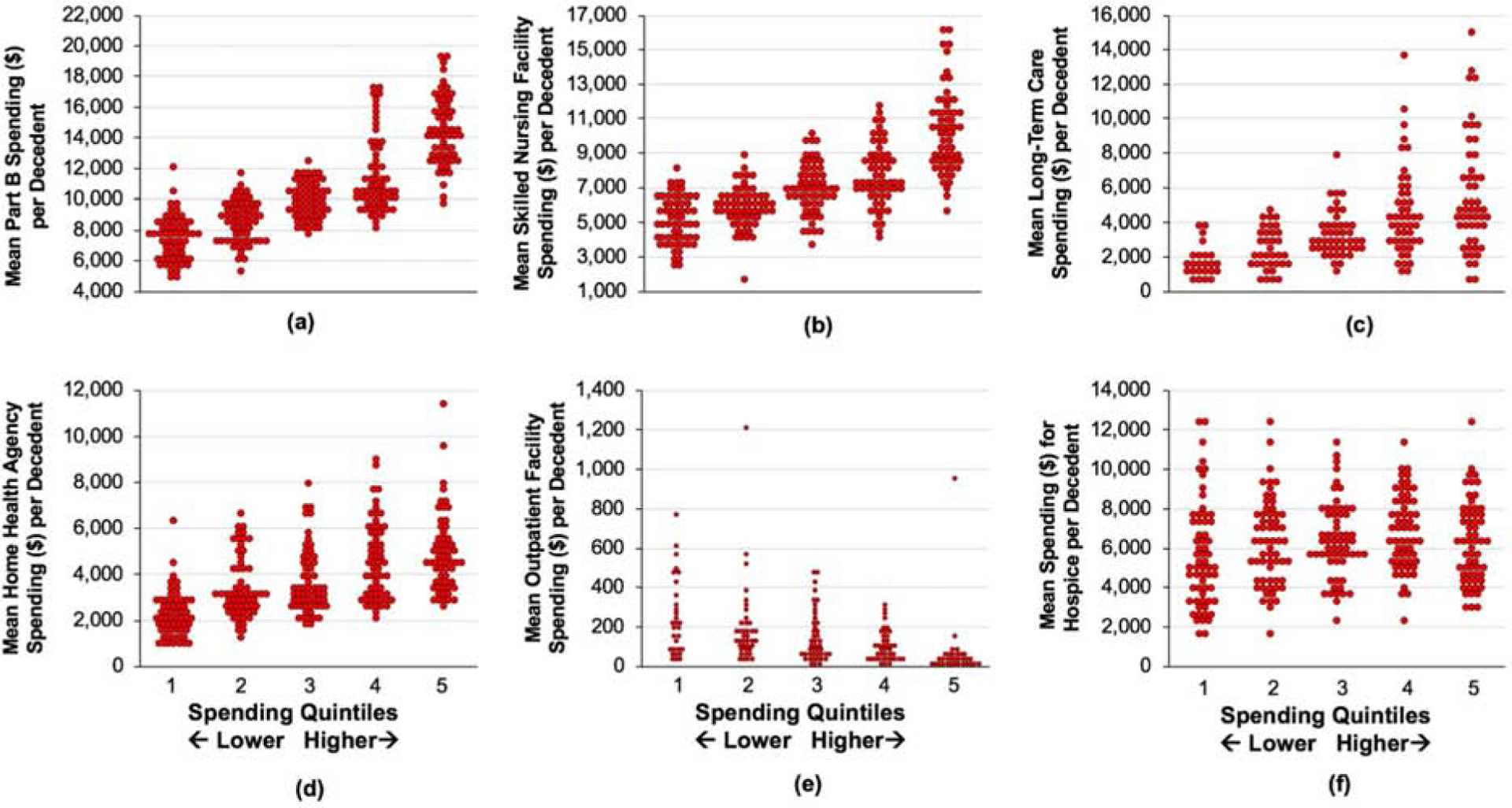
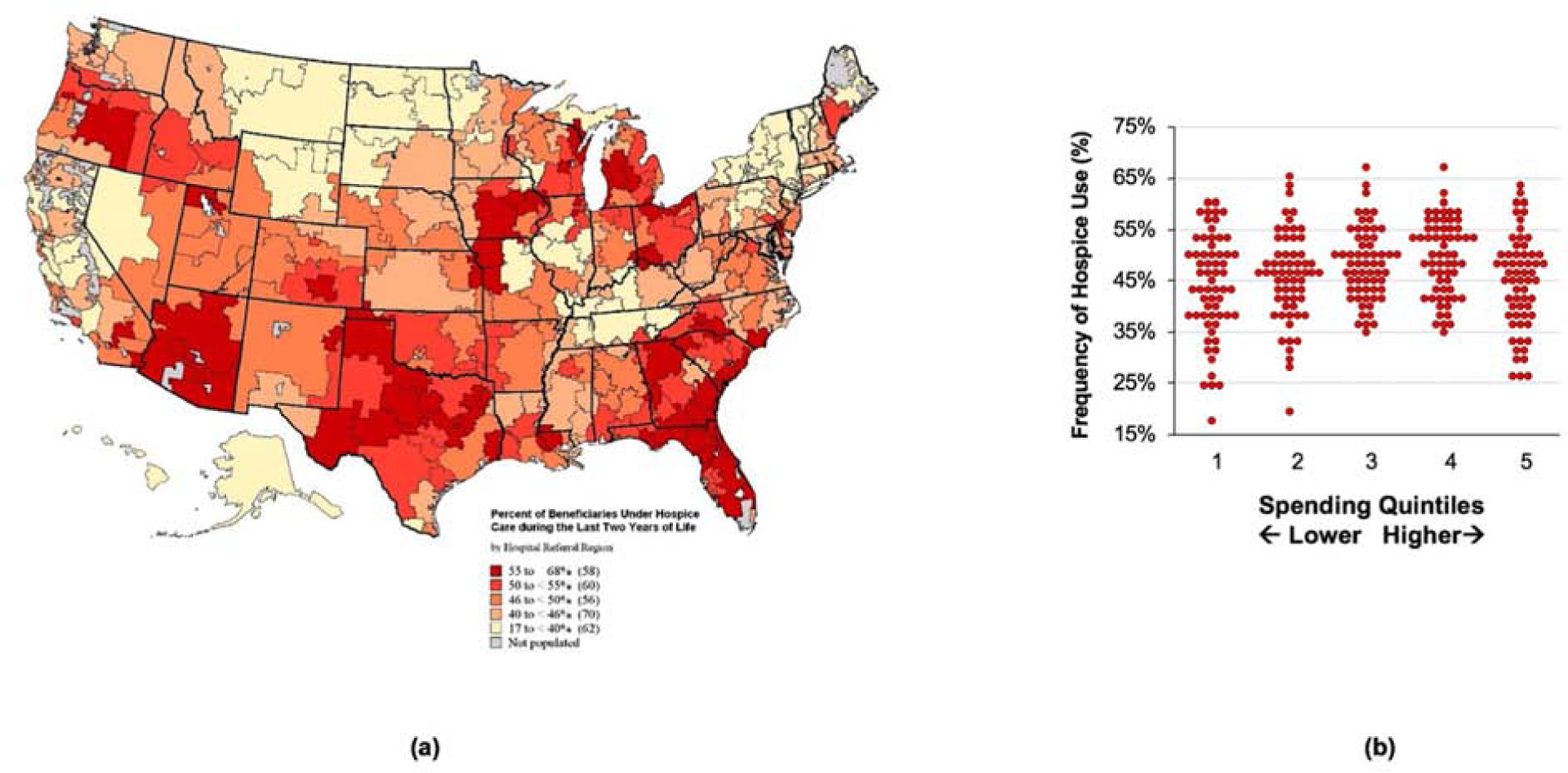
Results: We investigated data on 146,240 decedents with COPD from 306 HRRs. Age-sex-race-adjusted overall spending per decedent during the last 2 years of life varied significantly nationwide ($61,271±$11,639 per decedent; range: $48,288±$3,665 to $79,453±$9,242). Inpatient care accounted for 40.2% of spending ($24,626±$6,192 per decedent). Overall, 82%±4% of decedents were admitted to the hospital for 13.7±3.1 days, and 55%±11% were admitted to an intensive care unit for 5.4±2.5 days. Compared with HRRs in the lowest spending quintile, HRRs in the highest spending quintile had a 1.5-fold longer hospital length of stay. Skilled nursing facilities accounted for 11.6% of spending ($7101±$2403 per decedent), and these facilities were utilized by 38%±7% of decedents for 18.7±4.9 days. Hospice accounted for 10.3% of spending ($6,307±$2,201 per decedent) and was utilized by 47%±9% of decedents for 39.7±14.8 days. Significant geographic variation in hospice utilization existed nationwide.
Conclusions: End-of-life spending and healthcare utilization among older adults with COPD varied substantially nationwide. Decedents with COPD frequently utilized acute care near the end of life. Hospice utilization was higher than expected, with significant geographic disparities.
Keywords: Chronic obstructive pulmonary disease; Cost, Healthcare utilization, Hospice, Palliative care.
Copyright © 2019 Elsevier Inc. All rights reserved.
Conflict of interest statement
Figures
References
-
- Kochanek KD, Murphy SL, Xu JQ, Arias E. Mortality in the United States, 2016 NCHS Data Brief. Hyattsville, MD: National Center for Health Statistics;2017.
-
- Khakban A, Sin DD, FitzGerald JM, et al. The Projected Epidemic of Chronic Obstructive Pulmonary Disease Hospitalizations over the Next 15 Years. A Population-based Perspective. Am J Respir Crit Care Med. 2017;195(3):287–291. - PubMed
-
- Khakban A, Sin DD, FitzGerald JM, et al. Ten-Year Trends in Direct Costs of COPD: A Population-Based Study. Chest 2015;148(3):640–646. - PubMed
Publication types
MeSH terms
Grants and funding
LinkOut - more resources
Full Text Sources
Medical
