Recent advances in managing and understanding pyoderma gangrenosum
- PMID: 31885859
- PMCID: PMC6913206
- DOI: 10.12688/f1000research.19909.1
Recent advances in managing and understanding pyoderma gangrenosum
Abstract
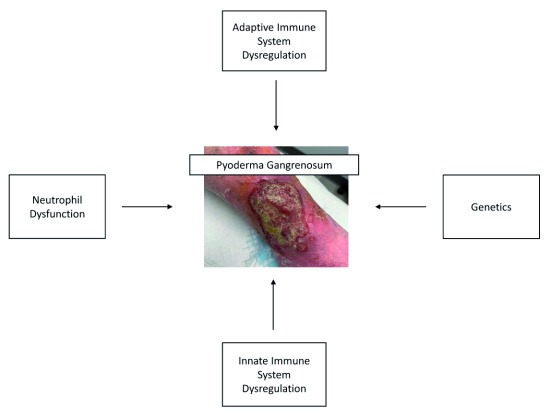
Pyoderma Gangrenosum (PG) is a rare neutrophilic dermatosis with multiple different clinical presentations and associated comorbidities. PG has historically been a challenging disorder to diagnose, leading to the development of new diagnostic criteria rather than the traditional approach of a diagnosis of exclusion. The pathophysiology is thought to involve both innate and adaptive immune system dysregulation, neutrophilic abnormalities, environmental, and genetic factors. As of today, no gold standard therapy exists for the treatment of PG, and the literature is restricted to mainly case reports, case series, and 2 small randomized clinical trials. Topical, systemic, and biologic therapy, as well as adequate analgesia and proper wound care all play a role in the management of PG. Recent studies have identified additional cytokines and signalling cascades thought to be involved in the pathogenesis of PG, ultimately leading to the development of new targeted therapies. This review will focus on recent advances in the pathophysiology, clinical presentation and associated comorbidities, diagnosis, and management of PG.
Keywords: Pyoderma Gangrenosum.
Copyright: © 2019 Fletcher J et al.
Conflict of interest statement
No competing interests were disclosed.No competing interests were disclosed.No competing interests were disclosed.
Figures
References
-
- McKenzie F, Arthur M, Ortega-Loayza AG: Pyoderma Gangrenosum: What Do We Know Now? Curr Derm Rep. 2018;7:147–157. 10.1007/s13671-018-0224-y - DOI
Publication types
MeSH terms
Substances
LinkOut - more resources
Full Text Sources
Research Materials