. 2019 Dec 30;14(12):e0218360.
doi: 10.1371/journal.pone.0218360. eCollection 2019.

Candida utilis yeast as a functional protein source for Atlantic salmon (Salmo salar L.): Local intestinal tissue and plasma proteome responses

Affiliations

Candida utilis yeast as a functional protein source for Atlantic salmon (Salmo salar L.): Local intestinal tissue and plasma proteome responses

Felipe Eduardo Reveco-Urzua et al. PLoS One. .

Abstract

Microbial ingredients such as Candida utilis yeast are known to be functional protein sources with immunomodulating effects whereas soybean meal causes soybean meal-induced enteritis in the distal intestine of Atlantic salmon (Salmo salar L.). Inflammatory or immunomodulatory stimuli at the local level in the intestine may alter the plasma proteome profile of Atlantic salmon. These deviations can be helpful indicators for fish health and, therefore potential tools in the diagnosis of fish diseases. The present work aimed to identify local intestinal tissue responses and changes in plasma protein profiles of Atlantic salmon fed inactive dry Candida utilis yeast biomass, soybean meal, or combination of soybean meal based diet with various inclusion levels of Candida utilis. A fishmeal based diet was used as control diet. Inclusion of Candida utilis yeast to a fishmeal based diet did not alter the morphology, immune cell population or gene expression of the distal intestine. Lower levels of Candida utilis combined with soybean meal modulated immune cell populations in the distal intestine and reduced the severity of soybean meal-induced enteritis, while higher inclusion levels of Candida utilis were less effective. Changes in the plasma proteomic profile revealed differences between the diets but did not indicate any specific proteins that could be a marker for health or disease. The results suggest that Candida utilis does not alter intestinal morphology or induce major changes in plasma proteome, and thus could be a high-quality alternative protein source with potential functional properties in diets for Atlantic salmon.


Conflict of interest statement

The authors have declared that no competing interests exist.

Figures
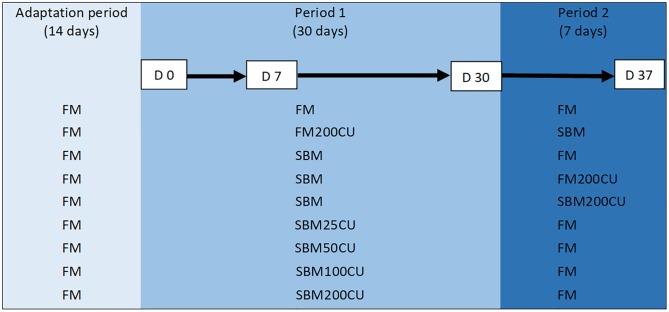
Fig 1
Fig 1. Experimental design.
The adaptation period of 14 days was followed by experimental period 1 that lasted for 30 days. In experimental period 2, there was a shift in diets and this period lasted for 7 days. Sampling points are day 0, 7, 30 and 37. FM = Fishmeal; SBM = soybean meal; SBM25CU = soybean meal + 25 g/kg C. utilis; SBM50CU = soybean meal + 50 g/kg C. utilis; SBM100CU = soybean meal + 100 g/kg C. utilis; SBM200CU = soybean meal + 200 g/kg C. utilis; FM200CU = fishmeal + 200 g/kg C. utilis.
Fig 2
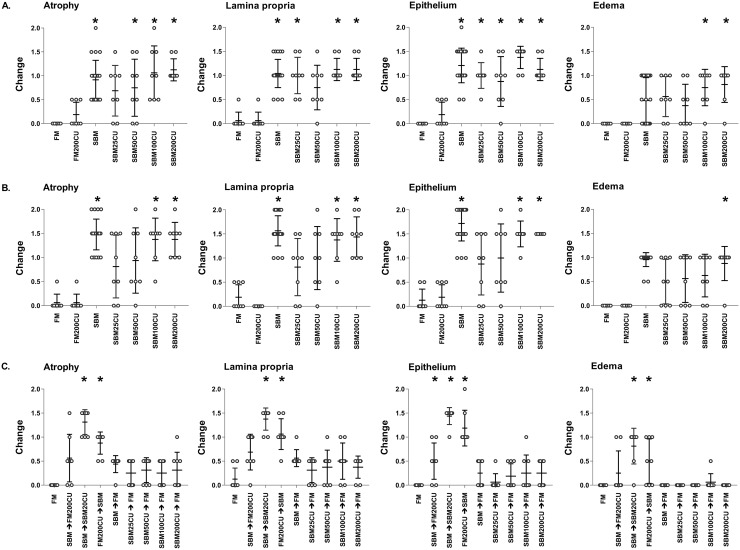
Fig 2. Histological evaluation.
Histological evaluation of the distal intestine of Atlantic salmon based on atrophy, lamina propria, epithelium and edema at 7 (A), 30 (B) and 37 (C) days. Changes are scored from 0 to 2 where 0 indicates no changes and 2 indicates severe changes. Data are expressed as mean and standard deviation, n = 8 for all groups. Significant difference from the control fish fed FM based diet is denoted by an asterisk (*) (p<0.05; Dunn´s test). FM = fishmeal; FM200CU = fishmeal combined with 200 g/kg C. utilis (CU); SBM = soybean meal; SBM25CU = soybean meal with 25 g/kg CU; SBM50CU = soybean meal with 50 g/kg CU; SBM100CU = soybean meal with 100 g/kg CU; SBM200CU = soybean meal with 200 g/kg CU.
Fig 3
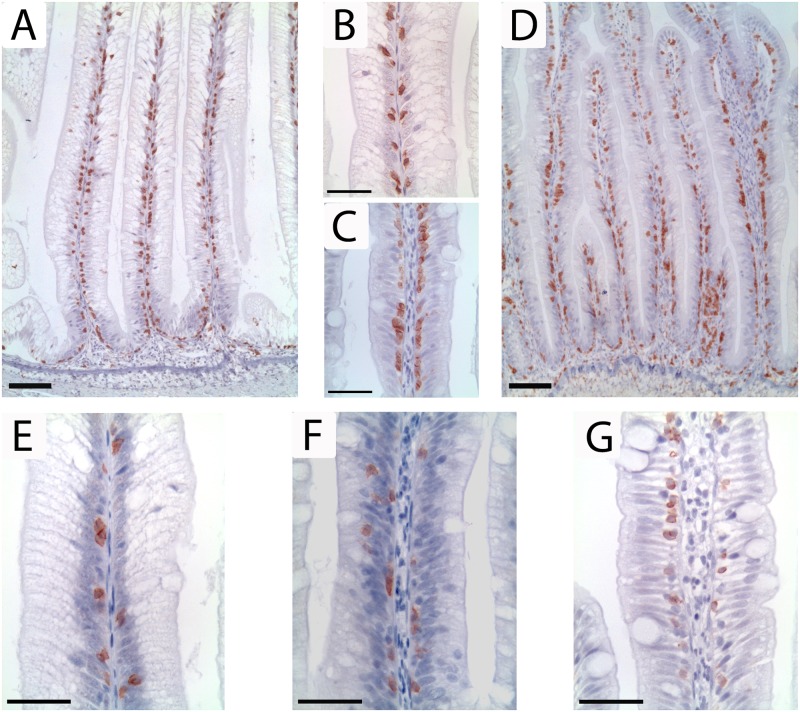
Fig 3. Immunohistochemical staining for CD3ɛ and CD8α positive cells at day 30.
Immunohistochemical labelling (brown) showed an abundant presence of CD3ɛ positive cells at the base of the epithelium along the entire length of simple folds in all diet groups (A: FM200CU; D: SBM). At higher magnification, CD3ɛ positive cells were rarely present in the lamina propria of the simple folds in any of the diets (B: FM200CU; C: SBM). However, there was a higher number of CD3ɛ positive cells in the lamina propria adjacent to the stratum compactum in groups fed diets with SBM (D: SBM). CD8α positive cells were mainly found between the epithelial cells of all individuals of all diet groups (E: FM200CU; F: SBM200CU; G: SBM). Image A and D captured at 10x magnification, Image B, C, E, F and G captured at 40x magnification.
Fig 4
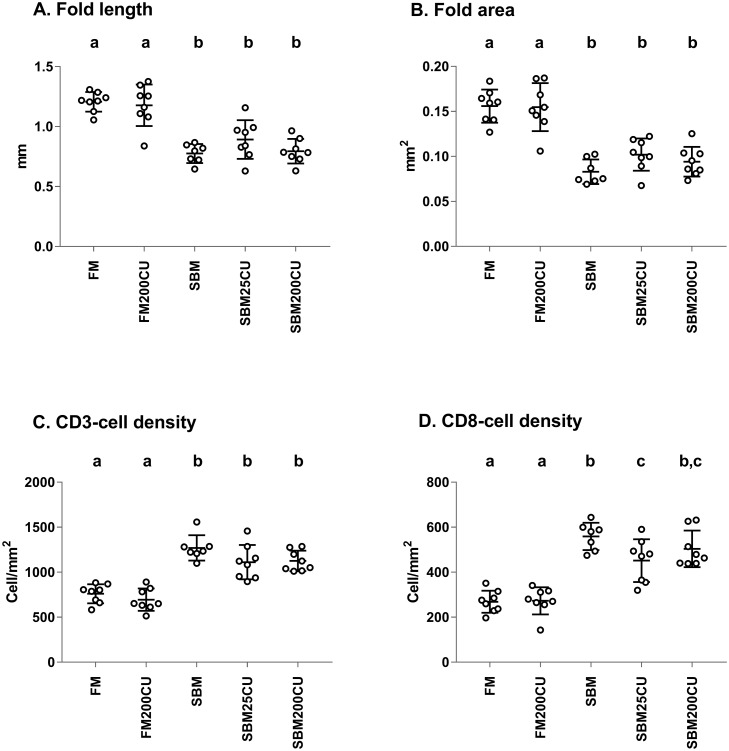
Fig 4. Morphometry of simple folds in distal intestine at day 30.
Morphometric measurements of fold length (A) and fold area (B) of the simple folds of the distal intestine, and the density of CD3ε- and CD8α-positive T-cells in simple folds including the lamina propria adjacent to the stratum compactum (C and D). Data are expressed as mean for each individual ± standard deviation (SD), n = 7 for the SBM diet and n = 8 individuals per diet for the remaining groups. Groups with different letters on the upper x-axis are significantly different (p<0.05; Dunn’s test).
Fig 5
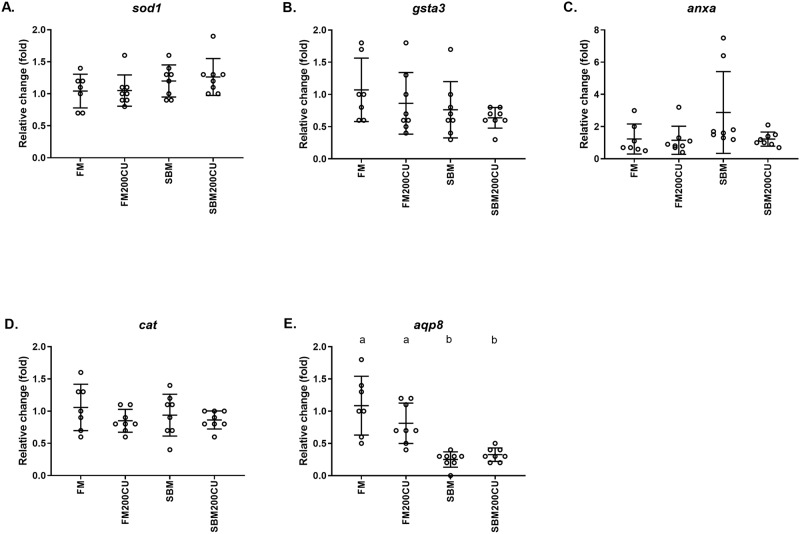
Fig 5. Gene expression.
Quantitative PCR analyses of (A) superoxide dismutase 1 (sod1), (B) glutathione S-transferase alpha 3 (gsta3), (C) annexin (anxa), (D) catalase (cat) and (E) aquaporin 8 (aqp8) genes in the DI of Atlantic salmon fed a control fishmeal-based diet (FM), a diet containing 200 g/kg Candida utilis (FM200CU), and a diet containing 200 g/kg soybean meal (SBM) and one diet with 200 g/kg SBM in combination with 200 g/kg of C. utilis (SBM200CU) for 30 days. Data are mean –ΔΔCT ± SE (n = 7 for FM diet, n = 8 for the other groups). All relative fold changes are calculated in relation to the FM group.
Fig 6
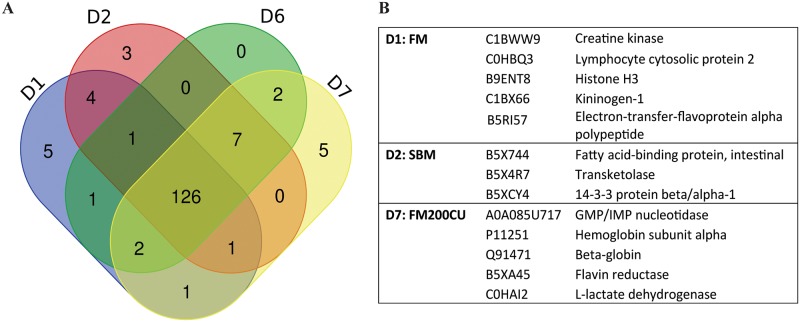
Fig 6. Common and unique proteins expressed in plasma of salmon fed different diets.
(A) Venn-diagram showing the overlap between plasma protein sets detected across the four diet groups FM (D1), SBM (D2), SBM200CU (D6) and FM200CU (D7). (B) Unique proteins expressed in each dietary group.

References

    1. Lock ER, Arsiwalla T, Waagbø R. Insect larvae meal as an alternative source of nutrients in the diet of Atlantic salmon (Salmo salar) postsmolt. Aquaculture Nutrition. 2016;22(6):1202–13. 10.1111/anu.12343 - DOI
    1. Sealey WM, Hardy RW, Barrows FT, Pan Q, Stone DAJ. Evaluation of 100% Fish Meal Substitution with Chicken Concentrate, Protein Poultry By-Product Blend, and Chicken and Egg Concentrate on Growth and Disease Resistance of Juvenile Rainbow Trout, Oncorhynchus mykiss. Journal of the World Aquaculture Society. 2011;42(1):46–55. 10.1111/j.1749-7345.2010.00442.x - DOI
    1. Naylor RL, Hardy RW, Bureau DP, Chiu A, Elliott M, Farrell AP, et al. Feeding aquaculture in an era of finite resources. Proceedings of the National Academy of Sciences. 2009;106(36):15103–10. 10.1073/pnas.0905235106 - DOI - PMC - PubMed
    1. Øverland M, Karlsson A, Mydland LT, Romarheim OH, Skrede A. Evaluation of Candida utilis, Kluyveromyces marxianus and Saccharomyces cerevisiae yeasts as protein sources in diets for Atlantic salmon (Salmo salar). Aquaculture. 2013;402–403:1–7. 10.1016/j.aquaculture.2013.03.016 - DOI
    1. Ytrestøyl T, Aas TS, Åsgård T. Utilisation of feed resources in production of Atlantic salmon (Salmo salar) in Norway. Aquaculture. 2015;448:365–74. 10.1016/j.aquaculture.2015.06.023 - DOI

Publication types