Review
. 2019 Dec 16;11(12):2026.
doi: 10.3390/cancers11122026.

Liver Cancer: Current and Future Trends Using Biomaterials

Affiliations
Review

Liver Cancer: Current and Future Trends Using Biomaterials

Sue Anne Chew et al. Cancers (Basel). .

Abstract

Hepatocellular carcinoma (HCC) is the fifth most common type of cancer diagnosed and the second leading cause of death worldwide. Despite advancement in current treatments for HCC, the prognosis for this cancer is still unfavorable. This comprehensive review article focuses on all the current technology that applies biomaterials to treat and study liver cancer, thus showing the versatility of biomaterials to be used as smart tools in this complex pathologic scenario. Specifically, after introducing the liver anatomy and pathology by focusing on the available treatments for HCC, this review summarizes the current biomaterial-based approaches for systemic delivery and implantable tools for locally administrating bioactive factors and provides a comprehensive discussion of the specific therapies and targeting agents to efficiently deliver those factors. This review also highlights the novel application of biomaterials to study HCC, which includes hydrogels and scaffolds to tissue engineer 3D in vitro models representative of the tumor environment. Such models will serve to better understand the tumor biology and investigate new therapies for HCC. Special focus is given to innovative approaches, e.g., combined delivery therapies, and to alternative approaches-e.g., cell capture-as promising future trends in the application of biomaterials to treat HCC.

Keywords: 3D models; biomaterials; hepatocellular carcinoma; immunotherapy; microparticles; nanoparticles; scaffolds.


Conflict of interest statement

The authors declare no conflict of interest.

Figures
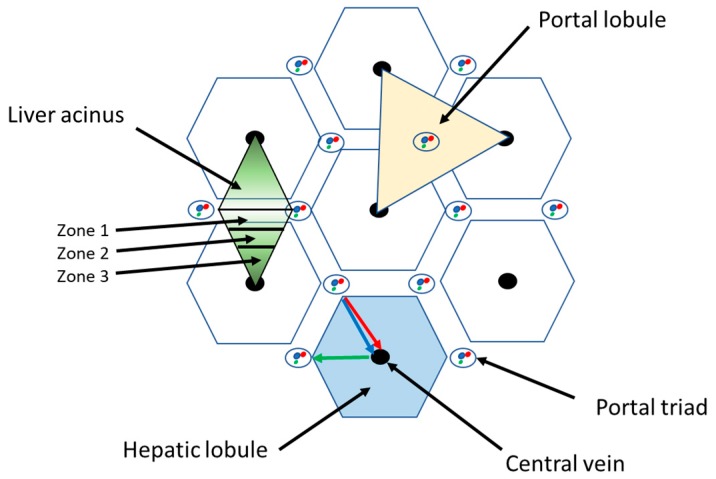
Figure 1
Figure 1
Schematic of the structure of liver lobule.
Figure 2
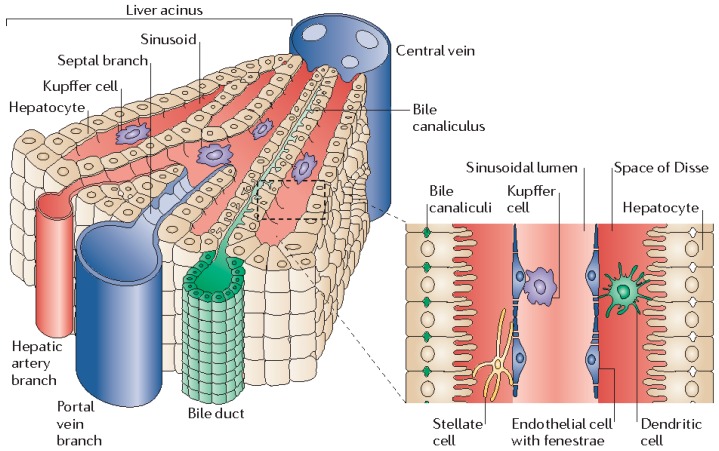
Figure 2
Three-dimensional structure of a liver lobule. Reprinted with permission from Springer Nature Publishing AG, Adams et al., Nat. Rev. Immunol., 2006 [15].
Figure 3
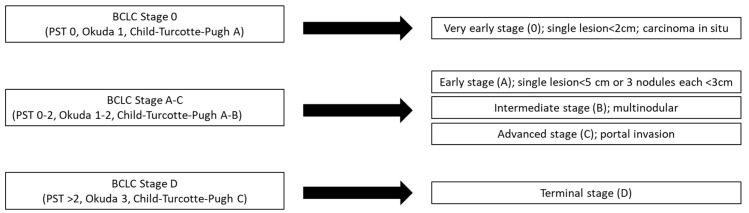
Figure 3
Barcelona-Clinic Liver Cancer (BCLC) criteria.
Figure 4
Figure 4
Schematic model showing surface and chemical structure of nanodiamond (ND) and Epirubicin (Epi) and the synthesis and aggregation of nanodiamond–Epirubicin drug complex (EPND). Reprinted with permission from ACS Publications, Wang et al., ACS Nano, 2014 [53].
Figure 5
Figure 5
Schematic of hepatoma-targeting and stepwise pH-responsive mechanisms of CAPL/PBAE/PLGA NPs. Reprinted with permission from Elsevier, Zhang et al., Journal of Controlled Release, 2016 [57].
Figure 6
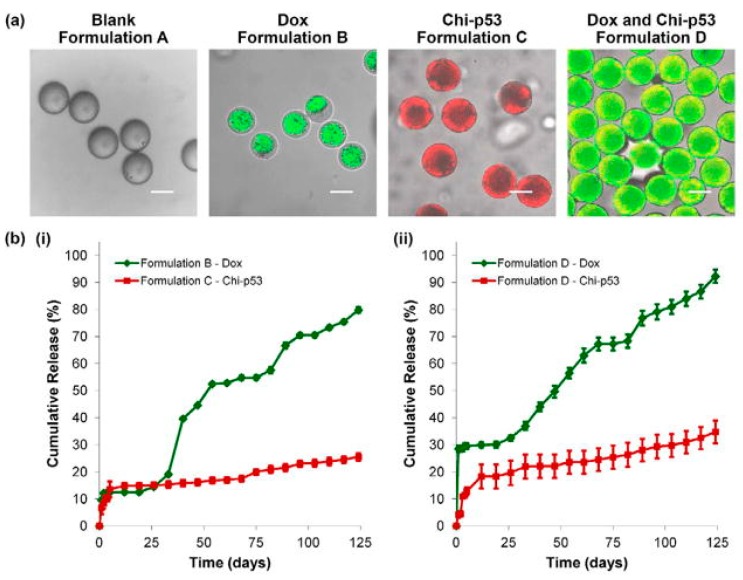
Figure 6
(a) Transmitted light and laser scanning confocal (overlay) micrographs of blank and drug loaded double-walled PLLA (PLGA) microspheres. The distribution of DOX in Formulations B and D microspheres is indicated in green. The distribution of chi-p53 NPs in formulations C and D microspheres is indicated in red and yellow (colocalization of red and green), respectively. Scale bar = 50 μm. (b) In vitro DOX and chi-p53 release from double-walled PLLA(PLGA) microspheres. Reprinted with permission from Elsevier, Xu et al., Biomaterials, 2013 [58].
Figure 7
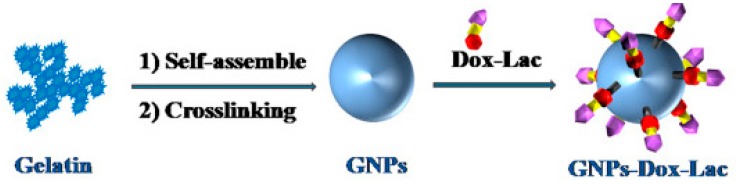
Figure 7
Preparation of GNPs-DOX-Lac particles. Reprinted with permission from Elsevier, Liu et al., Nanomedicine: Nanotechnology, Biology and Medicine, 2018, [65].
Figure 8
Figure 8
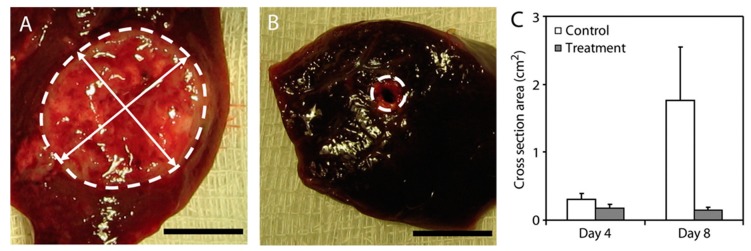
DOX-containing millirods. Photographs a untreated control (A) and a treated (B) tumor cross section on day 8. The boundary between the tumor and normal liver tissue is indicated with a white dotted outline. The mean cross sectional area of the untreated control and tumors after 4 and 8 days (C). The error bars indicate the standard deviation of each measurement (n = 4). Reprinted and adapted with permission from Wiley, Weinberg et al., Journal of Biomedical Materials Research Part A, 2007 [99].
Figure 9
Figure 9
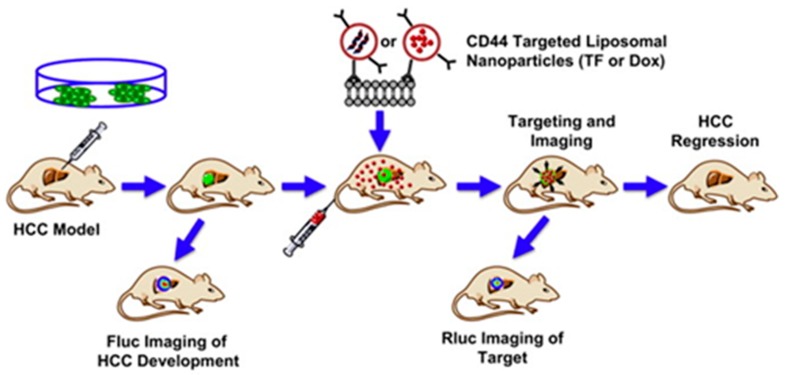
Schematic of targeted liposomes for imaging and therapy of HCC. The HCC model was developed by in situ injection of DF (Fluc, GFP) HepG2 cells with the progression or regression of HCC bearing tracked by Fluc imaging in vivo. The targeting of CD44 conjugated liposomes can be tracked by Rluc imaging. HCC regression resulted from administration of GCV and DOX. Reprinted with permission from Elsevier, Wang et al., Biomaterials, 2012 [84].
Figure 10
Figure 10
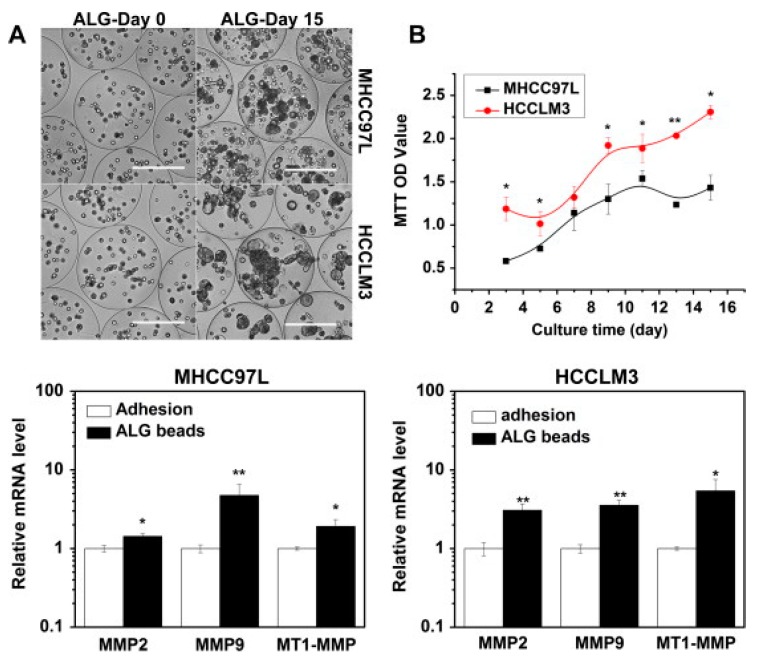
The growth profile and metastasis-related gene expression profile of HCC cells cultured in alginate beads. (A) The morphological appearance of MHCC97L and HCCLM3 cells, at day 0 and day 15. Scale bar: 200 μm. (B) Proliferation curves by MTT assay. Quantitative real-time PCR analysis graphs in the bottom side of the figure show gene expression of metalloproteinases (MMPs). β-Actin was used as an internal control. Reprinted with permission from Elsevier, Xu et al., Exp. Cell Res, 2013 [143].
Figure 11
Figure 11
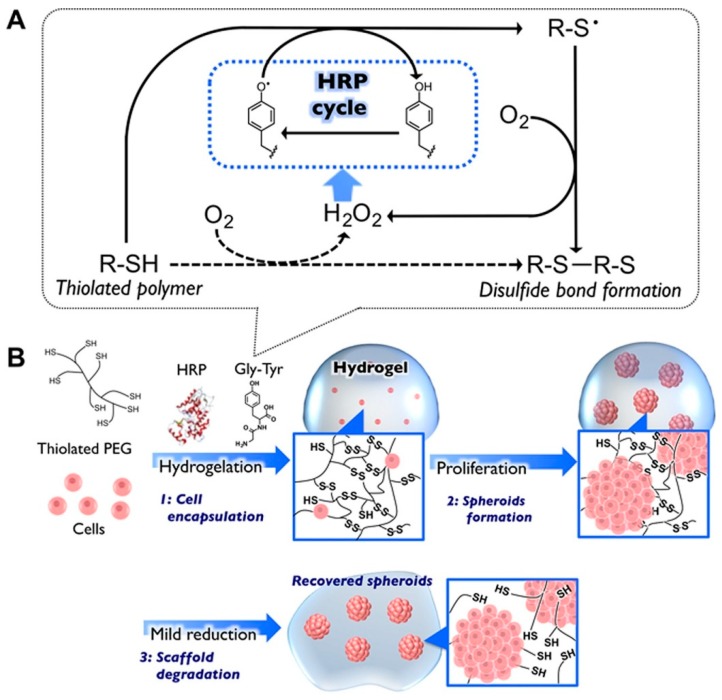
(A) Fabrication of a redox-degradable hydrogel by using horseradish peroxidase (HRP) catalysis: self-oxidation of a thiolated polymer generating hydrogen peroxide, hydrogelation (dashed arrows), HRP-mediated phenoxyradical formation promoting disulfide bond between the thiolated polymers (solid arrows). (B) Schematic of the fabrication and the recovery of cellular spheroids using redox-responsive hydrogels: encapsulation of target cells, spheroid formation by cell proliferation, recovery of the spheroids by degrading the scaffolds under reductive conditions. Reprinted with permission from Wiley, Moriyama et al., Biotechnol. J., 2016 [159].
Figure 12
Figure 12
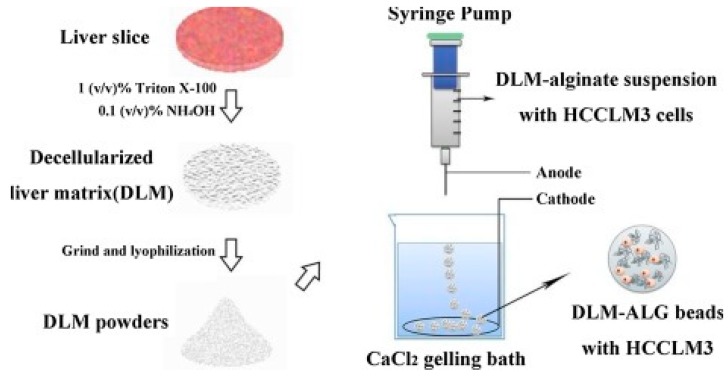
Schematic showing the preparation of decellularized liver matrix (DLM) and DLM-alginate hybrid gel beads (DLM–ALG beads). Reprinted with permission from Elsevier, Sun et al., Int. J. Biol. Macromol., 2018 [170].
Figure 13
Figure 13
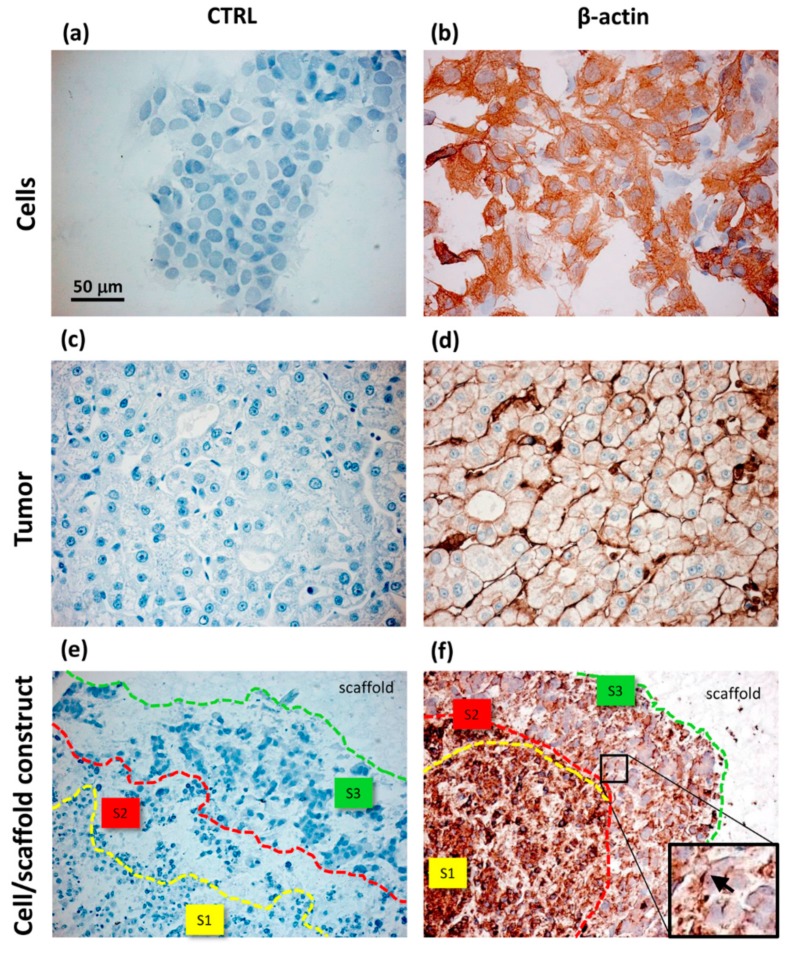
Immunohistochemical analysis of HepG2 cells cultured in monolayers (a,b); samples of HCC tumor (c,d) and HepG2 cells cultured inside PVA/G hydrogels (e,f). For each sample type, negative controls (a,c,e) and β-actin expression (b,d,f) are shown. S1, S2 and S3 in (e,f) define the areas of different morphotype localization within the cell/scaffold constructs. The insert in (f) shows a few cells with a lamellipodial-like expression of β-actin, indicated with an arrow.MDPI Creative Common Attribution license, Moscato et al., J. Funct. Biomater., 2015 [180].
Figure 14
Figure 14
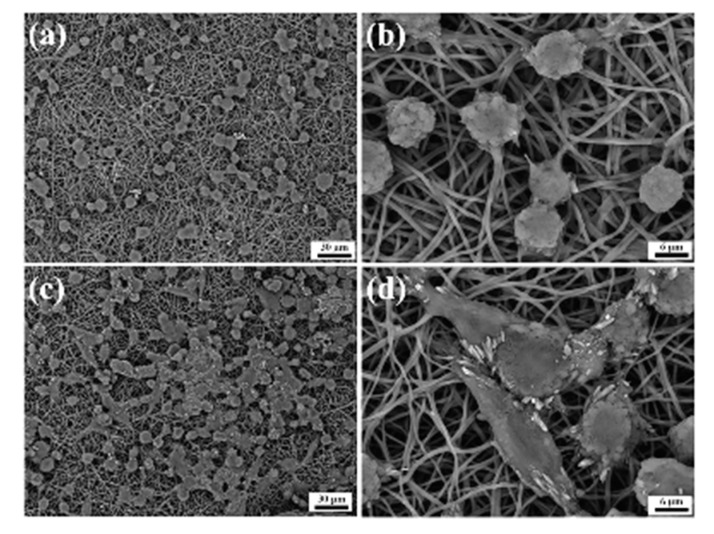
SEM images of HepG2 cells captured onto (a) mPEG-PVA/PEI-Ac and (c) LA-PEG-PVA/PEI-Ac nanofibers, respectively, after 240 min culture; (b,d) are high magnification image of (a,c), respectively. Reprinted with permission from Royal Society of Chemistry, Zhao et al., RSC Advances, 2015 [191].

References

    1. Dutta R., Mahato R.I. Recent advances in hepatocellular carcinoma therapy. Pharmacol. Ther. 2017;173:106–117. doi: 10.1016/j.pharmthera.2017.02.010. - DOI - PMC - PubMed
    1. Lu J., Wang J., Ling D. Surface Engineering of Nanoparticles for Targeted Delivery to Hepatocellular Carcinoma. Small. 2018;14:1702037. doi: 10.1002/smll.201702037. - DOI - PubMed
    1. Mohamed N.K., Hamad M.A., Hafez M.Z., Wooley K.L., Elsabahy M. Nanomedicine in management of hepatocellular carcinoma: Challenges and opportunities. Int. J. Cancer. 2017;140:1475–1484. doi: 10.1002/ijc.30517. - DOI - PubMed
    1. Turato C., Balasso A., Carloni V., Tiribelli C., Mastrotto F., Mazzocca A., Pontisso P. New molecular targets for functionalized nanosized drug delivery systems in personalized therapy for hepatocellular carcinoma. J. Control. Release. 2017;268:184–197. doi: 10.1016/j.jconrel.2017.10.027. - DOI - PubMed
    1. Usmani A., Mishra A., Ahmad M. Nanomedicines: A theranostic approach for hepatocellular carcinoma. Artif. Cells Nanomed. Biotechnol. 2018;46:680–690. doi: 10.1080/21691401.2017.1374282. - DOI - PubMed

LinkOut - more resources