


Efficacy and safety of prophylactic use of ketamine for prevention of postanesthetic shivering: a systematic review and meta analysis
- PMID: 31888509
- PMCID: PMC6937868
- DOI: 10.1186/s12871-019-0910-8
Efficacy and safety of prophylactic use of ketamine for prevention of postanesthetic shivering: a systematic review and meta analysis
Abstract
Background: Postanesthetic shivering is a common complication of anesthesia, which accounts for much discomfort in postoperative patients and may increase postoperative complications in high-risk patients. Due to the lack of high-quality evidence, it is difficult to draw a conclusion about optimal anti-shivering medication. The main purpose of this meta-analysis was to analyze and evaluate the efficacy and safety of prophylactic use of ketamine for preventing postanesthetic shivering.
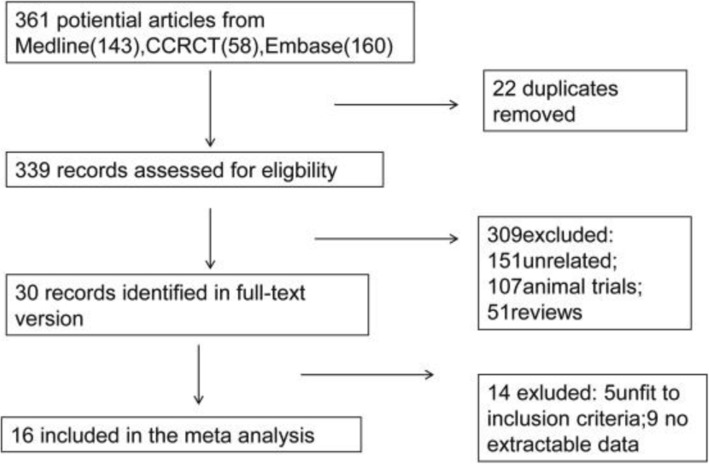
Methods: We searched the following databases: Medline, Embase, and the Cochrane Central Register of Controlled Trails for randomized controlled trials. The primary outcome observed was the difference of the incidence rate of postanesthetic shivering between ketamine group and placebo group. The secondary outcomes were the sedation score and incidence of the side effects caused by ketamine and any other drugs utilized in the studies.
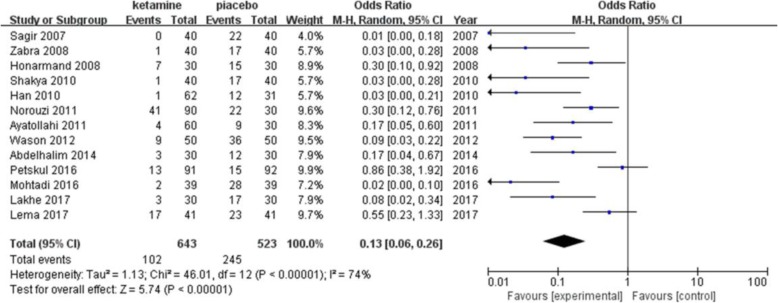
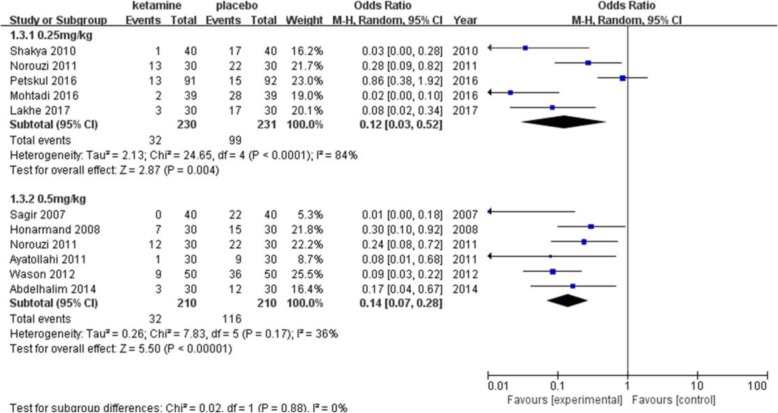
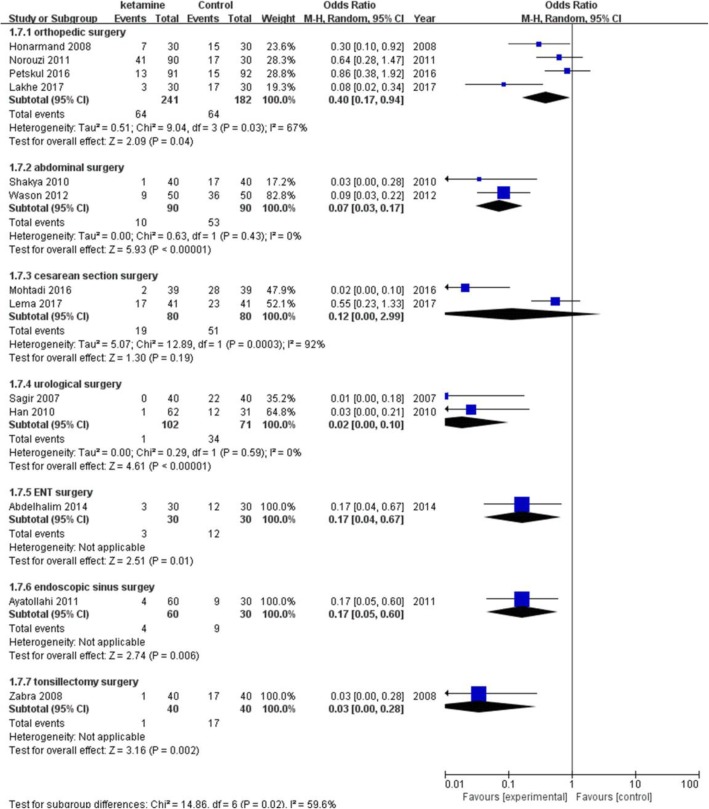
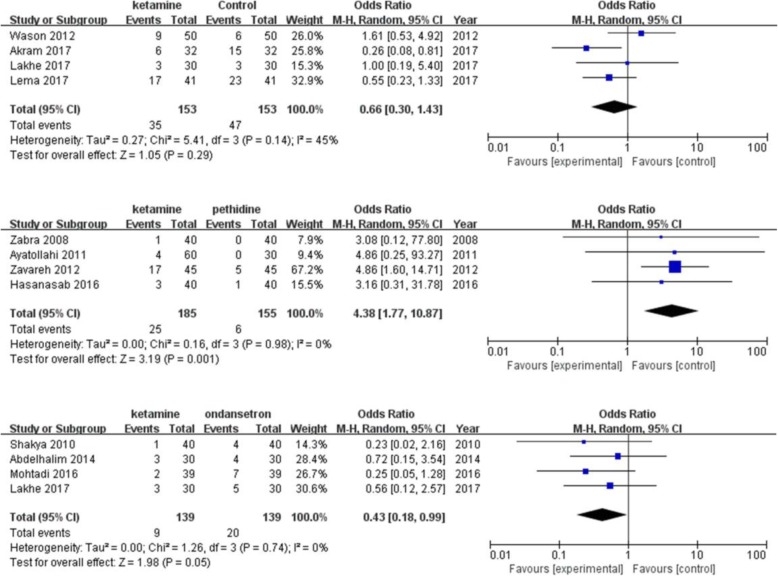
Results: In this meta-analysis, we analyzed a total of 16 trials including 1485 patients. Ketamine reduced the incidence rate of postanesthetic shivering compared to a placebo (odds ratio [OR]: 0.13, 95% confidence interval [CI]: 0.06 to 0.26, P<0.01). Regarding side effects, there was no evident variability of the incidence of nausea and vomiting. Usage of ketamine was associated with a lower rate of hypotension and bradycardia when compared to a placebo. Hallucinations were more frequently observed in patients who received higher doses of ketamine. No significant difference was found in the incidence of postanesthetic shivering with ketamine versus other pharmacological interventions.
Conclusions: Ketamine can prevent postanesthetic shivering without severe side effects. However, ketamine shows no advantage over other anti-shivering drugs.
Keywords: Anti-shivering; Ketamine; Postanesthetic shivering.
Conflict of interest statement
The authors declare that they have no competing interests.
Figures
References
Publication types
MeSH terms
Substances
LinkOut - more resources
Full Text Sources
Medical
